Oxford University Press's
Academic Insights for the Thinking World

Book thumbnail image

How much do you know about early Hollywood’s leading ladies?

By Sarah Rahman
Clara Bow, whose birthday falls on 29 July, was the “it” girl of her time, making fifty-two films between 1922 and 1930. “Of all the lovely young ladies I’ve met in Hollywood, Clara Bow has ‘It,'” noted novelist Elinor Glyn. According to her entry in American National Biography, “With Cupid’s bow lips, a hoydenish red bob, and nervous, speedy movement, Bow became a national rage, America’s flapper. At the end of 1927 she was making $250,000 a year.”

Read More
Book thumbnail image

Memory and the Great War

In honor of the 100th anniversary of World War I, we’re sharing an excerpt of Sir Hew Strachan’s The Oxford Illustrated History of the First World War. Get a sense of what it was like to live through this historic event and how its global effects still impact the world today.

Read More
Book thumbnail image

World Hepatitis Day: reason to celebrate

By Paul Sax
After years of intense basic and clinical research, hepatitis C is now curable for the vast majority of the millions of people who have it. The major barrier is access (diagnosis, getting care, and paying for it), because the scientific problem has been solved.

Read More
Book thumbnail image

Does pain have a history?

It’s easy to assume that we know what pain is. We’ve all experienced pain, from scraped knees and toothaches to migraines and heart attacks. When people suffer around us, or we witness a loved one in pain, we can also begin to ‘feel’ with them. But is this the end of the story?

Read More
Book thumbnail image

A revolution in trauma patient care

By Simon Howell
Major trauma impacts on the lives of young and old alike. Most of us know or are aware of somebody who has suffered serious injury. In the United Kingdom over five-thousand people die from trauma each year. It is the most common cause of death in people under forty. Many of the fifteen-thousand people who survive major trauma suffer life-changing injuries and some will never fully recover and require life-long care.

Read More
Book thumbnail image

Are schools teaching British values?

By Stephanie Olsen
In June, Education Secretary Michael Gove announced that all primary and secondary schools should promote “British values.” David Cameron said that the plans for values education are likely to have the “overwhelming support” of citizens throughout the UK. Cameron defined these values as “freedom, tolerance, respect for the rule of law, belief in personal and social responsibility and respect for British institutions.” ‪

Read More

Confidence and courage in mentoring

Mentorship is one of the most compelling assets for professional success. The mentor-mentee relationship offers one of the most priceless of all human qualities — transparency. The mentor offers the mentee hope for the future by sharing both wisdom and past challenges. Mentors help mentees be their best selves by helping them overcome their fears of failure and apprehension of taking risks.

Read More
Book thumbnail image

How I created the languages of Dothraki and Valyrian for Game of Thrones

By David J. Peterson
My name is David Peterson, and I’m a conlanger. “What’s a conlanger,” you may ask? Thanks to the recent addition of the word “conlang” to the Oxford English Dictionary (OED), I can now say, “Look it up!” But to save you the trouble, a conlanger is a constructed language (or conlang) maker—i.e. one who creates languages.

Read More
Book thumbnail image

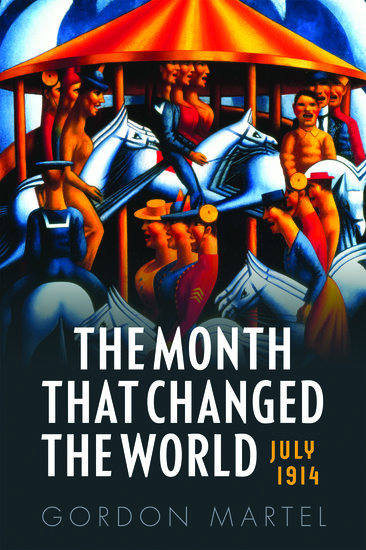
The month that changed the world: Sunday, 26 July 1914

By Gordon Martel
When day dawned on Sunday, 26 July, the sky did not fall. Shells did not rain down on Belgrade. There was no Austrian declaration of war. The morning remained peaceful, if not calm. Most Europeans attended their churches and prepared to enjoy their day of rest. Few said prayers for peace; few believed divine intervention was necessary.

Read More
Book thumbnail image

The month that changed the world: Saturday, 25 July 1914

By Gordon Martel
Would there be war by the end of the day? It certainly seemed possible: the Serbs had only until 6 p.m. to accept the Austrian demands. Berchtold had instructed the Austrian representative in Belgrade that nothing less than full acceptance of all ten points contained in the ultimatum would be regarded as satisfactory. And no one expected the Serbs to comply with the demands in their entirety – least of all the Austrians.

Read More
Book thumbnail image

Re-thinking the role of the regional oral history organization

By Jason Steinhauer What is the role of a regional oral history organization? The Board of Officers of Oral History in the Mid-Atlantic Region (OHMAR) recently wrestled with this question over the course of a year-long strategic planning process. Our organization had reached an inflection point. New technologies, shifting member expectations and changing demographics compelled […]

Read More
Book thumbnail image

Microbes matter

By John Archibald
We humans have a love-hate relationship with bugs. I’m not talking about insects — although many of us cringe at the thought of them too — but rather the bugs we can’t see, the ones that make us sick. Sure, microorganisms give us beer, wine, cheese, and yoghurt; hardly a day goes by without most people consuming food or drink produced by microbial fermentation.

Read More
Book thumbnail image

Occupational epidemiology: a truly global discipline

By Katherine M. Venables
Occupational epidemiology is one of those fascinating areas which spans important areas of human life: health, disease, work, law, public policy, the economy. Work is fundamental to any society and the importance society attaches to the health of its workers varies over time and between countries.

Read More