Oxford University Press's
Academic Insights for the Thinking World

  • History

Book thumbnail image

Ulster since 1600: politics, economy, and society

By Philip Ollerenshaw
For many people the terms Ulster, Northern Ireland, ‘the North’, conjure up images of communal conflict, sectarianism, and peace processes of indefinite duration. More than 3,500 people were killed in the national, communal and sectarian conflict that engulfed Northern Ireland between 1969 and Easter 1998 when the Good Friday Agreement was signed. Tens of thousands were injured or maimed, while sporadic acts of political violence persist to this day.
Read More
Book thumbnail image

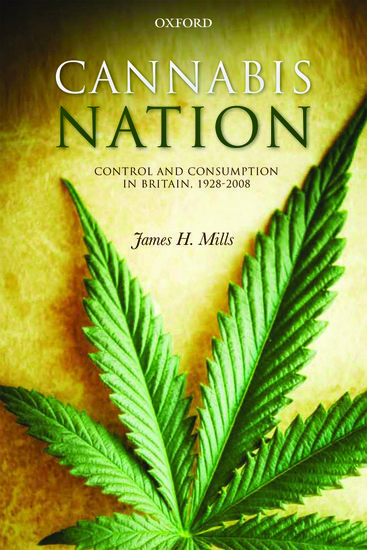
Ganja administration

By James H. Mills
It was announced 10 December as an outcome of the recent Commission into cannabis that the UK Government has decided to reorganise its ‘ganja administration’ with the objective of taxing sales of the drug in order to generate revenues and to control the price in order to discourage excessive consumption. The Government will work with partners from the private sector to ensure that products of a consistent quality are available to consumers.

Read More
Book thumbnail image

The life of J.R.R. Tolkien

Published in 1937 The Hobbit was Tolkien’s first published work of fiction, though he had been writing on legends since at least 1915. His creation — a mythological race of ‘hobbits’, in which Bilbo Baggins takes the lead — had originally been intended for children. But from the outset Tolkien’s saga also proved popular with adults, perhaps appreciative of the hobbits’ curiously English blend of resourcefulness and respectability.

Read More
Book thumbnail image

Oral history in disaster zones

By Caitlin Tyler-Richards
When Superstorm Sandy hit the United States’ east coast in late October, I was struck by the way in which oral historians and other like-minded academics responded to the ensuing chaos. This was not the first time I had seen oral history interact with natural disaster; one of the first articles I prepped for our Twitter feed was KUT News’ “Forged in Flames: An Oral History of the Labor Day Wildfires,” a multi-media documentation of the wildfires that overtook Texas in September 2011.

Read More
Book thumbnail image

Samuel Johnson and human flight

By Thomas Keymer
One doesn’t associate Samuel Johnson, whose death 228 years ago today ended his lengthy domination of the literary world, with the history of aviation. But ballooning was a national obsession in Johnson’s last year, and he was caught up in the craze despite himself.

Read More
Book thumbnail image

How Nazi Germany lost the nuclear plot

By Gordon Fraser
When the Nazis came to power in Germany in 1933, neither the Atomic Bomb nor the Holocaust were on anybody’s agenda. Instead, the Nazi’s top aim was to rid German culture of perceived pollution. A priority was science, where paradoxically Germany already led the world. To safeguard this position, loud Nazi voices, such as Nobel laureate Philipp Lenard,  complained about a ‘massive infiltration of the Jews into universities’.

Read More
Book thumbnail image

Secession: let the battle commence

By James Ker-Lindsay
There has rarely been a more interesting time to study secession. It is not just that the number of separatist movements appears to be growing, particularly in Europe, it is the fact that the international debate on the rights of people to determine their future, and pursue independence, seems to be on the verge of a many change.

Read More

The familiar face of Winston Churchill

By Christopher M. Bell
Churchill, a tireless self-promoter in his own time, would undoubtedly have taken a great deal of satisfaction from knowing that the legend he helped to craft would endure well into the twenty-first century. Unlike most politicians, he was deeply concerned with how he would be remembered – and judged – by history.

Read More
Book thumbnail image

Oral history students as narrators

For this week’s contribution to OUPblog, we’ve gone audio — we are the Oral History Review, after all. In our first podcast, our guest Stephen Sloan elaborates on “On the Other Foot: Oral History Students as Narrators,” a piece he wrote for the most recent issue of the OHR (volume 39, issue 2). This post represents another first: an effort to give current and future OHR contributors room to discuss their articles further.

Read More
Book thumbnail image

What sort of science do we want?

By Robyn Arianrhod
29 November 2012 is the 140th anniversary of the death of mathematician Mary Somerville, the nineteenth century’s “Queen of Science”. Several years after her death, Oxford University’s Somerville College was named in her honor — a poignant tribute because Mary Somerville had been completely self-taught. In 1868, when she was 87, she had signed J. S. Mill’s (unsuccessful) petition for female suffrage, but I think she’d be astonished that we’re still debating “the woman question” in science.

Read More

Summing up Alan Turing

Three words to sum up Alan Turing? Humour. He had an impish, irreverent and infectious sense of humour. Courage. Isolation. He loved to work alone. Reading his scientific papers, it is almost as though the rest of the world — the busy community of human minds working away on the same or related problems — simply did not exist.

Read More
Book thumbnail image

Spitting blood: the absence and presence of tuberculosis

Flying back from Boston recently I was delighted to be able to watch the 2008 film version of Frost and Nixon. I had greatly enjoyed the play in London and heard the film was also very good. So I plugged in the headphones and settled back.Before too long ex-president Richard Nixon is telling would-be interviewer David Frost how he bonded with his Russian counterpart Nikita Khrushchev over their shared sadnesses: Nixon had lost two brothers to tuberculosis.

Read More
Book thumbnail image

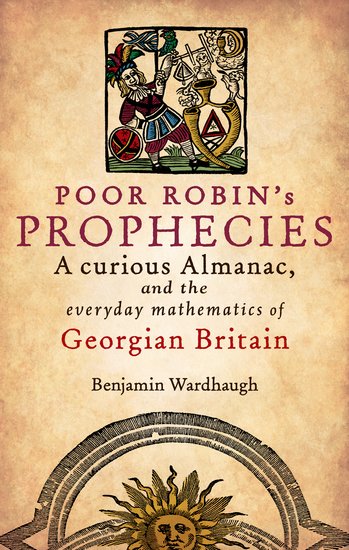
Is Almanac Day in your calendar?

By Benjamin Wardhaugh
As well as Halloween, Guy Fawkes, and All Saints’s day, this time of the year used to see another day of fun and frenzy. ‘Almanack Day’, towards the end of November, saw the next year’s almanacs go on sale. It generally came round on or about 22 November: St Cecilia’s Day. In London, Stationers’ Hall would be crammed to the rafters…

Read More
Book thumbnail image

Oral history, research, and technology

A month ago, the Oral History Association (OHA) hosted their 2012 annual conference, “Sing It Out, Shout It Out, Say It Out Loud: Giving Voice through Oral History” in Cleveland, Ohio. Unsurprisingly, one topic that came up in both formal presentations and casual conversation was the field’s use of the latest tech.

Read More
Book thumbnail image

The two-term era

By Andrew J. Polsky
When Barack Obama won reelection last week, he became the third consecutive president to win a second term. The last time that happened was at the beginning of the 19th century, when Thomas Jefferson, James Madison, and James Monroe benefited from Democratic-Republican dominance at the presidential level. Indeed, by the time Monroe ran for reelection in 1820, the opposition Federalist Party had collapsed.

Read More
Book thumbnail image

Remembrance Sunday

Remembrance Sunday, falling on 11th November in 2012 and traditionally observed on the Sunday closest to this date, marks the anniversary of the cessation of hostilities in the First World War. It serves as a day to reflect upon those who have given their lives for the sake of peace and freedom. We have selected a number of memorable, meaningful and moving quotes to commemorate the fallen.

Read More