Oxford University Press's
Academic Insights for the Thinking World

  • History

Book thumbnail image

Five things you may not know about Jimmy Carter

By Michael Gerhardt
Most people think of Jimmy Carter, if they ever do, as a failed president and perhaps overly energetic former president. Yet, a closer look at his four years in office suggest there was more to his presidency than his forging a Middle East peace initiative and his landslide loss in his reelection campaign.

Read More
Book thumbnail image

The price of free speech

By Ronald K.L. Collins
It is ironic: Free speech is seldom free. It often demands a price. There is a comic adage that says, “tell your boss what you think of him and the truth will set you free.” Indeed. Too often, such is the cost of free speech.

Read More
Book thumbnail image

Cheers to the local bar

By Christine Sismondo
“Where everybody knows your name.” Easily one of the best phrases ever written. That string of five words summed up the idea of the “local,” a refuge from the dynamism of modernity where a small clutch of people get together nearly every day to shoot the shit over a pint – or four.

Read More
Book thumbnail image

How to be an English language tourist?

By David Crystal
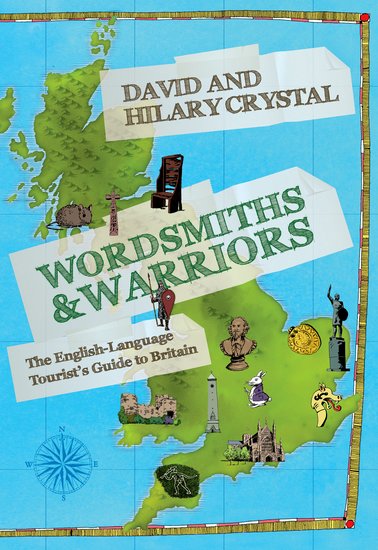
Hilary and I asked ourselves this question repeatedly when we were planning the tour that we eventually wrote up as Wordsmiths and Warriors: The English-Language Tourist’s Guide to Britain. Where can you find out about the places that influenced the character and study of the English language in Britain? How do you get there? And what do you find when you get there?

Read More
Book thumbnail image

2013 OHA will be much more than OK

By Troy Reeves
Thanks to a professional development grant, I spent a few days earlier this month visiting colleagues in Oklahoma and Texas, hoping to steal — I mean borrow! — ideas and procedures to improve the UW-Madison oral history program.

Read More
Book thumbnail image

The amended Constitution

By David J. Bodenhamer
Veneration of the Constitution—and of the Founders who drafted it—began early in the nation’s history. Thomas Jefferson, who in 1787 expressed reservations about the Philadelphia convention, hailed the document two years later as “unquestionably the wisest ever yet presented to men.”

Read More
Book thumbnail image

What should we do about Syria?

By Nigel Biggar
It could well be that current negotiations between the United States, France, and Russia will lead to the Assad regime’s surrender of its chemical weapons. Everyone — bar the regime itself — has a legitimate interest in seeing that happen. Meanwhile, the civil war in Syria drags on, in which far more people have been killed — and will yet be killed — by conventional weapons than by chemical ones. What stance should we take toward this complex conflict, morally speaking?

Read More
Book thumbnail image

The Gold Corner

By Charles Geisst
One of the more audacious trading operations in Wall Street history occurred in September 1869. The “Gold Corner” as it quickly became known, involved nothing less than an attempt to force up the price of gold using the resources of the United States government in the process.

Read More
Book thumbnail image

Middle East food security after the Arab Spring

By Eckart Woertz
Syria and Egypt paradigmatically highlight the perils of food security in the Middle East. Oil exports of Egypt, the largest wheat importer of the world, ceased at the end of the 2000’s. Generating enough foreign exchange for food procurement became more difficult and plans for more self-sufficiency have failed in the face of limited water and land resources.

Read More
Book thumbnail image

The whale that inspired Greenpeace

By Frank Zelko
On 15 September 2013, Greenpeace celebrated its 42nd anniversary. The organization, which was born in Vancouver in 1971, began life as a one-off campaign against US nuclear testing in the far North Pacific.

Read More
Book thumbnail image

Give peace a chance in Syria

By John Gittings
When Ban Ki-moon, speaking in The Hague, called recently on member countries to “give peace a chance” in Syria, and condemned the supply of weapons to both sides, he was taking part in a ceremony at the Peace Palace to mark the centennial of its foundation (a result of the Hague Peace Conference in 1899) which otherwise was ignored by the media.

Read More

King Richard’s worms

By Philip Mackowiak
It has been said that the only persons who refer to themselves as “we” are royalty, college professors, and those with worms. In the 4 September 2013 issue of the Lancet, Piers Mitchell and colleagues present evidence that Richard III, one of England’s best known medieval kings and the deformed villain of Shakespeare’s Richard III, had two reasons for referring to himself in the first person plural.

Read More
Book thumbnail image

Poetry of the Preamble

By Garrett Epps
Would it have made a difference to us, today, if the Preamble announced itself as the voice of the people of existing states, rather than (as it does) of “the people of the United States”?

Read More
Book thumbnail image

Heaney, the Wordsworths, and wonders of the everyday

By Lucy Newlyn
Here is one of the poems Dorothy wrote from her sick room. Dated by her as 1836 (and copied out for the Wordsworths’ friend and neighbour Isabella Fenwick in 1839), it gives us some insight into her state of mind as she looked back on a crisis in 1832-3 when her life was in danger.

Read More
Book thumbnail image

The first tanks and the Battle of Somme

By Paul Jankowski
“And there, between them, spewing death, unearthly monsters.” To a Bavarian infantry officer on the Somme in the early morning hours of 15 September 1916, the rhomboid, tracked behemoths lurching at him amidst waves of attacking enemy infantry had no name.

Read More