Oxford University Press's
Academic Insights for the Thinking World

  • Social Sciences

Book thumbnail image

Mental health and human rights

By Michael Dudley and Fran Gale
On 29 November, Natalya Gorbanevskaya, Soviet dissident poet and translator, died in Paris. In August 1968, this mother of two was arrested, “diagnosed” with schizophrenia and underwent five years’ forcible psychiatric treatment at Moscow’s then- infamous Serbsky Institute. She famously protested in Moscow’s Red Square against the Soviet invasion of Czechoslovakia.
Read More

Maps of the world

With Google maps and GPS instructions at the ready, it isn’t often that we step back to look at maps of the wider world. Long gone are the days when you had to flip open a physical map on your cross-country trip, to say nothing of the wealth of maps that exist today, from satellite imagery to geographic surveys, cityscapes to political maps.

Read More
Book thumbnail image

US accountability for post-9/11 human rights abuses

By Dr. Robert H. Wagstaff
December is Human Rights month and the 10th of December is Human Rights Day. What better time for President Obama to fulfill his promise of actually closing Guantanamo Bay and to initiate an investigation of violations of human rights by the US government post-9/11?

Read More
Book thumbnail image

Innovation in the water industry

By Andy Balmer
Questions about rising prices in the water industry often play out according to the same issues of climate change and poverty. But things have been relatively quiet of late for the water companies, which might, in part, be that the average cost of water per household is relatively small compared to gas and electricity, costing £388 compared to £1279.

Read More
Book thumbnail image

Syria’s civil war: historical forces behind regional realities

By Michael Hunt
Critics of the Obama administration’s Syrian policy have lamented its failure to take into account regional realities. With surprising speed those realities have put the brakes on US intervention. The anti-regime forces in Syria have remained deeply divided — indeed turned violently against each other — and resistant to outside guidance.

Read More
Book thumbnail image

Mandela, icon

By Elleke Boehmer
The name Nelson Mandela and the word icon are once again on people’s lips, as if spoken in the same breath.

Read More
Book thumbnail image

Between ‘warfare’ and ‘lawfare’

By Carsten Stahn
The Syria crisis has challenged the boundaries of international law. The concept of the ‘red line’ was used to justify military intervention in response to the use of chemical weapons. This phenomenon reflects a trend to use law as a strategic asset or instrument of warfare (‘lawfare’).

Read More
Book thumbnail image

Putting Syria in its place

By Klaus Dodds
Where exactly is Syria, and how is Syria represented as a place? The first part of the question might appear to be fairly straight forward. Syria is an independent state in Western Asia and borders Lebanon, Turkey, Jordan and Israel. It occupies an area of approximately 70, 000 square miles, which is similar in size to the state of North Dakota. Before the civil war (March 2011 onwards), the population was estimated to be around 23 million but millions of people have been displaced by the crisis.

Read More
Book thumbnail image

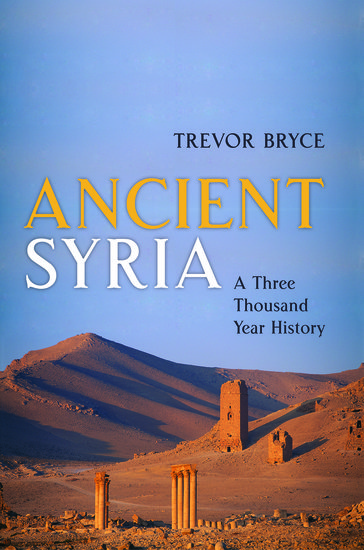
Ancient Syria: trouble-prone and politically volatile

By Trevor Bryce
I have long been fascinated with Syria. Like other Middle Eastern regions, it has many layers of civilization and has seen many conquerors and raiders tramp and gallop through its lands over the centuries. That of course has been the fate of lots of countries, ancient and modern.

Read More
Book thumbnail image

Do economists ever get it right?

By George Economides and Thomas Moutos
According to popular belief, economists rarely manage to predict correctly the consequences of important policy actions. Nevertheless, the case of the European Economic and Monetary Union (EMU) is one of those instances which economists did get it right.

Read More
Book thumbnail image

Seven facts of Syria’s displacement crisis

By Khalid Koser
Conflicts and crises regularly force people to flee their homes; and the plight of the displaced is often overlooked. In the case of Syria, however, displacement is not simply an unfortunate side-effect. Its massive volume threatens to render the country unsustainable for generations.

Read More
Book thumbnail image

The gold standard and the world economy [infographic]

By Richard S. Grossman
Britain operated under the gold standard for nearly 100 years before World War I forced Britain — and many other countries — to abandon it. During that century, Britain was the world’s military, financial, and industrial superpower.

Read More
Book thumbnail image

Election 2015: ‘Don’t vote, it just encourages the b**tards’

By Matthew Flinders
Without a whistle or a bang from a starter’s gun, the 2015 general election campaign is now well under way. Labour’s proposed freeze on energy prices marks a first tentative attempt to seize the pre-election agenda, while the Chancellor’s autumn statement next month looks set to respond by including measures aimed at cutting the cost of living.

Read More
Book thumbnail image

Syria and the social netwar 2011-2013

Syria is Oxford University Press’s Place of the Year, and to call attention to the sociopolitical turmoil in the country, we present a brief excerpt from Out of the Mountains: The Coming Age of the Urban Guerrilla by David Kilcullen. This is a powerful study of the important role technology, particularly social media, plays in the war zone in Syria.

Read More
Book thumbnail image

A day in Eyeth

By Jeannette D. Jones
There’s a legendary world in Deaf culture lore. It’s like Earth but it’s for people of the eye, so they call it Eyeth (get it? EARth, EYEth). In this world, people listen with their eyes with the comfort of being typical, just the way life is, unlike the existence of a Deaf person on Earth, heavily mediated through hearing devices, pads of paper, interpreters, lip reading, and gestures.

Read More