Oxford University Press's
Academic Insights for the Thinking World

  • Social Sciences

Research replication in social science: reflections from Nathaniel Beck

Questions about data access, research transparency and study replication have recently become heated in the social sciences. Professional societies and research journals have been scrambling to respond; for example, the American Political Science Association established the Data Access and Research Transparency committee to study these issues and to issue guidelines and recommendations for political science.

Read More

Changing legal education

Martin Partington discussed a range of careers in his podcasts yesterday. Today, he tackles how new legal issues and developments in the professional environment have in turn changed organizational structures, rules and regulations, and aspects of legal education.

Read More

The road to egalitaria

In 1985, Nobel Laureate Gary Becker observed that the gap in employment between mothers and fathers of young children had been shrinking since the 1960s in OECD countries. This led Becker to predict that such sex differences “may only be a legacy of powerful forces from the past and may disappear or be greatly attenuated in the near future.”

Read More

Why referendum campaigns are crucial

As we enter the potentially crucial phase of the Scottish independence referendum campaign, it is worth remembering more broadly that political campaigns always matter, but they often matter most at referendums.

Read More

Challenges facing UK law students

Making the leap between school and university can be a stretch at the best of times, but for UK law students it can be a real struggle. As there is no requirement to study law at school before beginning an undergraduate programme, many new law students have a very limited knowledge of how the law works and what they can expect from their studies.

Read More

Publishing tips from a journal editor: selecting the right journal

One of the most common questions that scholars confront is trying to find the right journal for their research papers. When I go to conferences, often I am asked, “how do I know if Political Analysis is the right journal for my work?” This is an important question, in particular for junior scholars who don’t have a lot of publishing experience — and for scholars who are nearing important milestones (like contract renewal, tenure, and promotion).

Read More

The French burqa ban

On July 1, 2014, the Grand Chamber of the European Court of Human Rights (ECHR) announced its latest judgment affirming France’s ban on full-face veil (burqa law) in public (SAS v. France). Almost a decade after the 2005 controversial decision by the Grand Chamber to uphold Turkey’s headscarf ban in Universities (Leyla Sahin v. Turkey), the ECHR made it clear that Muslim women’s individual rights of religious freedom (Article 9) will not be protected.

Read More

Defining intransigence and recognizing its merits

On any given day, a Google search finds the word “intransigent” deployed as though it automatically destroyed an opponent’s position. Charles Blow of the New York Times and Jacob Weisberg (no relation to the present writer) of Slate are only two of many, especially on the political left, who label Republicans “intransigent” and thereby assume they have won the argument against them.

Read More

The terror metanarrative and the Rabaa massacre

Just after dawn prayers on the morning of August 14, 2013, Egyptian security forces raided a large sit-in based at Cairo’s Rabaa al-Adawiyya Square and another at al-Nahda Square. Six weeks earlier, military leader and Minister of Defense Abdel Fattah al-Sisi staged a coup to remove Egypt’s first democratically elected president, the Muslim Brotherhood’s Mohamed Morsi, from office.

Read More
Book thumbnail image

The gender gap in pay in Spanish company boards

Is there gender gap in pay on the boards of listed Spanish firms? If there is, what are the factors behind the gender gap in pay? We sought to find the answers to these questions. Over the last few decades, payments for men have been consistently higher than those for women, even when they hold the same post and have been educated to the same level.

Read More
Book thumbnail image

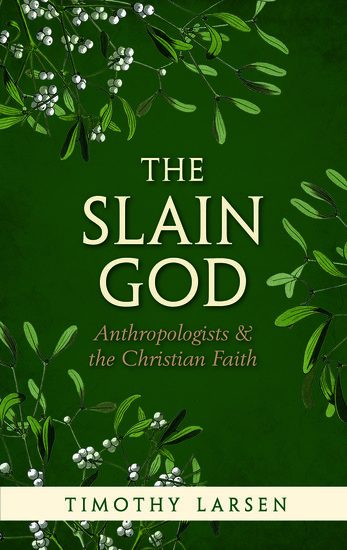
Anthropology and Christianity

The relationship between anthropologists and Christian identity and belief is a riddle. I first became interested in it by studying the intellectual reasons for the loss of faith given by figures in the nineteenth and twentieth centuries. There are an obvious set of such intellectual triggers.

Read More

Why study trust?

In many countries, including Britain, the Euro-elections in May showed that a substantial minority of voters are disillusioned with mainstream parties of both government and opposition. This result was widely anticipated, and all over Europe media commentators have been proclaiming that the public is losing trust in established politicians.

Read More

Improving survey methodology: a Q&A with Lonna Atkeson

I recently had the opportunity to talk with Lonna Atkeson, Professor of Political Science and Regents’ Lecturer at the University of New Mexico. We discussed her opinions about improving survey methodology and her thoughts about how surveys are being used to study important applied questions

Read More

Hate crime and community dynamics

Hate crimes are offences that are motivated by hostility, or where some form of demonstration of hostility is made, against the victim’s identity. Such crimes can have devastating impacts, both on those directly victimised and on other community members who fear they too may be targeted. While much has been written about the impacts of hate crime victimisation, there has been little which has focused on how the criminal justice system can effectively address the consequences of hate.

Read More

Why hope still matters

Someone asked me at a recent book talk why I chose to write about hope and children in poverty. They asked whether it was frivolous to write about such a topic at a time when children are experiencing the challenges associated with poverty and economic disadvantage at high rates.

Read More