Oxford University Press's
Academic Insights for the Thinking World

  • Science & Medicine

Neanderthals may have helped East Asians adapting to sunlight

Hominins and their closest living relative, chimpanzees, diverged approximately 6.5 million years ago on the African continent. Fossil evidence suggests hominins have migrated away from Africa at least twice since then. Crania of the first wave of migrants, such as Neanderthals in Europe and Peking Man in East Asia, show distinct morphological features that are different from contemporary humans (also known as Homo sapiens sapiens).

Read More
Book thumbnail image

Conservation physiology of plants

By Mark van Kleunen
Conservation physiology was first identified as an emerging discipline in a landmark paper by Wikelski and Cooke, published in Trends in Ecology and Evolution in 2006. They defined it as “the study of physiological responses of organisms to human alteration of the environment that might cause or contribute to population decline”.

Read More
Book thumbnail image

The rise of music therapy

By Scott Huntington
Music therapy involves the use of clinical, evidence-supported musical interventions to meet a patient’s specific goals for healing (a useful fact sheet). The music therapist should have the proper credentials and be licensed in the field of music therapy.

Read More
Book thumbnail image

Terror

By Yair Amichai-Hamburger
On the Internet, terrorists can find a wide-open playground for particularly sophisticated violence. I have no doubt that the people at the American Department of Defense, when they brought about the inception of the Internet, never thought in their worst nightmares that come 2013, every terrorist splinter group would boast a website and that all the advantages of the Internet would be at the service of terrorists for organizing, planning, and executing their attacks on innocent people.

Read More
Book thumbnail image

Proving Polybius wrong about elephants

By Adam L. Brandt and Alfred L. Roca
Do conservation genetics and ancient Greek history ever cross paths? Recently, a genetic study of a remnant population of elephants in Eritrea has also addressed an ancient mystery surrounding a battle in the Hellenistic world.

Read More
Book thumbnail image

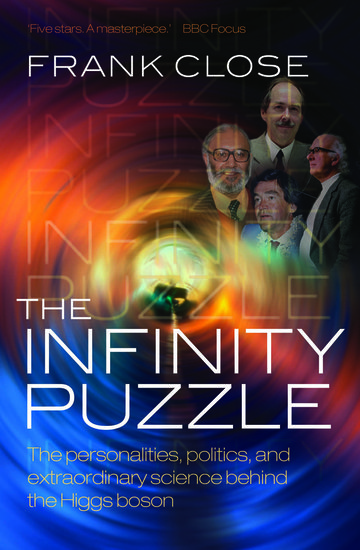
Frank Close on the Higgs boson

In 2013, the Nobel Prize for Physics was awarded jointly to François Englert and Peter W. Higgs for their work on what is now commonly known as the Higgs field and the Higgs boson. The existence of this fundamental particle, responsible for the creation of mass, was confirmed by the ATLAS and CMS experiments at CERN’s Large Hadron Collider in 2012.

Read More
Book thumbnail image

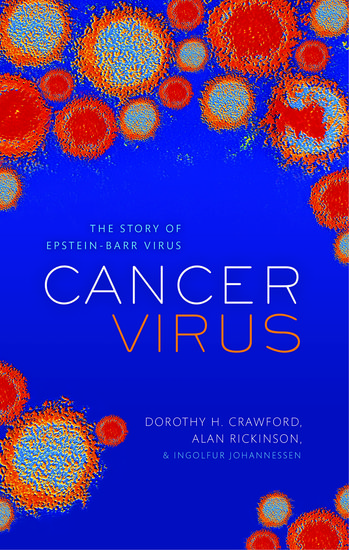
Cancer virus: the eureka moment

By Dorothy Crawford
On 24 February 1964 a young research virologist at the Middlesex Hospital in London peered at the screen of an electron microscope and saw a new virus. It turned out to be a human cancer virus – the first ever discovered.

Read More
Book thumbnail image

Predicting who will publish or perish as career academics

By Bill Laurance, Carolina Useche, Corey Bradshaw, and Susan Laurance
It doesn’t matter whether or not you think it’s fair: if you’re an academic, your publishing record will have a crucial impact on your career. It can profoundly affect your prospects for employment, for winning research grants, for climbing the academic ladder, for having a teaching load that doesn’t absorb all your time, for winning academic prizes and fellowships, and for gaining the respect of your peers.

Read More
Book thumbnail image

Common Core Standards, universal pre-K, and educating young readers

Parents and educators everywhere want to introduce children to the world of reading, but the task of helping a child become an independent reader is increasingly difficult and daunting. How can you create a love for reading and learning with stories, lessons, and activities while also supporting reading development? Book Smart: How to Develop and Support Successful, Motivated Readers, written by Anne E. Cunningham, PhD and Jamie Zibulsky, PhD, serves as a how-to guide for parents as they navigate through the uncertainties of teaching their children to read.

Read More

What does he mean by ‘I love you?’

Have you ever had difficulty expressing your emotions in words? Have people misinterpreted what you feel even if you name it? If you speak more than one language, you’re almost certain to have answered “yes”.

Read More
Book thumbnail image

A new concept of medical textbook

By Demosthenes G. Katritsis
As Charles Darwin elegantly demonstrated, survival depends on the ability for adaptation. This principle, however, can be conceptualized beyond species evolution. By reference to contingent or contextual considerations, adaptation is also relevant to the need of human activity, in general, to correlate with the speed of scientific progress, and technological innovation.

Read More
Book thumbnail image

How we all kill whales

By Michael Moore
My first job after veterinary school in 1983 was for the International Whaling Commission examining the efficacy of explosive harpoons for killing fin whales on an Icelandic whaling vessel. Later, I encountered a very different way of killing whales.

Read More
Book thumbnail image

Madness, rationality, and epistemic innocence

Lisa Bartolotti
Madness and irrationality may seem inextricably related. “You are crazy!” we say, when someone tells us about their risk-taking behaviour or their self-defeating actions). The International Classification of Diseases (ICD 10) and the Diagnostic and Statistical Manual of Mental Disorders (DSM 5) describe people with depression, autism, schizophrenia, dementia, and personality disorders as people who infringe norms of rationality.

Read More
Book thumbnail image

Why nobody dreams of being a professor

By now the reactions to Nicholas Kristof’s piece at the New York Times are circulating the Internet. There are good arguments in favor and against blaming professors or the public or both. Rather than take one side or the other I thought it would make sense to give a couple of anecdotes that provide insight into this issue.

Read More

Portraying scientists: Galileo and perceptual portraiture

By Nicholas Wade
Perceptual portraits represent people in an unconventional style. The portraits themselves are not always easy to discern – the viewer needs to apply the power of perception in order to extract the facial features from the design which carries them. The aim is both artistic and historical.

Read More