Oxford University Press's
Academic Insights for the Thinking World

  • History

Book thumbnail image

Derrida and the promise of democracy

By Simon Glendinning
Not so long ago Europe was not merely a recurrent theme for philosophy; it was central to the traditional discourse of “philosophy of the history of the world”. Taking in work by such giants as Kant, Hegel, and Husserl, the basic idea was that the history of “Man” can be related as a movement between an original “savage” condition and a final “fully human” condition. This construal of human history was not only European in origin, but also “Eurocentric”. Its centre was the idea that the transition for “Man” in history is a movement towards an end with European humanity at the head.

Read More
Book thumbnail image

Chicago burns

This Day in World History – At eight o’clock at night on October 8, 1871, a fire broke out in Patrick and Catherine O’Leary’s barn. Winds were strong that night in the Windy City, and the city itself was largely made of wood—not just the buildings, but even the sidewalks and signs. Every structure served as kindling, and the ferocious fire burned out of control for thirty-six hours, not stopping until it had destroyed 18,000 buildings over an area of three-and-a-half square miles. Three hundred people lost their lives in the fire, and a third of the city’s people were made homeless.

Read More
Book thumbnail image

Carlson receives patent for Xerography

This Day in World History – Chester Carlson had everything he needed to invent a xerography machine, or photocopier. He had been interested in printing and chemistry since childhood. He perceived a need—in his job, he found that he always needed more copies of documents than he could obtain cheaply. He reasoned that other businesses would also love to have a way of copying documents inexpensively. He had incentive to invent—he had just gotten married and did not think his job offered much chance for getting ahead. Finally, he had an inspiration.

Read More
Book thumbnail image

Downton Abbey: a national love affair?

By Lucy Delap
Downton Abbey specialises in dramatic twists and love affairs at all social levels. The world of domestic service provides an ideal backdrop for thwarted passions and sexual machinations of all sorts.

Read More
Book thumbnail image

Birth of Dangun, legendary founder of Korea

This Day in World History – According to Korean tradition, Dangun, the founder of Korea’s first dynasty, was born on October 3, more than 4,000 years ago. The legend of his birth indicates why this king is so important. Hwanung, the son of the king of heaven, wanted to live among men rather than among the gods. He came down the earth with 3,000 followers and settled in what is now North Korea, ruling the humans who lived in the area.

Read More
Book thumbnail image

Monumental decisions

By Margot Minardi
The new Martin Luther King, Jr. National Memorial in Washington, DC, attracted criticism from an unlikely corner recently when poet Maya Angelou complained that one of the inscriptions made the civil rights leader seem like an “arrogant twit.” In a sermon on “The Drum Major Instinct,” delivered two months before

Read More
Book thumbnail image

Mitchell discovers a comet

This Day in World History – Each evening that weather permitted, Maria (pronounced Mah-RYE-uh) Mitchell mounted the stairs to the roof of her family’s Nantucket home to sweep the sky with a telescope looking for a comet. Mitchell—who had been taught mathematics and astronomy by her father—began the practice in 1836. Eleven years later, on October 1, 1847, her long labors finally paid off. When she saw the comet, she quickly summoned her father, who agreed with her conclusion.

Read More
Book thumbnail image

Some questions about the Great Sea

Situated at the intersection of Europe, Asia, and Africa, the Mediterranean Sea has been for millenia the place where religions, economies, and political systems met, clashed, influenced and absorbed one another. Ranging from prehistory to the 21st century, The Great Sea is above all the history of human interaction across a region that has brought together many of the great civilizations of antiquity as well as the rival empires of medieval and modern times.

Read More
Book thumbnail image

Once again, “the people” prepare to elect an American president

By Louis René Beres

Apart from their obvious differences, all of the candidates, both Democrat (President Obama) and Republican, have one overriding chant in common. For each aspirant, every pitch is prefaced by sanctimonious appeals to “the people.” Whether openly, or with a quiet nod to a presumably more subtle strategy, “I want to be the people’s president” is always their conspicuously shared mantra.

This is not hard to understand. To suggest otherwise

Read More
Book thumbnail image

Chinese philosopher Kongfuzi born

This Day in World History – Few people in history can justly claim the impact of Kongfuzi (often called Confucius), whose teachings have influenced hundreds of millions of people across Asia. Like so many important figures in the world of ideas, the historical Kongfuzi is an elusive figure. While precise date of the sage’s birth is unknown, the Chinese have long celebrated September 28, and to this day, members of the Kong family still live in the family compound in Qufu, China.

Read More
Book thumbnail image

Champollion reveals decipherment of the Rosetta Stone

This Day in World History – On September 27, 1822, Jean François Champollion announced a long-awaited discovery: he could decipher the Rosetta Stone. The stone, a document written in 196 BCE during the reign of Ptolemy V, had been discovered in Rashid (Rosetta in French), Egypt in 1799 by French troops involved in a military campaign against the British. Deciphering hieroglyphics had frustrated scholars for centuries. Arab scholars, beginning in the ninth century, CE, made unsuccessful attempts, as did Europeans in the fifteenth.

Read More
Book thumbnail image

The Battle of Midway: a narrated slideshow

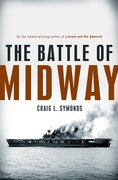
There are few moments in American history in which the course of events tipped so suddenly and so dramatically as at the Battle of Midway. At dawn of June 4, 1942, a rampaging Japanese navy ruled the Pacific. By sunset, their vaunted carrier force (the Kido Butai) had been sunk and their grip on the Pacific had been loosened forever.

Read More
Book thumbnail image

Marking the autumnal equinox in the ancient world

This Day in World History – Sometime around September 23 each year, Earth reaches the autumnal equinox, the point when the sun stands directly above the Equator and daylight and dark are roughly equal. (The day, of course, marks the autumnal equinox in the Northern Hemisphere. South of the Equator, it is the vernal, or spring, equinox. March 23 is the spring equinox in the Northern Hemisphere and the autumnal equinox in the Southern.) These astronomical events did not go unnoticed by ancient peoples.

Read More
Book thumbnail image

Erdogan’s victory lap: Turkish domestic politics after the uprisings

By Steven A. Cook

As Cairo’s citizens drove along the Autostrad [last] week, they were greeted with four enormous billboards featuring pictures of Turkish Prime Minister Recep Tayyip Erdogan. With Turkish and Egyptian flags, the signs bore the message, “With United Hands for the Future.” Erdogan’s visit marks a bold development in Turkey’s leadership in the region. The hero’s welcome he received at the airport reinforced the popular perception: Turkey is a positive force, uniquely positioned to guide the Middle East’s ongoing transformation.

Read More
Book thumbnail image

Six women, two men hanged for witchcraft

This Day in World History – In the fatal climax of months of turmoil, six women and two men were hanged in Salem, Massachusetts, after having been found guilty of witchcraft. The eight were the last victims of a witchcraft hysteria that gripped Salem and other towns in Massachusetts in 1692. The tumult began in February 1692, when several young girls began to behave strangely and complained of physical torments. Soon, the girls were accusing women in the village of being witches. Witchcraft was a capital offense at the time, and colonial leaders set up a court to investigate. In all, about 140 people—86% of whom were women—were accused of witchcraft in Salem.

Read More
Book thumbnail image

Beside the seaside: Blackpool and national biography

By Sue Arthur
Memories of your summer holiday may be fading, but the latest update of the Oxford Dictionary of National Biography seeks to rekindle the summer—or at least summers past—with one of the new additions from its latest update, published today. For forty years Reginald Dixon (1904-1985) played the Wurlitzer at the Tower Ballroom, Blackpool, turning a former cinema organist into a recording star, known worldwide for his signature tune, ‘I do like to be beside the seaside.’ Here Dixon’s biographer, Sue Arthur, describes the man who became ‘Mr Blackpool’, and the interwar resort he helped to make a national attraction.

Read More