Oxford University Press's
Academic Insights for the Thinking World

  • History

Book thumbnail image

Illustrating a graphic history: Mendoza the Jew

By Liz Clarke
The illustration of a graphic history begins with the author’s script. There are two aspects to turning that script into artwork. It’s both a story, calling for decisions to be made about the best way to present the narrative visually, and a history, rooted in fact and raising questions about what the places and people (and their furniture and transportation and utensils) would actually have looked like.

Read More
Book thumbnail image

Felon disfranchisement preserves slavery’s legacy

By Pippa Holloway
Nearly six million Americans are prohibited from voting in the United States today due to felony convictions. Six states stand out: Alabama, Florida, Kentucky, Mississippi, Tennessee, and Virginia. These six states disfranchise seven percent of the total adult population – compared to two and a half percent nationwide. African Americans are particularly affected in these states.

Read More
Book thumbnail image

Getting to know Sir Philip Sidney

By Roger Kuin
What does Sir Philip Sidney’s correspondence teach us about the man and his world? You have to realise what letters were, what they were like, and what they were for. Some of them were like our e-mails: brief and to the point. Other letters are long and more like a personal form of news media: meant to inform the recipient (often Sidney himself) about what is happening in the world of politics.

Read More

Oxford University Press during WWI

By Lizzie Shannon-Little and Martin Maw
The very settled life of Oxford University Press was turned upside down at the outbreak of the First World War; 356 of the approximately 700 men that worked for the Press were conscribed, the majority in the first few months. The reduction of half of the workforce and the ever-present uncertainty of the return of friends and colleagues must have made the Press a very difficult place to work.

Read More
Book thumbnail image

‘Storytelling’ in oral history: an exchange

Silence, interrogation, confession, chronology, and stories. The Oral History Review (OHR) Volume 41, Issue 1 is now online and coming to mailboxes soon, and along with it Alexander Freund’s article, “Confessing Animals”: Toward a Longue Durée History of the Oral History Interview.”OHR Editorial Board Member Erin Jessee spoke with the University of Winnipeg professor over his novel approach to the oral history interview.

Read More
Book thumbnail image

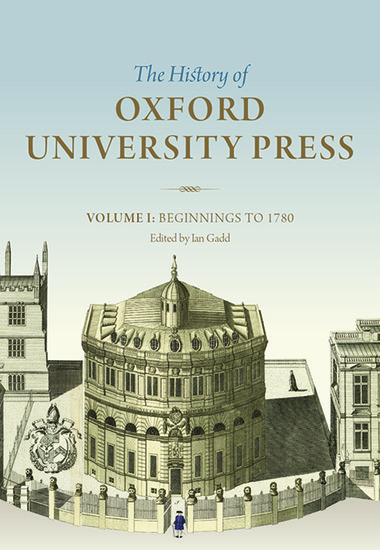
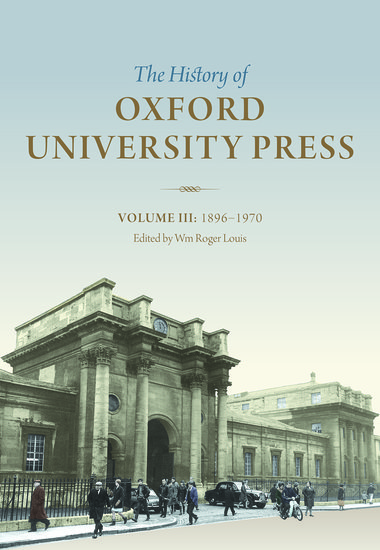
New perspectives on the history of publishing

There is a subtle shift occurring in the examination of the history of the book and publishing. Historians are moving away from a history of individuals towards a new perspective grounded in social and corporate history. From A History of Cambridge University Press to The Stationers’ Company: A History to the new History of Oxford University Press, the development of material texts is set in a new context of institutions.

Read More
Book thumbnail image

The politics of green shopping

By Thomas Jundt
On this day forty-four years ago, some 20 million Americans took to the streets, parks, and lecture halls for an event billed as a national environmental teach-in—Earth Day.

Read More
Book thumbnail image

Putin in the mirror of history: Crimea, Russia, empire

By Mark D. Steinberg
Contrary to those who believe that Vladimir Putin’s political world is a Machiavellian one of cynical “masks and poses, colorful but empty, with little at its core but power for power’s sake and the accumulation of vast wealth,” Putin often speaks quite openly of his motives and values—and opinion polls suggest he is strongly in sync with widespread popular sentiments.

Read More
Book thumbnail image

Trauma happens, so what can we do about it?

By Carolyn Lunsford Mears, Ph.D.
Fifteen years ago, 20 April 1999, it happened in my community… at my son’s school. Two heavily armed seniors launched a deadly attack on fellow students, teachers, and staff at Columbine High School in Jefferson County, Colorado.

Read More

Very short talks

By Chloe Foster
We have seen an abundance of Very Short Introductions (VSI) authors appearing at UK festivals this year. Appearances so far have included at Words by the Water festival in Keswick, Oxford Literary Festival, and Edinburgh Science festival. The versitility of the series and its subjects means our author talks are popular at a variety of different types of festivals

Read More

A bookish slideshow

From ancient times to the creation of eBooks, books have a long and vast history that spans the globe. Although a book may only seem like a collection of pages with words, they are also an art form that have survived for centuries. In honor of National Library Week, we couldn’t think of a more fitting book to share than The Book: A Global History. The slideshow below highlights the fascinating evolution of the book.

Read More
Book thumbnail image

The Mexican-American War and the making of American identity

By John C. Pinheiro
Few Americans today would have difficulty imagining a United States where the citizens disagree over the wisdom of immigration, question the degree to which Mexicans can be fully American, and dispute about the value of religious pluralism. But what if the America in question was not that of 2014 but rather the 1830s and 1840s?

Read More
Book thumbnail image

A publisher before wartime

This year marks the centenary of the start of the First World War. This cataclysmic event in world history has been examined by many scholars with different angles over the intervening years, but the academic community hopes to gain fresh insight into the struggles of war on this anniversary.

Read More
Book thumbnail image

A call for oral history bloggers

By Caitlin Tyler-Richards
Over the past few months, the Oral History Review has become rather demanding. In February, we asked readers to experiment with the short form article. A few weeks ago, our upcoming interim editor Dr. Stephanie Gilmore sent out a call for papers for our special Winter/Spring 2016 issue, “Listening to and for LGBTQ Lives.” Now, we’d like you to also take over our OUPBlog posting duties.

Read More
Book thumbnail image

Preparing for OAH 2014

Each year the Organization of American Historians gathers for a few days of networking and education, and this year the annual meeting will be held in Atlanta from 10-13 April 2014. This year’s conference theme is “Crossing Borders,” highlighting the impact of migration on the history of the United States. Organizers are encouraging attendees to cross a few professional borders as well — from career level to specialties.

Read More
Book thumbnail image

Twenty years after the Rwandan Genocide

By Scott Straus
We are now entering the month of April 2014—a time for reflection, empathy, and understanding for anyone in or involved with Rwanda. Twenty years ago, Rwandan political and military leaders initiated a series of actions that quickly turned into one of the 20th century’s greatest mass violations of human rights. As we commemorate the genocide, our empathy needs to extend first to survivors and victims. Many families were destroyed in the genocide.

Read More