Oxford University Press's
Academic Insights for the Thinking World

Book thumbnail image

Five women songwriters who helped shape the sound of jazz

The songwriting business offered few opportunities to women in the early 20th century.  And jazz bandleaders, despite their own experiences with discrimination, were hardly more tolerant of female talent. Although audiences expected the leading orchestras to showcase a ‘girl singer’, women were rarely allowed to serve in other capacities, either on the bandstand or writing arrangements and compositions.

Read More
Book thumbnail image

March Madness: Atlas Edition

On 19 March 2013, 64 college basketball teams will meet on the court for the battle of the year. In the United States, college basketball season ends when elite teams compete in March Madness over the course of four weeks. Teams compete based on their placement in a regional bracket, and either go home or move forward after a single game. Four teams will make the “Final Four” on 6 April, and on 8 April, the NCAA will have its college basketball champion.

Read More
Book thumbnail image

Six facts about physiology

The Mayo Clinic Scientific Press suite of publications is now available on Oxford Medicine Online. To highlight some of the great resources, we’ve pulled together some interesting facts about physiology from James R. Munis’s Just Enough Physiology.

Read More
Book thumbnail image

Can women fight?

By Anthony King
On 24 January 2013, Leon Panetta, the US Secretary of State for Defence, made an historic announcement: from 2016, combat roles would be open to female service personnel. For the first time, women would be allowed to serve in the infantry. Applauded in liberal quarters, the decision was widely seen as unproblematic since it merely ratified a de facto reality.

Read More
Book thumbnail image

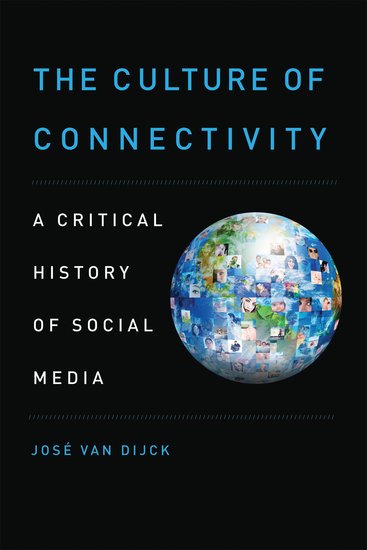
Social media and the culture of connectivity

By José van Dijck
In 2006, there appeared to be a remarkable consensus among Internet gurus, activists, bloggers, and academics about the promise of Web 2.0 that users would attain more power than they ever had in the era of mass media. Rapidly growing platforms like Facebook (2004), YouTube (2005), and Twitter (2006) facilitated users’ desire to make connections and exchange self-generated content.

Read More

Images of Ancient Nubia

For most of the modern world, ancient Nubia seems an unknown and enigmatic land. Only a handful of archaeologists have studied its history or unearthed the Nubian cities, temples, and cemeteries that once dotted the landscape of southern Egypt and northern Sudan. Nubia’s remote setting in the midst of an inhospitable desert, with access by river blocked by impassable rapids, has lent it not only an air of mystery, but also isolated it from exploration.

Read More
Book thumbnail image

Do people tend to live within their own ethnic groups?

By Maisy Wong
There are many policies around the world designed to encourage ethnic desegregation in housing markets. In Chicago, the Gautreaux Project (the predecessor of the Moving To Opportunity program) offered rent subsidies to African American residents of public housing who wanted to move to desegregated areas. Germany, the United Kingdom, and Netherlands, impose strict restrictions on where refugee immigrants can settle. Many countries also have “integration maintenance programs” or “neighborhood stabilization programs” to encourage desegregation. These policies are often controversial as they are alleged to favor some ethnic groups at the expense of others. Regardless of the motivation behind these policies, knowing the welfare effects is important because these desegregation policies affect the location choices of many individuals.

Read More
Book thumbnail image

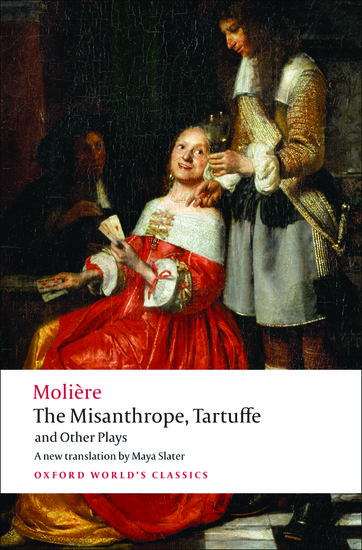
The tragic death of an actor

By Maya Slater
The farce is at its height: the old clown in the armchair is surrounded by whirling figures in outlandish doctors’ costumes, welcoming him into their brotherhood with a mock initiation ceremony. He takes the Latin oath: ‘Juro’, falters. His face crumples. The audience gasps – is something wrong? But the clown is grinning now, all is well, the dancing grows frenzied, the play rushes on to its end. Not till the next day will the audience find out what happened afterwards. They carried the clown off the stage in his chair, and rushed him home. He was coughing blood, dying. He asked for his wife, and for a priest to confess him. They failed to arrive before he died.

Read More
Book thumbnail image

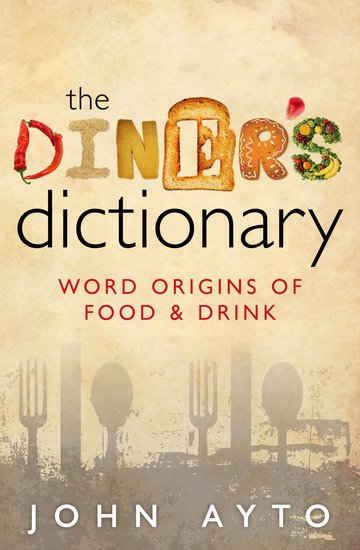
Quiz on the word origins of food and drink

Did you know that ‘croissant’ literally means ‘crescent’ or that oranges are native to China? Do you realize that the word ‘pie’ has been around for seven hundred years in English or that ‘toast’ comes from the Latin word for ‘scorch’? John Ayto explores the word origins of food and drink in The Diner’s Dictionary. We’ve made a little quiz based on the book. Are you hungry for it?

Read More
Book thumbnail image

Appreciating the perspective of Rastafari

Recently, I was discussing my academic interest with an acquaintance from my elementary school days. On revealing that I have researched and written about the Rastafarian movement, I was greeted with a look of incredulity. He followed this look with a question: “How has Rastafari assisted anyone to progress in life?”

Read More
Book thumbnail image

In conversation with Sally Dunkley

How can modern singers recreate Renaissance music? The Musica Dei donum series by Oxford University Press explores lesser known works of the Renaissance period. Early music specialists and series editors Sally Dunkley and Francis Steele have gone back to the original manuscripts to create authentic editions in a practical format for the 21st century singer.

Read More
Book thumbnail image

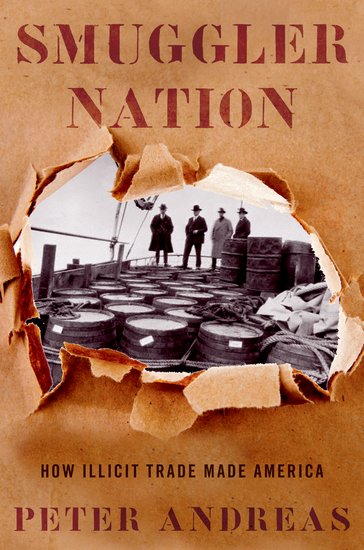
A history of smuggling in America

Today America is the world’s leading anti-smuggling crusader. While honorable, that title is also an ironic one when you consider America’s very close history of… smuggling. Our illicit imports have ranged from West Indies molasses and Dutch gunpowder in the 18th century, to British industrial technologies and African slaves in the 19th century, to French condoms and Canadian booze in the early 20th century, to Mexican workers and Colombian cocaine in the modern era. Simply put, America was built by smugglers.

Read More

Wrenching an etymology out of a monkey

By Anatoly Liberman
Primates have given Germanic language historians great trouble. In the most recent dictionary of German etymology (Kluge-Seebold), the entry Affe “ape” is one of the most detailed. In the revised version of the OED, monkey is also discussed at a length, otherwise rare in this online edition. Despite the multitude of hypotheses, the sought-for solution is not in view.

Read More
Book thumbnail image

What happens when Walmart comes to Nicaragua?

By Hope Michelson
Walmart now has stores in more than fifteen developing countries in Central and South America, Asia and Africa. A glimpse at the scale of operations: Nicaragua, with a population of approximately six million, currently has 78 Walmart retail outlets with more on the way. That’s one store for every 75,000 Nicaraguans; in the United States there’s a Walmart store for every 69,000 people.

Read More
Book thumbnail image

Checking in on Martin Luther King, Jr.’s dream, with data

By Sydney Beveridge
Martin Luther King, Jr. was the legendary civil rights leader whose strong calls to end racial segregation and discrimination were central to many of the victories of the Civil Rights movement. Every January, the United States celebrates Martin Luther King Jr. Day to honor the activist who made so many strides towards equality.

Read More
Book thumbnail image

Depression in old age

By Siegfried Weyerer
Depression in old age occurs frequently, places a severe burden on patients and relatives, and increases the utilization of medical services and health care costs. Although the association between age and depression has received considerable attention, very little is known about the incidence of depression among those 75 years of age and older.

Read More