Oxford University Press's
Academic Insights for the Thinking World

  • Arts & Humanities

Book thumbnail image

The changing face of opera

Outreach and innovation are two buzzwords that pop up again and again in relation to established “classical” music institutions such as symphony orchestras and opera companies. In an effort to build younger audiences, many of these institutions have introduced new programs that attempt to do away with the of the concert-going experience, such as expensive tickets or the need for a certain type of attire, that might discourage younger or less experienced listeners from attending.

Read More
Book thumbnail image

Reveries of a solitary fell runner

By Matthew Flinders
New Year is – or so I am told – a time to reflect upon the past and to consider the future. Put slightly differently, it is a time to think. Is it possible, however, that we may have lost – both individually and collectively – our capacity to think in a manner that reaches beyond those day-to-day tasks that command our attention?

Read More
Book thumbnail image

On music and mentorship

By Trevor Wiggins
As part of my freelance existence, I mentor a number of musically gifted teenagers. They operate in a varied and difficult-to-negotiate world, especially if they possess a great talent but are not in a highly protected ‘hothouse’ environment. As musicians, they are expected to behave with total professionalism, changing from kids having fun on a beach to soloing in front of 10,000 people in a few minutes. (I have seen them do just that on many occasions.)

Read More
Book thumbnail image

Holy Court of Owls, Batman!

By Mark Peters
My name is Mark Peters, and I am a Batman-aholic. I blame Christopher Nolan. Between The Dark Knight and The Dark Knight Rises, I felt an insatiable thirst for more Batman than Mr. Nolan was providing. In my desperation, I turned to a childhood addiction: comic books.

Read More
Book thumbnail image

Downton’s Secrets

By Deborah Cohen
Not long now, Downton fans. The beribboned third season wafts ashore in America today, though if the students I teach are any indication, the younger set (fervent Occupiers, some of them — savor the irony!) have already partaken via illegal means.

Read More
Book thumbnail image

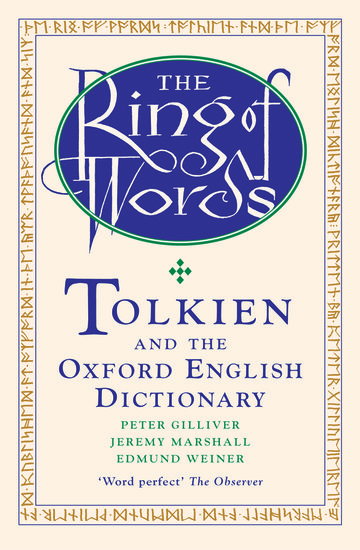
A definition of ‘hobbit’ for the OED

In a hole in the ground there lived a hobbit… What’s a hobbit and how did J.R.R. Tolkien come by this word? Was it invented, adapted, or stolen? To celebrate the release of The Hobbit film and renewed interest in J.R.R Tolkien’s work, we’ve excerpted this passage from The Ring of Words: Tolkien and the Oxford English Dictionary by Peter Gilliver, Jeremy Marshall, and Edmund Weiner.

Read More
Book thumbnail image

The Dirty Dozens

English has two great rhyming slanguages, cockney rhyming slang and the dozens, the African American insult game. We’ll leave the parsing of cockney phrases for now and examine the dirty, bawdy, and wonderful world of verbal street duels. While its origins lie in “yo’ mama” jokes, this is language meant for music, as rap and hip-hop today can attest. Here’s a taste with an excerpt from Elijah Wald’s The Dozens: A History of Rap’s Mama.

Read More
Book thumbnail image

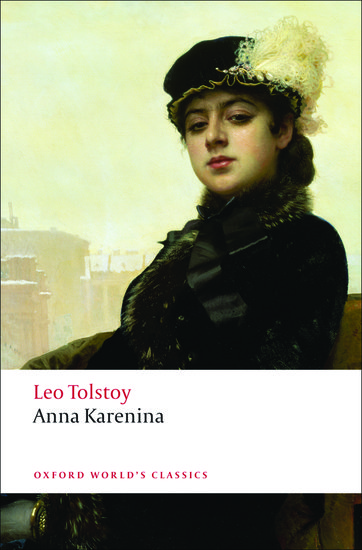
Love and appetite in Anna Karenina

A timely reminder to act while you still can for New Year’s Eve… A new film adaptation of Anna Karenina, starring Keira Knightly and directed by Joe Wright, has opened worldwide, so we wanted to put it to the test. How faithful is the script to the novel? We’ve paired a scene from the film with an excerpt of the work below. One of the greatest novels ever written, Anna Karenina sets the impossible and destructive triangle of Anna, her husband Karenin, and her lover Vronsky against the marriage of Levin and Kitty, thus illuminating the most important questions that face humanity.

Read More
Book thumbnail image

Music: a proxy language for autistic children

I spend around 12 hours a week – every week – sharing thoughts, feelings, new ideas, reminiscences and even jokes with some very special children who have extraordinary musical talents, and many of whom are severely autistic.

Read More

Gerard Wolfe at the Tenement Museum

Thirty years after the first edition was published, Synagogues of New York’s Lower East Side: A Retrospective and Contemporary View, Second Edition (Fordham University Press) was released earlier this year. The author Gerard Wolfe shows how the Jewish community took root on the Lower East Side of Manhattan in the late 19th and early 20th century by focusing on these beautiful buildings and houses of worship.

Read More
Book thumbnail image

Romanticism: a legacy

By Michael Ferber
The Very Short Introductions are indeed very short, so I had to cut a chapter out of my volume that would have discussed the aftermath or legacy of Romanticism today, two hundred years after Romanticism’s days of glory. In that chapter I would have pointed out the obvious fact that those who still love poetry look at the Romantic era as poetry’s high point in every European country. Think of Wordsworth, Keats, Shelley, Pushkin, Mickiewicz, Leopardi, Lamartine, Hugo, and Nerval. Those who still love “classical” music fill the concert halls to listen to Beethoven, Schumann, Chopin, Berlioz, and Wagner; and those who still love traditional painting flock to look at Constable, Turner, Friedrich, and Delacroix. These poets and artists are still “alive”: their works are central to the culture from which millions of people still draw nourishment. I can scarcely imagine how miserable I would feel if I knew I could never again listen to Beethoven or read a poem by Keats.

Read More
Book thumbnail image

Oxford Music in 2012

2012 has been an eventful year for the OUP music teams. We’re in reflective mood as the year draws to a close, so we thought we’d share our highlights of 2012.

Read More
Book thumbnail image

Charting success: The Beatles, December 1962

The Beatles were unlikely successes on London’s record charts in December 1962. Northerners with schoolboy haircuts who wrote and performed their own songs, their first record “Love Me Do” had risen slowly up British charts, despite lack of significant promotion by their publisher and record company, and without an appearance on national television.

Read More
Book thumbnail image

Selling the Beatles, 1962

By Gordon R. Thompson
As a regional businessman and a fledgling band manager, Brian Epstein presumed that the Beatles’ record company (EMI’s Parlophone) and Lennon and McCartney’s publisher (Ardmore and Beechwood) would support the record. This presumption would prove false, however, and Epstein would need to draw on all of the resources he could spare if he were to make the disc a success.

Read More
Book thumbnail image

The women of Les Miz

On Christmas Day, the eagerly-awaited movie musical Les Misérables — “A Musical Phenomenon” the advertisement promises — will open across the United States. If it makes half the splash that its Broadway source did in 1987, we’re in for a long ride. The musical ran for 6680 performances, and won Tony awards for Best Musical, Best Book, and Best Score. It closed and then re-opened for another 463-performance run in 2006. It continues to tour the US.

Read More
Book thumbnail image

Football, festivity, and music

Sports fans eagerly anticipate television broadcasts of their favorite sports, whether it is baseball, basketball, soccer, hockey, boxing, golf, auto racing, or any of the other events aired on the tube. In the USA, the biggest television sports event is undoubtedly (American) professional football: the National Football League. In 2011, NBC’s “Sunday Night Football” was the highest-rated program on American TV.

Read More