Oxford University Press's
Academic Insights for the Thinking World

Book thumbnail image

Depression in old age

By Siegfried Weyerer
Depression in old age occurs frequently, places a severe burden on patients and relatives, and increases the utilization of medical services and health care costs. Although the association between age and depression has received considerable attention, very little is known about the incidence of depression among those 75 years of age and older.
Read More
Book thumbnail image

John Ruskin’s childhood home

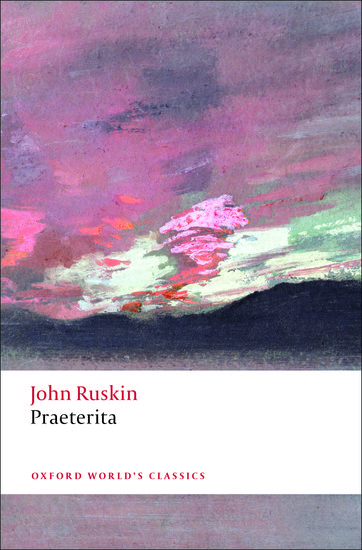
Praeterita, John Ruskin’s incomplete autobiography, was written between periods of serious mental illness at the end of his career, and is an eloquent analysis of the guiding powers of his life, both public and private. An elegy for lost places and people, it recounts Ruskin’s intense childhood, his time as an undergraduate at Oxford, and his journeys across France, the Alps, and northern Italy. In the following excerpt, Ruskin remembers his childhood home.

Read More
Book thumbnail image

Chaucer in the House of Fame

By Jonathan Dent
By the time Geoffrey Chaucer died in 1400, he had been living for almost a year in obscurity in a house in the precincts of Westminster Abbey, and on his death he was buried in a modest grave in the church’s south transept. The poet’s last few months had not been his happiest. At the close of a decade in which he had gradually retired from the various administrative offices he had occupied under Edward III and Richard II, Richard’s deposition by Henry Bolingbroke in September 1399 had turned Chaucer’s world upside down.

Read More
Book thumbnail image

Jason Steinhauer, the Kluge Center, and opportunities for oral historians

By Troy Reeves
In our second blog post of 2013, I, Troy Reeves, Managing Editor, have taken over, while our social media coordinator and blog contributor Caitlin Tyler-Richards get some well deserved time away from the office. This guarantees the reader of two things: (1) This post will be wordy, nearing on inscrutable; and (2) far less funny.

Read More
Book thumbnail image

Thought Control

Tim Bayne
As a teacher I have sometimes offered to give a million pounds to any student who can form any one of the following beliefs—that they can fly; that they were born on the moon; or that sheep are carnivorous. Needless to say, I have never had to pay up. The Queen in Lewis Carroll’s Through the Looking Glass might have been able to believe six impossible things before breakfast, but that is a feat few of us can match. In fact, the formation of belief doesn’t seem to be under our voluntary control at all. Coming to adopt a belief seems to be more like digesting or metabolizing than looking or speaking—it seems to be something that happens to one rather than something that one does.

Read More
Book thumbnail image

C is for Coloratura

Marilyn Horne, world-renowned opera singer and recitalist, celebrated her 84th birthday on Wednesday. To acknowledge her work, not only as one of the finest singers in the world but as a mentor for young artists, I give you one of my favorite performances of hers:

Read More

Five facts about the esophagus

We are pleased to announce that the Mayo Clinic Scientific Press suite of publications is now available on Oxford Medicine Online. To highlight the great resources, we’ve got some curious facts about the oesophagus from Stephen Hauser’s Mayo Clinic Gastroenterology and Hepatology Board Review.

Read More
Book thumbnail image

Examining photographs of Einstein’s brain is not phrenology!

By Dean Falk, Fred Lepore, and Adrianne Noe
Imagine that you return from work to find that a thief has broken into your home. The police arrive and ask if they may dust for finger and palm prints. Which would you do? (A) Refuse permission because palm reading is an antiquated pseudoscience or (B) give permission because forensic dermatoglyphics is sometimes useful for identifying culprits. A similar question may be asked about the photographs of the external surface of Albert Einstein’s brain that recently emerged after being lost to science for over half a century.

Read More

Drinking vessels: ‘goblet’

By Anatoly Liberman
One more drinking vessel, and I’ll stop. Strangely, here we have another synonym for bumper, and it is again an old word of unknown origin. In English, goblet turned up in the fourteenth century, but its uninterrupted recorded history began about a hundred years later. Many names of vials, mugs, and beverages probably originated in the language of drinkers, pub owners, and glass manufacturers. They were slang, and we have little chance of guessing who and in what circumstances coined them.

Read More
Book thumbnail image

The two funerals of Thomas Hardy

By Phillip Mallett
At 2.00 pm on Monday 16 January 1928, there took place simultaneously the two funerals of Thomas Hardy, O.M., poet and novelist. His brother Henry and sister Kate, and his second wife Florence, had supposed that he would be buried in Stinsford, close to his parents, and beneath the tombstone he had himself designed for his first wife, Emma, leaving space for his own name to be added. But within hours of his death on 11 January, Sydney Cockerell and James Barrie had established themselves at his home at Max Gate, and determined that he should be laid in Poets’ Corner in Westminster Abbey.

Read More
Book thumbnail image

Changing the conversation about the motives of our political opponents

By E. Tory Higgins
“Our country is divided.” “Congress is broken.” “Our politics are polarized.” Most Americans believe there is less political co-operation and compromise than there used to be. And we know who is to blame for this situation—it’s our political opponents. Democrats know that Republicans are to blame, and Republicans know that Democrats are to blame.

Read More
Book thumbnail image

Memories of undergraduate mathematics

By Lara Alcock
Two contrasting experiences stick in mind from my first year at university. First, I spent a lot of time in lectures that I did not understand. I don’t mean lectures in which I got the general gist but didn’t quite follow the technical details. I mean lectures in which I understood not one thing from the beginning to the end. I still went to all the lectures and wrote everything down – I was a dutiful sort of student – but this was hardly the ideal learning experience…

Read More
Book thumbnail image

Douglas Christie on contemplative ecology

There is a deep and pervasive hunger for a less fragmented and more integrated way of understanding and inhabiting the world. What must change if we are to live in a sustainable relationship with other organisms? What role do our moral and spiritual values play in responding to the ecological crisis? We sat down with Douglas E. Christie, author of The Blue Sapphire of the Mind, to discuss a contemplative approach to ecological thought and practice that can help restore our sense of the earth as a sacred place.

Read More
Book thumbnail image

Ancient manuscripts and modern politics

By Louis René Beres
Oddly, perhaps, there are striking similarities between Western Epicureanism and Eastern Buddhism. Even a cursory glance at Lucretius, On The Nature of Things, reveals a characteristically “Buddhist” position on human oneness and human transience. Greek and Roman Stoicism, too, share this animating concept, a revealing vision of both interpersonal connectedness and civilizational impermanence.

Read More
Book thumbnail image

The music industry, change, and copyright

What happens when the creative world, technology, and the law combine? Look to the introduction of radio in the 1920s and a long-forgotten composer named Ira B. Arnstein. The long and tortured career of Arnstein, “the unrivaled king of copyright infringement plaintiffs,” opens a curious window into the evolution of copyright law in the United States and the balance of power in Tin Pan Alley.

Read More