Oxford University Press's
Academic Insights for the Thinking World

Book thumbnail image

Jim Downs on the Emancipation Proclamation

The editors of the Oxford African American Studies Center spoke to Professor Jim Downs, author of Sick From Freedom: African-American Illness and Suffering during the Civil War and Reconstruction, about the legacy of the Emancipation Proclamation 150 years after it was first issued. We discuss the health crisis that affected so many freedpeople after emancipation, current views of the Emancipation Proclamation, the reception of Professor Downs’s book, and the insights the book can give us into the public health crises of today.
Read More
Book thumbnail image

The future of information technologies in the legal world

By Richard Susskind
The uncharitable might say that I write the same book every four years or so. Some critics certainly accuse me of having said the same thing for many years. I don’t disagree. Since the early 80s, my enduring interest has been in the ways in which technology can modernize and improve the work of the legal profession and the courts. My main underpinning conviction has indeed not changed – that legal work is document and information intensive and that a whole host of information technologies can and should streamline and sometimes even overhaul traditional methods of practicing law and administering justice.

Read More
Book thumbnail image

HIV/AIDS testing: suspicion and mistrust among Baby Boomers

By Chandra Ford
February 7th will mark the thirteenth National Black HIV/AIDS Awareness Day. Despite the fact that blacks make up only 14% of the US population, the CDC reports that blacks accounted for 44% of all newly reported HIV infections in 2009, the HIV infection rate among Latinos was nearly three times as high as that of whites, and 1 in 4 persons living with HIV/AIDS in the USA is an older adult (50+ years old).

Read More
Book thumbnail image

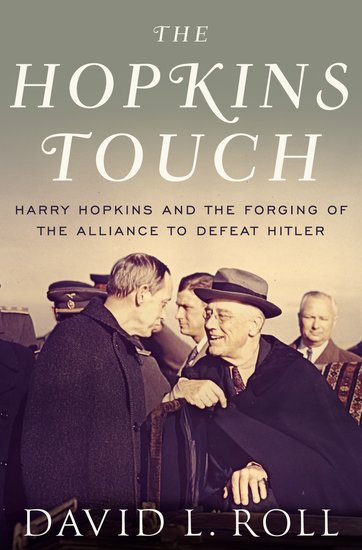
Who was Harry Hopkins?

By David Roll
He was a spectral figure in the Franklin Roosevelt administration. Slightly sinister. A ramshackle character, but boyishly attractive. Gaunt, pauper-thin. Full of nervous energy, fueled by caffeine and Lucky Strikes. Hopkins was an experienced social worker, an in-your-face New Deal reformer. Yet he sought the company of the rich and well born. He was a gambler, a bettor on horses, cards, and the time of day.

Read More
Book thumbnail image

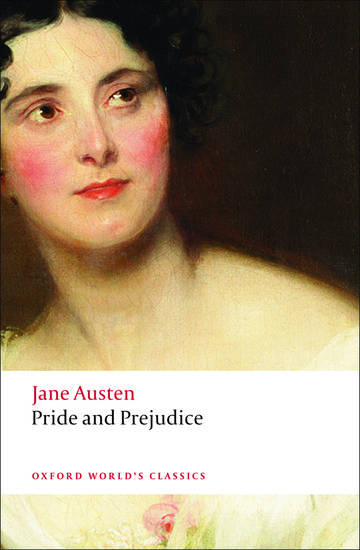
How ardently I admire and love you…

On 28 January 1813, Pride and Prejudice by Jane Austen was published. Originally titled ‘First Impressions’, Austen was forced to re-title it with a phrase from Frances Burney’s Cecilia after the publication of Margaret Holford’s First Impressions. We’ve paired an extract from the book with a scene from the most recent dramatization to see how Austen’s words have survived the centuries.

Read More
Book thumbnail image

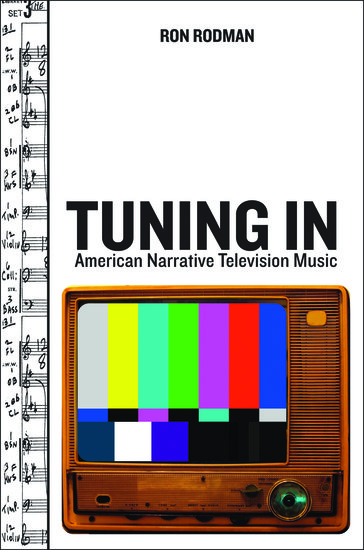
The Subject is Jazz

The New Year is a time of looking forward to the future and back to the past. Looking back, last year witnessed the death of Dave Brubeck, one of the all time great jazz musicians. Brubeck became famous through his live performances and his recordings, especially the seminal Time Out album released in 1958. But he also became famous through his many appearances on American and international television.

Read More
Book thumbnail image

Happy Birthday, Pride and Prejudice! Would you find me a date?

By Sarah Raff
Two hundred years after the initial publication of Pride and Prejudice, commodities marketed to Janeites overwhelmingly emphasize Jane Austen’s powers as an advisor. Shoppers can choose among volumes called Finding Mr. Darcy: Jane Austen’s Rules for Love or Dating Mr. Darcy: The Smart Girl’s Guide to Sensible Romance; The Jane Austen Guide to Life, Happily Ever After, Modern Life’s Dilemmas, Dating, Good Manners, and coming soon, Thrift.

Read More
Book thumbnail image

The global data privacy power struggle

By Christopher Kuner
Tension between different regulatory systems has long existed in certain areas (think of the disagreements between EU and US competition regulators regarding the aborted GE-Honeywell merger in the early 2000s). A similar power struggle is currently underway between different legal regimes regulating the collection, processing, and transfer of personal data.

Read More
Book thumbnail image

Why are married men working so much?

By John Knowles
If you become wealthier tomorrow, say through winning the lottery, would you spend more or less working than you do now? Standard economic models predict you would work less. In fact a substantial segment of American society has indeed become wealthier over the last 40 years — married men.

Read More
Book thumbnail image

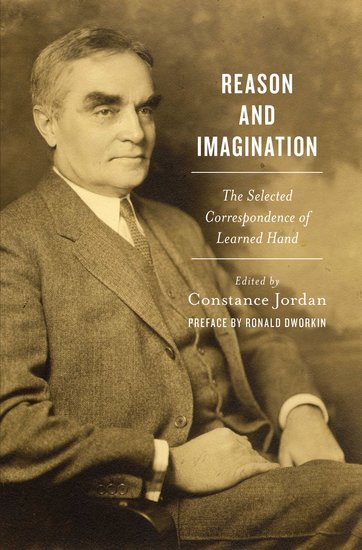
A letter from Harry Truman to Judge Learned Hand

Learned Hand was born on this day in 1872. In a letter dated 15 May 1951, Judge Learned Hand wrote President Harry S. Truman to declare his intention to retire from “regular active service.” President Truman responded to Hand’s news with a letter praising his service to the country. These letters are excerpted from Reason and Imagination: The Selected Letters of Learned Hand, edited by Constance Jordan.

Read More
Book thumbnail image

Obama’s Second Inaugural Address

By Elvin Lim
Conservatives hate it; liberals love it. His Second Inaugural Address evinces Barack Obama coming into his own, projecting himself unvarnished and real before the world. No more elections for him, so also less politics. He is number 17 in the most exclusive club in America — presidents who get to serve a second term. Yes, there’s still the bonus of a legacy. But the legacy-desiring second-term president would just sit back and do no harm, rather than put himself out there for vociferous battles to come.

Read More
Book thumbnail image

The curious appeal of Alice

By Peter Hunt
The recent appearance of Fifty Shades of Alice, which is (I am told) about a girl who follows a vibrating white rabbit down a hole, made me reflect, not for the first time, that children’s literature is full of mysteries.

Read More
Book thumbnail image

‘Ebonics’ in flux

By Tim Allen
On this day forty years ago, the African American psychologist Robert Williams coined the term “Ebonics” during an education conference held at Washington University in Saint Louis, Missouri. At the time, his audience was receptive to, even enthusiastic about, the word. But invoke the word “Ebonics” today and you’ll have no trouble raising the hackles of educators, journalists, linguists, and anyone else who might have an opinion about how people speak.

Read More
Book thumbnail image

The Playboy Riots of 1907

By Ann Saddlemyer
There had been rumours for months. When Dublin’s Abbey Theatre announced that John Millington Synge’s new play The Playboy of the Western World would be produced on Saturday, 26 January 1907, all were on alert. Controversy had followed Synge since the production of his first Wicklow play, The Shadow of the Glen, in which a bold, young and lonely woman leaves a loveless May/December marriage to go off with a fine-talking Tramp who rhapsodizes over the freedom of the roads. Irish women wouldn’t do that!

Read More
Book thumbnail image

A Grove Music Mountweazel

By Anna-Lise Santella
On my desk sits an enormous, overstuffed black binder labeled in large block letters “BIBLE”. This is the Grove Music style sheet that was handed to me on my first day on the job, the same one — with a few more recent amendments — assembled by Stanley Sadie and his editorial staff for the first edition of the New Grove Dictionary of Music and Musicians published in 1980.

Read More
Book thumbnail image

A fresh look at the work of Robert Burns

By Robert P. Irvine
As we sit down to enjoy our Burns Suppers on Friday, it is worth pausing to ask ourselves just how well we know some of the songs and poems that are a feature of the occasion. Editing and presenting a selection of his texts in the order in which they were published, taking as my copy-text the version of the poem or song published on that occasion, has given me many new insights into the original contexts of Burns’s work.

Read More