Oxford University Press's
Academic Insights for the Thinking World

Book thumbnail image

Public International Law Quiz

In the last fifty years, public international law has undergone a radical transformation, moving from a discipline which ‘the great majority of lawyers of all states [knew] little or nothing’ about (Oppenheim) to the fastest growing legal discipline. To celebrate the recent update to the Max Planck Encyclopedia of International Law, we present this quiz.

Read More
Book thumbnail image

World Cancer Day 2013: The Best of British

There is a tendency to point out deficiencies when it comes to cancer campaigns and treatment, but I think it is time to commend the British campaigns and innovations in treatment. They have proven to be some of the best in the world and have had a major impact in the fight against cancer.

Read More
Book thumbnail image

Five facts about Thomas Bodley

This week marks the 400th anniversary of the death of Sir Thomas Bodley, diplomat and founder of the Bodleian Library. After retiring from public life in 1597, Bodley decided to “set up my staff at the library door in Oxon; being thoroughly persuaded, that in my solitude, and surcease from the Commonwealth affairs, I could not busy myself to better purpose, than by reducing that place (which then in every part lay ruined and waste) to the public use of students.”

Read More
Book thumbnail image

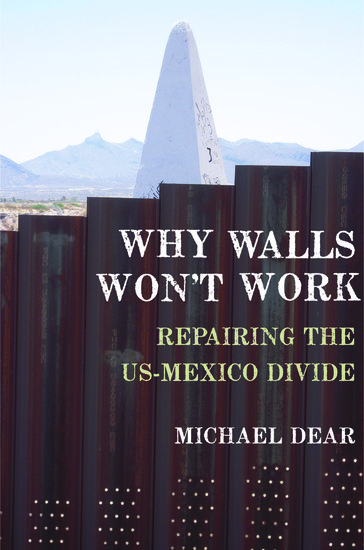
“Third Nation” along the US-Mexico border

By Michael Dear
Not long ago, I passed a roadside sign in New Mexico which read: “Es una frontera, no una barrera / It’s a border, not a barrier.” This got me thinking about the nature of the international boundary line separating the US from Mexico. The sign’s message seemed accurate, but what exactly did it mean?

Read More
Book thumbnail image

Burrowing into Punxsutawney Phil’s hometown data

Every February second, people across Pennsylvania and the world look to a famous rodent to answer the question—when will spring come? For over 120 years, Punxsutawney Phil Soweby (Punxsutawney Phil for short), has offered his predictions, based on whether he sees his shadow (more winter) or not (an early spring).

Read More
Book thumbnail image

James Joyce and birthdays

By Finn Fordham
Joyce was obsessed with birthdays. Today, February 2nd, is his. An emerging secular saint’s day, it will be remembered and alluded to round the world – especially in Dublin – in the corners of newspapers and pubs, in blogs (like this one), tweets and the odd talk. Born in 1882, Joyce’s cake – if he could have one, let alone eat it – would have a hundred and thirty one candles; a hundred years ago, therefore, he would have been celebrating his 31st birthday. The image of candles is suitable, since Joyce’s birthday fell on ‘Candlemas’, a holy day which commemorates Christ’s first appearance in a synagogue with his mother, forty days after his birth, in part by the lighting of candles.

Read More
Book thumbnail image

Friday procrastination: mysterious jetsetting edition

Friday procrastination is back! Apologies for the absence loyal followers but this blog editor has been jetsetting, mysterious, and then trapped in an email prison as a result of the mysterious jetsetting. What did I miss? Well here are some things you may have missed:

Read More
Book thumbnail image

Oral historians and online spaces

By Caitlin Tyler-Richards
In November 2012, a thread appeared on the H-Net Oral history listserv with the enticing subject line “experimental uses of oral history.” Amid assorted student projects and artistic explorations, two projects in particular caught my eye: the VOCES Oral History Project and the Freedom Mosaic. As we work towards our upcoming special issue on Oral History in the Digital Age, I’ve been mulling over oral historians negotiate online spaces.

Read More
Book thumbnail image

Collective redress – another false dawn?

By Professor John Sorabji (Hon)
Collective action reform in England and Wales was first seriously mooted twenty five years ago. From the perspective of proponents of the opt-out form of collective action (i.e., a form of collective proceedings where all the potential claimants are automatically represented in the proceedings unless they explicitly choose not to be), nothing of substance has been achieved since then.

Read More
Book thumbnail image

A Very Short Film competition

By Chloe Foster
After more than three months of students carefully planning and creating their entries, the Very Short Film competition has closed and the longlisted submissions have been announced.

Read More
Book thumbnail image

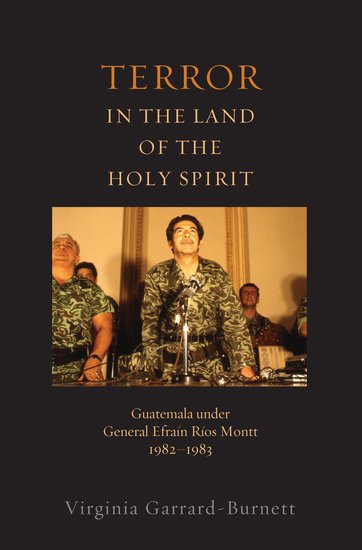
Ríos Montt to face genocide trial in Guatemala

By Virginia Garrard-Burnett
After the judge’s ruling Monday in Guatemala City, the crowd outside erupted into cheers and set off fireworks. The unthinkable had happened: Judge Miguel Ángel Gálvez had cleared the way for retired General Efraín Ríos Montt, who between 1982 and 1983 had overseen the darkest years of that nation’s 36-year long armed conflict, would stand trial for genocide.

Read More
Book thumbnail image

Understanding and respecting markets

By Michael Blair QC, George Walker, and Stuart Willey
Almost every day has brought a fresh story about investment markets, their strengths and weaknesses. Misreporting of data for calculation of LIBOR, money laundering with a whiff of Central American drugs trading, costly malfunctioning of programme trading mechanisms which brought the trading company to its knees, reputational damage inflicted by as yet unsubstantiated accusations of illicit financing in breach of international sanctions… the list goes on and on.

Read More
Book thumbnail image

To memorize or not to memorize

I have a confession to make: I have a terrible memory. Well, for some things, anyway. I can name at least three movies and TV shows that Mary McDonnell has been in off the top of my head (Evidence of Blood, Donnie Darko, Battlestar Galactica), and rattle off the names of the seven Harry Potter books, but you take away that Beethoven piano score that I’ve been playing from since I was 14, and my fingers freeze on the keyboard.

Read More
Book thumbnail image

What is a false allegation of rape?

By Candida Saunders
What is a false allegation of rape? At first, this might appear to be a daft question. Reflecting the general tendency to think of the truth or otherwise of allegations in reductive terms of being either true or false, the meaning of “false allegation” is commonly taken to be self-evident. A false allegation of rape is an allegation that is false; the rape alleged did not, in fact, occur. In the abstract, this seems a perfectly logical and sensible approach.

Read More
Book thumbnail image

The non-interventionist moment

By Andrew J. Polsky
The signs are clear. President Barack Obama has nominated two leading skeptics of American military intervention for the most important national security cabinet posts. Meeting with Afghan President Hamid Karzai, who would prefer a substantial American residual presence after the last American combat troops have departed in 2014, Obama has signaled that he wants a more rapid transition out of an active combat role

Read More

Monthly etymology gleanings for January 2013, part 1

By Anatoly Liberman
Last time I was writing my monthly gleanings in anticipation of the New Year. January 1 came and went, but good memories of many things remain. I would like to begin this set with saying how pleased and touched I was by our correspondents’ appreciation of my work, by their words of encouragement, and by their promise to go on reading the blog in the future. Writing weekly posts is a great pleasure.

Read More