Oxford University Press's
Academic Insights for the Thinking World

Book thumbnail image

March Madness: Atlas Edition

On 19 March 2013, 64 college basketball teams will meet on the court for the battle of the year. In the United States, college basketball season ends when elite teams compete in March Madness over the course of four weeks. Teams compete based on their placement in a regional bracket, and either go home or move forward after a single game. Four teams will make the “Final Four” on 6 April, and on 8 April, the NCAA will have its college basketball champion.
Read More
Book thumbnail image

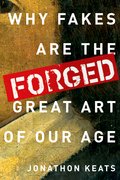
Can art forgers be artists too?

Art forgeries are often decried for crime, but could they be considered art? Many young artists learn to copy old master before refining their own work, and contemporary artists often play with ideas of authorship. So can an art forger be considered a legitimate artist? Do they want to make a statement? What motivates art forgers to commit forgery? We spoke with Jonathon Keats, author of Forged: Why Fakes are the Great Art of Our Age. – See more at: https://blog.oup.com/2013/03/art-forgers-artists/?preview=true&preview_id=36324&preview_nonce=600140b224#sthash.OZRHQ9Ow.dpuf

Read More
Book thumbnail image

A history of psycholinguistics in the pre-Chomskyan era

By Willem Levelt
How do we speak and how do we understand language? It is widely believed that the scientific study of these uniquely human abilities was launched during the 1950s with the advent of Noam Chomsky’s generative linguistics. True, modern psycholinguistics received a major impulse from this “cognitive revolution,” but the empirical study of how we speak and listen and how children acquire these amazing skills has its roots in the late 18th century

Read More
Book thumbnail image

The connection from physical to mental

By Robert Kirk
Physicalists like me think everything in the world is ultimately physical, and that the physical facts provide for all the facts, including consciousness. But how should we conceive of the link between physical and mental?

Read More
Book thumbnail image

Home clutter, confusion, and chaos

Spring cleaning is just around the corner. In this excerpt from Pursuing the Good Life (originally published on Psychology Today), the late Christopher Peterson reflects on his own clutter and the detrimental effects of clutter on people.

Read More
Book thumbnail image

Mothering Sunday and Mother’s Day

This Sunday, if you give (or receive) cards, flowers, and gifts for Mothering Sunday, spare a thought forConstance Adelaide Smith. In 1913 Constance read an article in a local newspaper which described plans to introduce to Britain an American ‘Mother’s Day’ celebration. The aim, as devised by the Philadelphian Anna Jarvis, was to establish a celebration to be held annually on the second Sunday in May

Read More
Book thumbnail image

Six facts about physiology

The Mayo Clinic Scientific Press suite of publications is now available on Oxford Medicine Online. To highlight some of the great resources, we’ve pulled together some interesting facts about physiology from James R. Munis’s Just Enough Physiology.

Read More
Book thumbnail image

Friday procrastination: Rain on the sun edition

OUP author Jason Mittell is understandably proud of his student’s excellent video. March Madness begins. We’ll be starting our own on the OUPblog and OxfordWords, but to start one for the papacy and of course Tournament of Books. American Revolutionary art Internet-ed. And more links for your reading pleasure…

Read More
Book thumbnail image

Why are Mexicans leaving farm work, and what does this mean for US farmers?

By J. Edward Taylor and Diane Charlton
Agriculture in North America traditionally has had its comparative advantage in having access to abundant low-skilled labor from Mexico. Around 70% of the United States hired farm workforce is Mexico-born, according to the National Agricultural Worker Survey (NAWS). Fruit, vegetable, and horticultural farms in the US have enjoyed an extended period of farm labor abundance with stable or decreasing real wages.

Read More
Book thumbnail image

Can women fight?

By Anthony King
On 24 January 2013, Leon Panetta, the US Secretary of State for Defence, made an historic announcement: from 2016, combat roles would be open to female service personnel. For the first time, women would be allowed to serve in the infantry. Applauded in liberal quarters, the decision was widely seen as unproblematic since it merely ratified a de facto reality.

Read More
Book thumbnail image

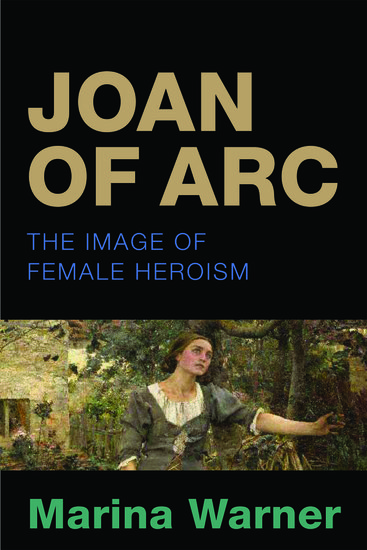
Mary and Joan on International Women’s Day

International Women’s Day has grown since the 1900s to become a global occasion to inspire women and celebrate achievements. Perhaps two of the most inspirational female figures from history are the Virgin Mary and Joan of Arc. We spoke with Marina Warner, author of the seminal titles, Joan of Arc: The Image of Female Heroism and Alone of All Her Sex: The Myth and the Cult of the Virgin Mary, about these women and their historical and personal impact.

Read More
Book thumbnail image

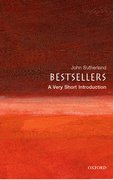
Bestsellers: a snapshot of an age

To celebrate World Book Day this week, we take a look at what John Sutherland thinks about why we read bestsellers and what they say about the age in which they were published, in his Very Short Introduction to Bestsellers.

Read More
Book thumbnail image

P.A.J. Waddington on jury service

By Professor J. Waddington
Fortunately, I have escaped the obligation of performing jury service, but I know many who have been less fortunate. The stories they tell of their experience hardly fosters confidence in this institution that enjoys such a position of unquestioned pre-eminence in the Common Law criminal trial. They tell of ignorant, utterly disengaged, deeply prejudiced people, often more anxious to escape the confines of the court and resume their lives, than committed to doing justice.

Read More
Book thumbnail image

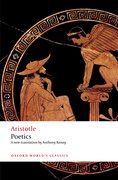
Controlling the fable-makers

Along with Plato, Aristotle (384–322 bc) was one of the two greatest philosophers of antiquity, and in the view of many he was the greatest philosopher of all time. His Poetics is the most influential book on poetry ever written and is a founding text of European aesthetics and literary criticism. We present a brief extract from Republic, Books Two and Three.

Read More
Book thumbnail image

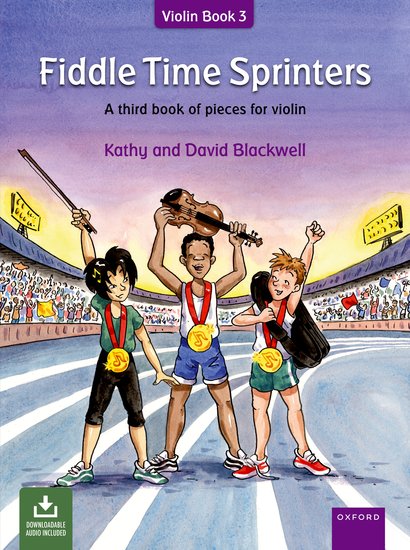
Diary of a string time teacher

By Kathy Blackwell
A friend once asked if I ever get bored teaching the violin and doing the same thing year after year. He was surprised when I said “It’s anything but dull and boring!” I have always enjoyed the unique character and style of each student, and it’s a privilege as a teacher to see them develop over the years.

Read More
Book thumbnail image

Descartes’ dogs

By Robert V. McNamee and Daniel Parker
It is well known in the history of psychology that Descartes was an early thinker on what we would now call classical conditioning or Pavlovian conditioning, which he referred to as “reflex”. However, an early epistolary reference seems generally to be missed: his letter to his friend Marin Mersenne, 18 March 1630.

Read More