Poetry of the Preamble
By Garrett Epps
Would it have made a difference to us, today, if the Preamble announced itself as the voice of the people of existing states, rather than (as it does) of “the people of the United States”?

Oxford University Press's
Academic Insights for the Thinking World
By Garrett Epps
Would it have made a difference to us, today, if the Preamble announced itself as the voice of the people of existing states, rather than (as it does) of “the people of the United States”?

In my last post I wrote about little known composer Sophie Elisabeth. Today’s subject, Francesca Caccini, is somewhat better known. The last decade or so has seen a renewed interest in her work.
By Elizabeth Wallin
With the new medical school term about to start, lots of fresh-faced medical students are about to hit the wards for the first time. Finding the right balance between lectures, bookwork and bedside experience is difficult, and different for everyone. Some learn best in the library, others in theatre, and others by sticking like glue to a qualified doctor.
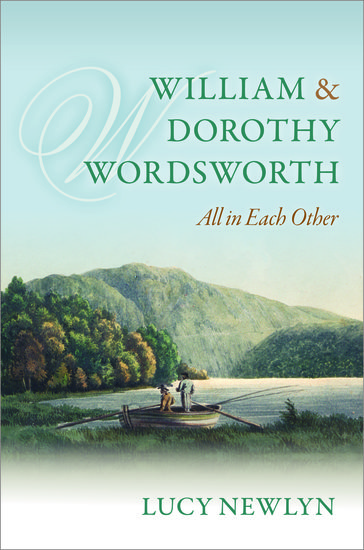
By Lucy Newlyn
Here is one of the poems Dorothy wrote from her sick room. Dated by her as 1836 (and copied out for the Wordsworths’ friend and neighbour Isabella Fenwick in 1839), it gives us some insight into her state of mind as she looked back on a crisis in 1832-3 when her life was in danger.
By Paul Jankowski
“And there, between them, spewing death, unearthly monsters.” To a Bavarian infantry officer on the Somme in the early morning hours of 15 September 1916, the rhomboid, tracked behemoths lurching at him amidst waves of attacking enemy infantry had no name.
This September marks the fifth anniversary of Lehman Brothers’ bankruptcy. While US markets have posted a stronger than expected year, full recovery has been slow since the “too big to fail” 2008 financial crisis. Robert W. Kolb takes a look back at Lehman Brothers’ decline in the following excerpt from The Financial Crisis of Our Time.
By John McWilliams
Cooper’s daunting, lifelong energies led him to venture down still other fictional paths, nominally imaginary but rendered realistic through trenchant social commentary. He experimented with unreliable first person narrative, with the biography of an inanimate object, with urban satire, with the beast fable (The Monikins), and with dystopian fiction (The Crater).
By Lewis L. Gould
Theodore Roosevelt became President of the United States upon the death of William McKinley in the early morning of 14 September 1901. An assassin had fatally wounded McKinley eight days earlier. Vice President Roosevelt took the presidential oath at a friend’s home in Buffalo, New York, hurried to Washington for a brief Cabinet meeting.
By Philip H. Pfatteicher
Throughout much of the Christian Church, 14 September is celebrated as a feast of the Holy Cross. By focusing on the visible cross, the Christian church is making a rich and manifold proclamation. Venantius Fortunatus (530-609) in his hymn “Sing my tongue, the glorious battle” reflects one aspect of devotion to the cross.

By Caitlin Tyler-Richards
In our first podcast of the season, managing editor Troy Reeves speaks with the newest addition to the Oral History Review (OHR) editorial staff, David J. Caruso. As you will learn, David wears a number of hats in the oral history community.

By Cherie Hackelberg
Without a doubt, attending society conferences is one of my favorite job responsibilities as a Marketing Manager for the Academic and Trade books division at Oxford. I typically spend the majority of my days marketing our books from my desk.
By Richard A. Baker
In a 1948 election contest to fill a US Senate seat, the wife of one of the candidates took a dim view of her husband’s opponent, Representative Margaret Chase Smith. Why, she wondered publicly, would the voters of Maine want to send “a woman to Washington when you can get a man?”
By Robert Eaglestone
So here’s the first thing about the books on the Booker Prize lists, both short and long: until the end of August, it was hard-to-impossible to get hold of most of them. Only one was in paperback in July (well done, Canongate). And while some were in very pricey hardback, several hadn’t even been published. This begs the question: who is the Booker Prize for?

By Kandice Rawlings
Summer is over, and it’s back-to-school season. Art students are heading back to their classrooms and studios, receiving a course of training that will help them become professional artists.

By Richard Bränström
Although there has been much progress in many European countries regarding social acceptance of LGBT individuals in recent decades; much discrimination, social injustice, and intolerance still exists with adverse consequences for both physical and mental health in these populations.
By Anatoly Liberman
Simpleton is an irritating word. At first sight, its origin contains no secrets: simple + ton. And that may be all there is to it despite the obscurity of –ton. We find this explanation in the OED and in the dictionaries dependent on it.