Oxford University Press's
Academic Insights for the Thinking World

May 2013

Book thumbnail image

The History of the World: Israel becomes a state

From the beginning of the Nazi persecution the numbers of Jews who wished to settle in Palestine rose. As the extermination policies began to unroll in the war years, they made nonsense of British attempts to restrict immigration, which was the side of British policy unacceptable to the Jews; the other side – the partitioning of Palestine – was rejected by the Arabs.

Read More
Book thumbnail image

Baseball scoring

What is it about the sounds of baseball that make them musical, and so easily romanticized? In Ken Burns’ documentary Baseball, George Plimpton says that “Baseball has these absolutely unique sounds. The sounds of spring and summer….The sound of the ball against the bat is absolutely extraordinary. I don’t know any American male that doesn’t hear that in the springtime and get called back to some moment in the past.” These sounds are especially vivid in a game that’s often so quiet.

Read More
Book thumbnail image

Insomnia in older adults

What keeps you up at night? Do the effects of sleep deprivation change with age? What are risks associated with insomnia in older adults? Mr. Christopher Kaufmann and Dr. Adam Spira join us to discuss their most recent research in The Journals of Gerontology Series A: Biological Sciences and Medical Sciences.

Read More
Book thumbnail image

100 years of psychopathology

By Paolo Fusar-Poli and Giovanni Stanghellini
In 1913, Allgemeine Psychopathologie (General Psychopathology) was published. A guide for young students, doctors and psychologists, it had been completed two years earlier by a 28-year-old German psychiatrist: Karl Jaspers. He aimed to overcome scientific reductionism and establish psychopathology as a new comprehensive science during a period of significant advances in neuroscience.

Read More
Book thumbnail image

Pornography, sperm competition, and behavioural ecology

By Michael N. Pham, William F. McKibbin, and Todd K. Shackelford
Like candy, pornography creates an adaptive mismatch. For a moment, try to see the world not from “human eyes” but from the eyes of an animal biologist. You might think that men’s enjoyment of pornography is bizarre: men are sexually aroused by the sight of ink that’s splattered on magazine pages, or computer pixels that display light. Nobody would argue that men evolved to have sex with magazines or computers. Adaptive mismatch? Quite.

Read More
Book thumbnail image

Israel’s urgent strategic imperative

By Louis René Beres
It is hard to understand at first, but Israel’s survival is linked to certain core insights of the great Spanish existentialist philosopher, Jose Ortega y Gasset. Although he was speaking to abstract issues of art, culture, and literature, Ortega’s insights can be extended productively to very concrete matters of world politics.

Read More
Book thumbnail image

H. P. Lovecraft and the Northern Gothic Tongue

By Roger Luckhurst
There is a very specific language of Gothic and horror literature that has its roots buried deep in the history of English: doom has been around since Old English; dread carries over from Middle English; eerie, that sense of vague superstitious uneasiness, enters Middle English through Scottish. The adjectives are harsh and guttural: moons are always gibbous, the trees eldritch.

Read More
Book thumbnail image

Oral history and hearing loss

By Caitlin Tyler-Richards
When perusing the internet for innovations in the oral history discipline, I generally seek out new voices, intuitive platforms and streamless presentations. Embarrassingly, I rarely consider the basics of oral history collection and production, the act of sharing someone’s story with a wider audience. That is one of several reasons I so enjoyed Brad Rakerd’s contribution to Oral History Review issue on Oral History in the Digital Age, “On Making Oral Histories More Accessible to Persons with Hearing Loss.”

Read More
Book thumbnail image

Jekyll and Hyde: thoughts from Creation Theatre’s director

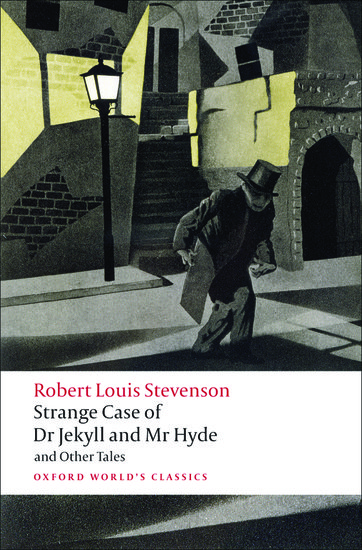
We are delighted that this year Oxford World’s Classics will be sponsoring Oxford theatre company Creation Theatre’s production of Jekyll and Hyde, which is taking place at another Oxford institution – Blackwell’s Bookshop – from 8 June to 6 July. To celebrate our partnership, we asked the production’s Director, Caroline Devlin, for her thoughts on Robert Louis Stevenson’s classic novel Strange Case of Dr Jekyll and Mr Hyde.

Read More
Book thumbnail image

What’s the secret of bacteria’s success?

By Sebastian Amyes
Bacteria have achieved many firsts; they were the first cellular life-forms on the planet, they are the primary biomass on the planet; they are the most prevalent cell type in and on the human body outnumbering our own cells; they are responsible for more human deaths than any other infectious agents; and, in some parts of the world, they are the premier cause of all deaths. How did these small, single-cell organisms, that are invisible to the naked eye become so successful?

Read More

The real secret behind Gatsby

The Great Gatsby is one of the best-known American novels, but weirdly, and strangely reflective of Gatsby himself, one of the least understood. The much-awaited Baz Lurhmann version of The Great Gatsby opens in the United States tomorrow, and like Gatsby himself — as a new trailer reminds us — the novel is “guarding secrets.”

Read More

Visions of Wagner

By Barry Millington
Few composers embrace such a span of disciplines — musicological, philosophical, historical, political, philological — as Richard Wagner. To what extent does the wide-ranging, comprehensive nature of Wagner’s works militate against a true understanding of them? How close are we, in his bicentenary year, to an understanding that does them justice? The following illustrations from The Sorcerer of Bayreuth: Richard Wagner, his Work and his World demonstrate the variety of perspectives on Wagner, from outdated stereotypes to new reappraisals.

Read More
Book thumbnail image

The first jukebox musical

By Hal Gladfelder
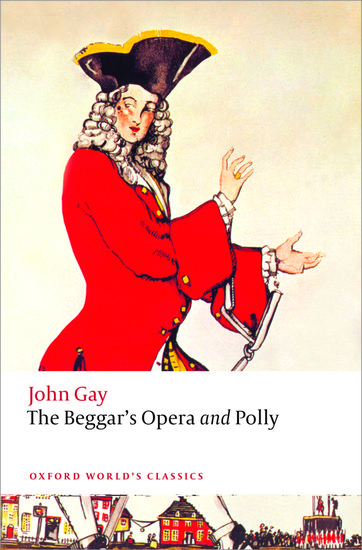
The opening-night audience at John Gay’s The Beggar’s Opera—first performed on 29 January 1728 at the Theatre Royal, Lincoln’s Inn Fields—can’t fully have known what sort of theatrical experience awaited them. The play’s title, for a start, must have struck them as nonsensical. What could a beggar have to do with an opera?

Read More