Oxford University Press's
Academic Insights for the Thinking World

May 2013

Panning for etymological gold: “aloof”

By Anatoly Liberman
It may not be too widely known how hard it is to discover the origin of even “easy” words. Most people realize that the beginning of language is lost and that, although we can sometimes reconstruct an earlier stage of a word, we usually stop when it comes to explaining why a given combination of sounds is endowed with the meaning known to us.
Read More
Book thumbnail image

The five big lifestyle changes for heart health

Today’s problem for the health-conscious person is information overload – new health studies pour out almost daily from newspapers, radio stations, and television networks. Just how true are the studies? How compelling are the facts they claim? Lionel Opie, Director Emeritus of the Hatter Cardiovascular Research Institute, has read countless scientific articles and listened to countless international experts – as well as keeping an ear open when patients tell him about their experiences – to identify the ‘big five’, the only five lifestyle changes with compelling evidence behind them.

Read More
Book thumbnail image

This is your brain on food commercials…

By Ashley N. Gearhardt
Gooey chocolate and scoops of mouth-watering chocolate ice cream. Steaming hot golden French fries. Children see thousands of commercials each year designed to increase their desire for foods high in sugar, fat, and salt like those mentioned above. Yet, we know almost nothing about how this advertising onslaught might be affecting the brain.

Read More
Book thumbnail image

Advice from the CDC on travel and H7N9

By Megan Crawley O’Sullivan, MPH
Avian influenza. H7N9. Bird flu. If you are planning a trip to China, these phrases might have you concerned. There are still many uncertainties regarding the new influenza A (H7N9) virus: it isn’t clear where the virus started or how people are getting sick, and a vaccine is not yet available. Amid these unanswered questions, it’s not surprising that many travelers are doubting their plans.

Read More
Book thumbnail image

Getting from “is” to “ought” near the end of life

By Nancy Berlinger
There is a saying in ethics: you can’t get an “ought” from an “is.”  Descriptions of the world as it is do not reveal truths about the world as it ought to be. Even when descriptions of real-world conditions suggest that something is seriously wrong — that our actions are causing unintended and avoidable harms to ourselves, to others, to our common environment — reaching agreement on how we ought to change our thinking and our behavior, and then putting these changes into practice, is hard.

Read More
Book thumbnail image

The limits of American power, a historical perspective

By Christopher Nichols
Just when, where, why, and how should American power be used? Current assumptions about the near omnipresence—though far from omnipotence—of US power, its influence and its reach are now shaky. Yet these same assumptions coexist alongside widely shared views that such power could and should be used.

Read More
Book thumbnail image

International humanitarianism in the United States

By Julia Irwin
Each year on 8 May, the Red Cross and Red Crescent societies of dozens of nations unite in celebration of World Red Cross/Red Crescent Day. This global event observes the birthday of Henry Dunant, one of the founders of the International Committee of the Red Cross and Red Crescent (ICRC), and commemorates the humanitarian principles that this organization represents.

Read More
Book thumbnail image

Beatlemania

Fifty years ago, in March of 1963, The Beatles released their first album entitled Please Please Me. While the music partly based on British folk and popular forms—including skiffle and music-hall styles—American rock ’n’ roll was by far their dominant resource. The album quickly dominated the British charts and led the group to a path of superstardom that changed the world forever.

Read More
Book thumbnail image

Give weight-loss diets a rest

By Abigail C. Saguy and Tamara B. Horwich
A respected cardiologist of our acquaintance recently confessed that he often tells his patients to lose weight. This may sound like good advice, but he knows better. Scores of clinical studies show that heavier patients with heart disease are, on average, less likely to die than thinner ones. Furthermore, weight loss efforts are typically counterproductive.

Read More
Book thumbnail image

Adopt the Marketplace Fairness Act

By Edward A. Zelinsky
The Marketplace Fairness Act, now being debated in the US Senate, is a rare phenomenon: a bill with strong bi-partisan support and an accurate title. The Act would indeed establish fairness in the marketplace by imposing on out-of-state internet and mail order sellers the same sales tax withholding requirements now imposed only on in-state brick-and-mortar businesses.

Read More
Book thumbnail image

Why do we have a Heart Failure Awareness Day?

By Anya Creaser
How would you feel if you were told you had heart failure? Once you had recovered from the shock, what are the questions you’d ask? European Heart Failure Awareness Days aim to combat all those blank looks in doctors’ offices. So you have heart failure and now you have to live with it. But you’re not alone.

Read More
Book thumbnail image

Preparing for ESIL 2013

By Katherine Marshall
In April 2013, OUP attended the American Society of International Law’s annual conference in Washington DC. Now, it is the turn of the society’s European counterpart, the European Society of International Law (ESIL).

Read More
Book thumbnail image

John Snow and cholera: how myth helped secure his place in history

By Sandra Hempel
The high-profile marking of John Snow’s bicentenary on March 15th would have surprised the great man. The London School of Hygiene and Tropical Medicine, the WellcomeTrust, and The Lancet were among the august UK organisations to honour him, with events including an exhibition, three days of seminars, and a gala dinner. The physician was also celebrated in the United States where he has a large fan base.

Read More
Book thumbnail image

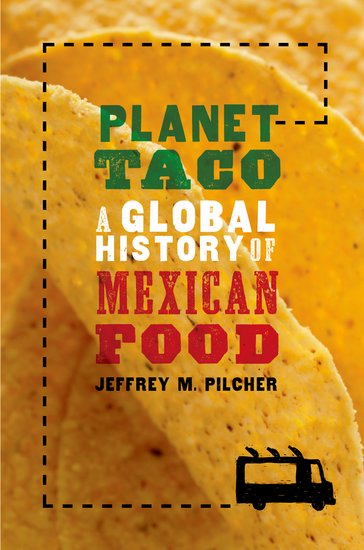
Cinco de Mayo and the insurgent taco

On the fifth of May, many in the US and Mexico will celebrate Cinco de Mayo, the commemoration of Mexico’s victory over the French at the Battle of the Puebla in 1862. In this excerpt from Planet Taco: A Global History of Mexican Food, Jeffrey Pilcher looks at Cinco de Mayo and the first written instance of the word “taco.”

Read More
Book thumbnail image

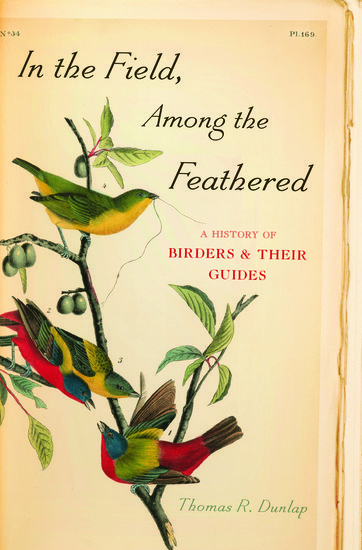
A day for birds, birds for a lifetime

By Thomas R. Dunlap
Bird Day began in 1894 as part of the wildlife conservation movement that sprang up in response to the slaughter of the bison and the Passenger Pigeon. Birds always had a large role, for they were threatened but also familiar and fascinating. More than any other form of life they drew and held people, becoming for many a lifelong interest, passion, and even obsession.

Read More
Book thumbnail image

Seven things you never knew about heart failure

Heart failure affects 750,000 people in the UK alone and is fast becoming a greater threat to public health than cancer. But how much do you know about this condition? The European Heart Failure Awareness Day is designed to raise awareness of heart failure, including possible symptoms, the importance of an early and accurate diagnosis, and the need for optimal treatment. In that spirit, we’ve prepared this brief quiz on heart failure for you to test your knowledge.

Read More