Who’s your literary valentine? [quiz]
It is a truth universally acknowledged that [pretty much everyone] is in want of a literary valentine. . . Characters from classic literature have a way of capturing our hearts.

Oxford University Press's
Academic Insights for the Thinking World


It is a truth universally acknowledged that [pretty much everyone] is in want of a literary valentine. . . Characters from classic literature have a way of capturing our hearts.

This time of year is often filled with images of romance, hearts, and cupid’s bows, but not all love stories end in happily ever after. Who among us hasn’t had their heart broken, or felt the sting of rejection once (or twice)? But we all know that life without love (even if it’s painful) isn’t much of a life. As Charles Darwin once said, ‘Much love much trial, but what an utter desert is life without love’.

It’s almost that time of year again, when families, friends and acquaintances get together to host a Burns supper, and celebrate the life and poetry of Robert Burns. Variously known as Rabbie Burns, the Bard of Ayrshire or the Ploughman Poet, Burns is widely regarded as the national poet of Scotland and indeed celebrated worldwide.

Voltaire had numerous passionate affairs, and engaged in an enormous amount of private correspondence with his lovers, much of which has been kept for posterity. Providing a fascinating insight into Voltaire’s inner-most emotions, his letters give a glimpse of his friendships, sorrows, joys, and passionate desires…

Love and literature are perfect companions. Love has been, and continues to be, an inspiration for famous and celebrated authors around the world, who have written great literary masterpieces on romantic infatuations and passions. The characters they depict make a lasting impression on us, the readers – after all, who hasn’t dreamed of the Juliet to their Romeo, or the Ron to their Hermoine?

Along with death and trees, love is probably the most commonly explored theme in literature. So many of our favorite maxims and aphorisms about love are drawn from classical fiction. But how well do we really know these quotes or the novels and poems from which they derive?

A reasonable line of thought can give rise to a crisis of commitment: Many a commitment requires persistence or willpower, especially in the face of temptation. A straightforward example is the decision to quit smoking; another is the promise to be faithful to someone for the rest of one’s life.

Another ‘Awareness Day’, International Kissing Day, is coming up on July 6. It might not seem obvious but kissing, like most subjects can now be easily linked to the science of DNA. Thus, there could be no more perfect opener for my Double Helix column, given the elegance and beauty of a kiss. To start, there is the obvious biological link between kissing and DNA: propagation of the species. Kissing is not only pleasurable but seems to be a solid way to assess the quality and suitability of a mate.

The time of year approaches that has gaggles of teenage girls quivering anxiously in school corridors: outwardly bemoaning the late arrival of the postman; while inwardly breathing a huge sigh of relief.

It’s big, it’s red, and it’s here. Valentine’s Day strikes fear into the hearts of men and women around the Western world like nothing else can. But you needn’t run scared of the Hallmark branded teddy bears. Oh no. Follow the sprinkling of rose petals, the sweet aroma of scented candles, and the dulcet tones of Phil Collins up the stairs to the luxury boudoir that is Oxford University Press.
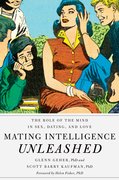
By Jessica Fell Williams and Glenn Geher
On the 14th of April, single Koreans will signal their singleness by wearing, eating, and experiencing “black” as a statement on the nature of being single. From the perspective of mating intelligence, following mating-relevant customs that are specific to one’s culture is crucial in mating.
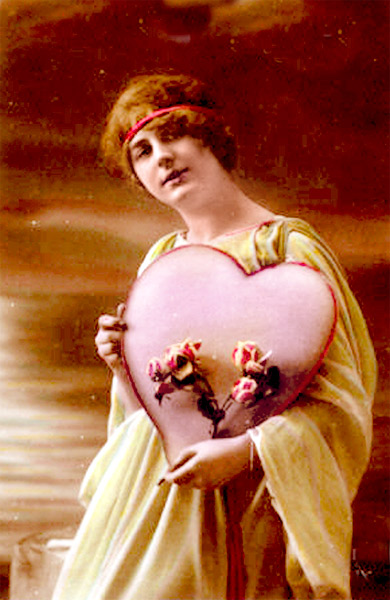
Love is in the air at Oxford University Press! As we celebrate Valentine’s Day, we’ve asked staff members from our offices in New York, Oxford, and Cary, NC, to share their favorite love songs. Read on for their selections, and be sure to tell us what your favorites are too. Happy Valentine’s Day!
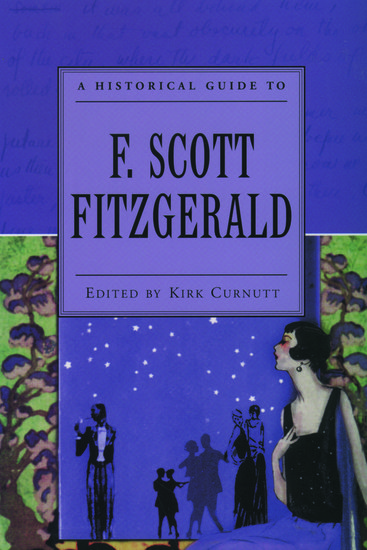
By Kirk Curnutt
According to literary legend, the author of The Great Gatsby sold his soul. Perpetually cash-strapped, F. Scott Fitzgerald spent much of his twenty-year career cranking out popular fiction for the Saturday Evening Post and other high-paying “slicks.” While Edith Wharton, Willa Cather, and William Faulkner racked up double digits in the novels column, Fitzgerald completed a paltry four and a half, with only one of them (Gatsby, of course) truly great. By contrast, he produced 160 short stories, earning a total of $241,453 off the genre – more than $3 million in today’s dollars.
What Cassie has been reading this week.
A look at two very personal cover images.
Anatoly investigates the origin of the word ‘race.’