Oxford University Press's
Academic Insights for the Thinking World

Book thumbnail image

The Beatles Get a Second Chance, 9 May 1962

By Gordon Thompson
On this spring morning fifty years ago, Brian Epstein climbed the front steps and passed through the simple entrance of the EMI Recording Studios in St. John’s Wood, London, placing him on the other side of the looking glass. As a retailer, he had sold recordings made in these studios by Sir Edward Elgar, Sir Thomas Beecham, and, more recently, Cliff Richard and the Shadows. The neophyte manager of the Beatles now eagerly anticipated the possibility of watching through the control room window as his “boys” joined that exclusive club.

Read More
Book thumbnail image

Why Obama cannot receive any credit for his actions

By Elvin Lim
With the airwaves ablaze with a new controversy about President Obama campaign ad, it may be worth thinking about why it is so difficult for many Americans, even some on the Left, to give Obama credit for anything. To proffer a tentative answer, I’m going to sketch the landscape of the comparison group: how other presidents have been vilified.

Read More
Book thumbnail image

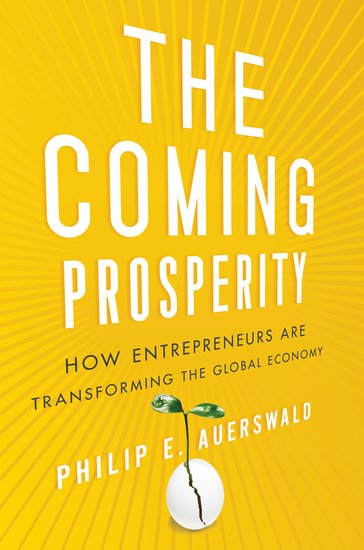
Philip Auerswald on driving innovation today

The benefits of four centuries of technological and organizational change are at last reaching a previously excluded global majority. To make the most of this epochal transition, the key is entrepreneurship. Our friends at the Kauffman Foundation sat down with Philip Auerswald, author of The Coming Prosperity: How Entrepreneurs Are Transforming the Global Economy, to discuss what’s next for the world.

Read More
Book thumbnail image

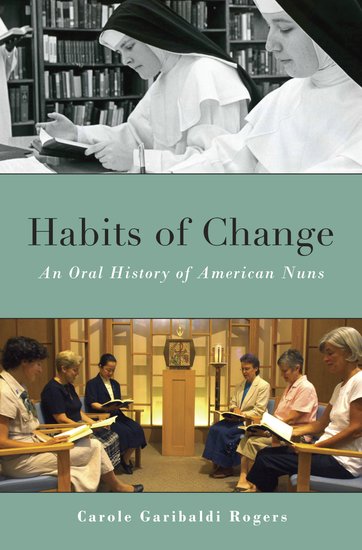
Sisters in their finest moments

Carole Garibaldi Rogers
Oral histories of American Catholic women religious repeatedly reveal courageous steps out from traditional roles into ministries that serve the poor and marginalized. They also illuminate historical trends in both the church and society.

Read More
Book thumbnail image

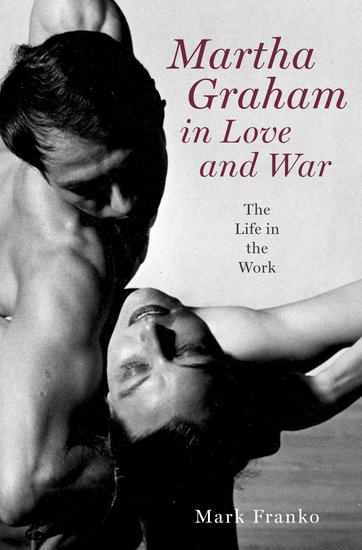
Martha Graham Redivivus

By Mark Franko
Martha Graham’s work was prominent in the New York dance world of the 1930s in the wake of her innovative Primitive Mysteries (1931). Yet, her reputation grew exponentially beyond the confines of dance and the New York art world after the premiere of American Document (1938) followed by its national tour in 1939. This is, paradoxically, a work that the Martha Graham Dance Company may be reluctant to perform today in a version close to the original. It was related to the political issues of the day, highly anti-fascist and popular front, and critical of the history of the United States. Graham’s national reputation took hold at this time, and she was noted not only for her choreography and dancing but also for her political stance in the pre-war moment.

Read More
Book thumbnail image

The growth of the Giving Pledge and the federal estate tax

By Edward Zelinsky
By taking the Giving Pledge, wealthy individuals publicly commit to contribute “the majority of their wealth to philanthropy.” The Pledge was started by Warren Buffett and Bill Gates, Jr. Recently, twelve more wealthy families signed the Giving Pledge including Elon Musk, a founder of PayPal.

Read More
Book thumbnail image

Mitt Romney as Commander in Chief: some troubling signs

Now that Mitt Romney has established himself as the certain Republican nominee in the 2012 president election, Americans will begin to scrutinize his record and his statements more closely. The economic problems that have beset the United States over the past four years mean that much of the attention will focus on Romney’s economic proposals; so, too, does the ongoing controversy over “Obamacare” assure a focus on the Republican’s stance on health care. However, with an ongoing war in Afghanistan and continuing tensions over the Iranian nuclear weapons program, we also need to consider how Romney understands the role of the president as a commander in chief. Some of the signs are disturbing.

Read More
Book thumbnail image

Beethoven’s Ninth Symphony premieres

This Day in World History
Back to the audience, facing the orchestra, the composer steadily marked the tempo with his hands. He was not conducting, though — he was deaf. Thus it was that, when the orchestra and chorus finished, he could not hear the applause and cheers of the Vienna audience. When a musician turned him around so he could see the joy on listeners’ faces, Ludwig von Beethoven bowed in gratitude — and wept.

Read More
Book thumbnail image

Behind the controversy: Sisters serve

By Carole Garibaldi Rogers
As women religious in the US once again stand accused of misdeeds by the hierarchy, it is worth asking: What have these women done? They have said over and over with their lives that they are simply following the Gospel message to serve the poor. And that deep-rooted conviction underlies almost all of the 94 oral history interviews I conducted with American Catholic nuns, first in the early 1990s and most recently in 2009-2010.

Read More
Book thumbnail image

The Sack of Rome

This Day in World History
On May 6, 1527, a mass of German Lutheran and Spanish Catholic troops—unlikely allies—reached Rome angry at being unpaid for months and resentful of the riches of the papacy. As the soldiers—by now a rampaging mob—entered the Vatican, Pope Clement VII was saying a mass in the Sistine Chapel. With Swiss Guards being slaughtered in St. Peter’s Square, the pope was hustled away to safety in the stout Castel Sant’Angelo. And the sack of Rome was on.

Read More
Book thumbnail image

Who are the women behind the latest Vatican reprimands?

By Carole Garibaldi Rogers
The hierarchy of the Roman Catholic Church could have selected any number of unifying actions to mark the fiftieth anniversary celebration of the Second Vatican Council (1962-1965). They have chosen instead a divisive path: to reprimand the leadership of American Catholic nuns.

Read More
Book thumbnail image

Mayan Midwives and Western Medicine

By Barbara Rogoff
Doña Chona Pérez, who turns 87 this week, was born with a piece of the amniotic sac over her head like a veil, indicating a birth destiny of being a sacred midwife. This credential indicating divine selection to the profession has been recognized in the Mayan region for many years.

Read More
Book thumbnail image

Writing and recording with scrapbooks

By Ellen Gruber Garvey
May 5 is National Scrapbooking Day. Like National Fig Newton Day or National Golf Month, its purpose is mainly commercial. It was unsurprisingly started by an album company. Scrapbook making is hugely popular and profitable. Stores that sell scrapbooking supplies use the day to sponsor scrapping gatherings or crops where scrapbookers — nearly all women — get together to spread their projects out at tables with equipment for diecutting, embossing, distressing paper to make it look old, and sharing tips about layout and technique as they paste family pictures and memorabilia into their scrapbooks.

Read More
Book thumbnail image

Kublai Khan becomes Mongol Emperor

This Day in World History
In 1259, the great Mongol Empire — which stretched from parts of China west to Russia — was shaken for the second time by the death of its leader, or khan, when Mongke, a grandson of the founder Genghis Khan, died. One of his brothers, Kublai, left his army in China, came back to Mongolia, and had himself declared the Great Khan.

Read More
Book thumbnail image

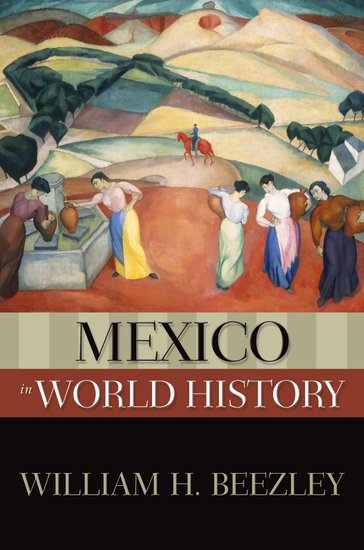
Cinco de Mayo, sesquicentennial of the Battle of Puebla

By William H. Beezley
Mexicans are celebrating the sesquicentennial of the Cinco de Mayo (5th of May) 1862, when at the Battle of Puebla, their troops defeated a veteran French invasion force. The battle shocked western leaders and military observers in equal measure. The Mexicans were viewed as ragtag, poorly-armed bandits rather than soldiers, and the French were considered by many as the world’s best-equipped, most-experienced army. As astonishing as the victory was, it did not end the French invasion, but only postponed it for a year until a second Battle at Puebla.

Read More
Book thumbnail image

Differentiating conflict and bullying within friendship

In Bully, Emmy award-winning director Lee Hirsch invites viewers to spend a year in the lives of students and parents who deal with public torment and humiliation on a daily basis. By following the young victims from the classroom to their living rooms, viewers are given an intimate look into the effects that bullying has on these targets and their families. While parents and administrators scramble to find a solution to the problem, they must ask themselves: how do we differentiate bullying from conflict within friendships?

Read More