Oxford University Press's
Academic Insights for the Thinking World

Book thumbnail image

Bob Chilcott and Charles Bennett on “The Angry Planet”

Composer Bob Chilcott and librettist Charles Bennett discuss their experiences of creating “The Angry Planet”, a large-scale cantata on the theme of the environment which was premiered at the 2012 Proms by the Bach Choir, the BBC Singers, the National Youth Choir of Great Britain, and London schoolchildren.


Read More
Book thumbnail image

The Doctrine of Discovery and Indigenous Peoples

By Robert J. Miller and Jacinta Ruru
Today is the United Nations International Day of the World’s Indigenous Peoples. It is a day for action. An important part of this action must be to continue the work towards banishing racist international colonialism law including the Doctrine of Discovery. This Doctrine legitimated the notion that the first European country that discovered lands unknown to other Europeans could claim property and sovereign rights over Indigenous Peoples and their homelands.

Read More
Book thumbnail image

London’s Burning!

Today we are celebrating the UK publication of The Day Parliament Burned Down, in which the dramatic story of the nineteenth century national catastrophe is told for the first time. In this blog post, author Caroline Shenton presents the top ten London fires that have changed the face of the capital city.

Read More
Book thumbnail image

Edinburgh International Book Festival: Frank Close and Peter Higgs

By Frank Close
When I interviewed Peter Higgs at the Borders Book Festival in Melrose in June, he had been waiting 48 years to see if his eponymous boson exists. On July 4 CERN announced the discovery of what looks very much like the real thing. On August 13 I am sharing the stage with Peter again, this time in Edinburgh. We shall be discussing his boson and my book The Infinity Puzzle, which relates the marathon quest to find it. How has his life changed?

Read More

Two English apr-words, part 2: ‘Apricot’

By Anatoly Liberman
Fruits and vegetables travel from land to land with their names. Every now and then they proclaim their country of origin. Such is the peach (though of course not in its present-day English form), whose name is a borrowing of Old French peche (Modern French pêche), ultimately from Latin Persicum malum “Persian apple.” It follows that the noun peach began its life as an adjective. To a modern speaker of French and English the distance between pêche ~ peach and persicum (with its phonetic pit gone) is unbridgeable, but Swedish persika, Dutch perzik, and Russian persik are quite transparent.

Read More

How exactly did Mendeleev discover his periodic table of 1869?

The usual version of how Mendeleev arrived at his discovery goes something like this. While in the process of writing his textbook, ‘The Principles of Chemistry’, Mendeleev completed the book by dealing with only eight of the then known sixty-three elements. He ended the book with the halogens.

Read More
Book thumbnail image

Cyber War and International Law

By Dr. Russell Buchan and Nicholas Tsagourias
It seems both timely and necessary to question whether public international law adequately protects states from the threat of cyber attacks. This is because states have become increasingly dependent upon computer networks and the information that they hold in order to effectively regulate their societies.

Read More
Book thumbnail image

In memoriam: Robert Hughes

Oxford University Press is saddened to hear of the passing of Robert Hughes. Robert Hughes was born in Australia in 1938 and lived in Europe and the United States since 1964. He worked in New York as an art critic for Time Magazine for over three decades from 1970 onward. He twice received the Franklin Jeweer Mather Award for Distinguished Criticism from the College Art Association of America. He is the author of numerous books, including Culture of Complaint: The Fraying of America, which Oxford University Press published in 1993. Publishers Weekly called it a “a withering, salubrious jeremiad.” Robert Hughes is survived by his wife, two stepsons, brother, sister, and niece.

Read More
Book thumbnail image

Vice Presidents at War

By Andrew J. Polsky
Much of the attention to Mitt Romney’s choice of a running mate will focus on whether the selection will influence the outcome of the election in November. (The short answer is probably not, unless he suddenly decides to think outside the proverbial box.) We might do better to spend more time considering how a vice president influences policy. I find that vice presidents have sometimes played a role in policy debates, but it is never decisive.

Read More
Book thumbnail image

Are small farmers in developing countries stuck on stubble?

By Nicholas Magnan
No-till agriculture, a resource conserving technology which increases the amount of organic matter in the soil, offers many benefits to farmers and society. Because farmers don’t plow their fields before planting, equipment, fuel, and labor costs are reduced. These reduced costs should appeal to cash-poor farmers in developing countries. Furthermore, no-till has been shown to increase and stabilize crop yields, conserve water in the soil and protect the crop from mild drought, prevent soil erosion, and mitigate climate change through carbon sequestration.

Read More
Book thumbnail image

Excelling Under Pressure

By Gerald Klickstein
The Olympics are in full swing, and we’re bound to witness some athletes who triumph and others who choke under the stress of performing. What differentiates those two groups? I’ve been probing that question for decades from the perspective of a musician and educator. Through my research and experience, I’ve come to appreciate that, for athletes and musicians alike, the primary distinction between those who excel under pressure and those who crack lies in how they prepare to perform.

Read More
Book thumbnail image

Public pensions’ unrealistic rate of return assumptions

By Edward Zelinsky
Ten years ago, the financial problems of public employee pensions concerned only specialists in the field. Today, the underfunding of public retirement plans is widely understood to be a major problem of the American polity. Underfinanced public pensions threaten the ability of the states and their localities to provide basic public services while paying the retirement benefits promised to state employees.

Read More
Book thumbnail image

Funding and Favors at the Olympics

By David Potter
Public funding for sports events was a fact of life for the Greeks and Romans. So was private funding, and both the Greeks and the Romans knew what the benefits and what the pitfalls associated with either might be. Can we be certain that the organizers of the London Olympics are quite so clear about this? The widely advertised donation (amounting to thirty-one million dollars) by pharmaceutical giant GlaxoSmithKline (GSK) of testing facilities for 6,250 blood samples taken from athletes could raise that question.

Read More
Book thumbnail image

Making prisoners work: from hulks to helping victims

By Susan Easton and Christine Piper
In July 2012, two prisoners lost their application for judicial review of two Prison Service Instructions which implement the Prisoners’ Earnings Act 1996. This Act demands that a deduction of up to 40% from the wages of prisoners in open prisons is imposed.

Read More
Book thumbnail image

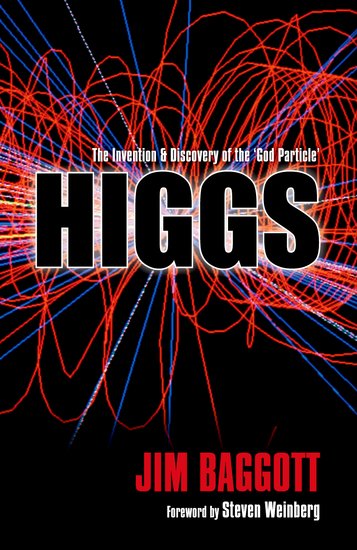
Putting the Higgs particle in perspective

By Jim Baggott
On 4 July scientists at CERN in Geneva declared that they had discovered a new particle ‘consistent’ with the long-sought Higgs boson, also known as the ‘God particle’. Although further research is required to characterize the new particle fully, there can be no doubt that an important milestone in our understanding of the material world and of the evolution of the early universe has just been reached.

Read More
Book thumbnail image

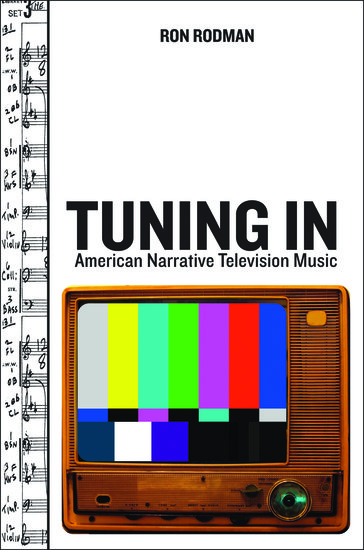
Music and the Olympics: A Tale of Two Networks

Television networks use music to connect audience and program through theme music and short video spots called “promos. Themes and promos carry what media musicologist Philip Tagg calls “appellative functions”, which summon viewers to the television screen. With an event as big as the Olympics, television networks need to attract as large an audience as possible to maximize commercial ad revenue.

Read More