Dizzying new perspectives of vertigo research
By Béla Büki
In the last three decades vertigo science has been revolutionized by new examination techniques and improving understanding of physiological principles.

Oxford University Press's
Academic Insights for the Thinking World


By Béla Büki
In the last three decades vertigo science has been revolutionized by new examination techniques and improving understanding of physiological principles.
What is the future of warfare? Counterinsurgency expert David Kilcullen’s fieldwork in supporting aid agencies, non-government organizations, and local communities in conflict and disaster-affected regions, has taken him from the mountains of Afghanistan to the cities of Syria. His experience in the last few years has led to new ways of thinking about the face of global conflict.

Macmillan Cancer Support have raised over £1 million with their #gosober for October campaign. But is this a lifestyle that more of us should adopt permanently? Here are five great reasons to stay sober after October.
By Jean Baker
Organizing for the women’s suffrage parade planned for 23 October 1915 in New York had taken months. By this time leaders of the New York movement were practiced at arranging such popular spectacles in a state that would be a significant prize, with parades its most effective, opinion–changing tactic. Finally–nearly seventy years after the Seneca Falls Convention and its call for women’s suffrage– the momentum seemed to be shifting.

From the Harlem Rag to grand pianos to the Grammy awards to the international stage… Jazz has had many different incarnations since its origins 120 years ago. This brief slideshow with images from Mervyn Cooke’s The Chronicle of Jazz conveys the diversity of change in jazz performers throughout the years. Innovation, experimentation, controversy, and emotion — all found in the most imaginative and enduring music.
Spoiler Alert: This article includes plot details from the film. Watching Gravity as a professor who teaches child psychology, I could not help but see the developmental themes that resonate with this film. One of the luminous images that lingered with me long after the film ended is the scene in which Ryan Stone (Sandra Bullock) is nestled in the safety of a spacecraft following a grueling battle for her life.

At the end of each year at Oxford University Press, we look back at places around the globe (and beyond) that have been at the center of historic news and events. In conjunction with the publication of the 20th edition of Oxford Atlas of the World we launched Place of the Year (POTY) 2013 last week. In honor of 20 editions of the Atlas, we put together a longlist of 20 nominees that made an impact heard around the world this year. If you haven’t voted, there’s still time (vote below).

By Keith A. Bender and Ioannis Theodossiou
The 18th Century political economist, Adam Smith, wrote: ‘Workmen… when they are liberally paid by the piece, are very apt to overwork themselves and to ruin their health and constitution in a few years’
In a world of 9.1 billion people… where 61% of the world’s population lives in urban centers… primarily with coastal cities as magnets of growth… and the people within these cities becoming ever more connected… with mobile phones as tools for destruction…
By Henry S. Richardson
Scholarly and regulatory attention to the ethics of medical research on human subjects has been one-sidedly focused on the prevention of moral disasters. Scandals such the US Public Health Service (PHS)’s Tuskegee syphilis experiments, which for decades observed the effects of untreated syphilis on the participants, most of whom were poor black sharecroppers, rightly spurred the broad establishment of a regulatory regime that emphasized the importance of preventing such severe harming and exploitation of the human subjects of research.
By Adrian Bardon
In the early 5th century BCE a group of philosophers from the Greek colony of Elea formed a school of thought devoted to the notion that sense perception — as opposed to reason — is a poor guide to reality. The leader of this school was known as Parmenides.
By Erik N. Jensen
Let’s get one thing straight about Andy Murray’s Wimbledon singles title: It was not the first one by a Briton in 77 years, despite what the boisterous headlines might have you believe. London’s venerable Times set the tone on July 8 with its proclamation, “Murray ends 77-year wait for British win.”
By Sonia Tsuruoka
Not much remains to be said about the politics of the written word: scores of historical biographers have examined the literary appetites of revolutionaries, and how what they read determined how they interpreted the world. Mohandas Gandhi read Henry David Thoreau’s Civil Disobedience during his two-month incarceration in South Africa.
By Claude Rawson
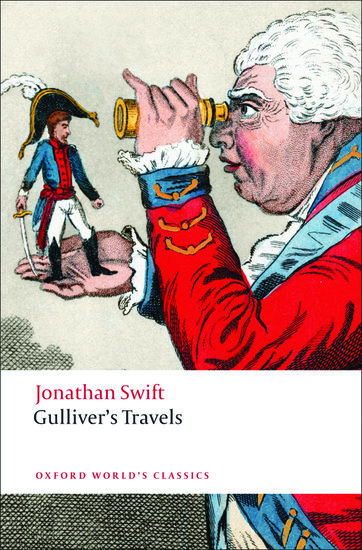
Jonathan Swift, whom T. S. Eliot called “colossal,” “the greatest writer of English prose, and the greatest man who has ever written great English prose,” died on 19 October 1745.
By Mitch Kachun
Like many scholars who study nineteenth century African American history and literature, I am excited by the attention surrounding the newly released film, 12 Years a Slave, based on the experiences of Solomon Northup, a free black man from New York who was kidnapped in 1841 and sold into slavery.
By Jill L. Levensen
In its fall preview issue for 2013 (dated 2-9 September), New York magazine lists Romeo and Juliet with other films opening on 11 October 2013, and it comments: “Julian Fellowes (the beloved creator of Downton Abbey) tries to de-Luhrmann-ize this classic.” The statement makes two notable points.