Oxford University Press's
Academic Insights for the Thinking World

Defining intransigence and recognizing its merits

On any given day, a Google search finds the word “intransigent” deployed as though it automatically destroyed an opponent’s position. Charles Blow of the New York Times and Jacob Weisberg (no relation to the present writer) of Slate are only two of many, especially on the political left, who label Republicans “intransigent” and thereby assume they have won the argument against them.

Read More

An appreciation of air conditioning

This week—August 15, to be exact—celebrates the climax of Air Conditioning Appreciation Days, a month-long tribute to the wonderful technology that has made summer heat a little more bearable for millions of people.

Read More

Engaged Buddhism and community ecology

For the most part, Buddhists have historically been less concerned with explaining the world than with generating personal peace and enlightenment. However, the emergence of “engaged Buddhism” – especially in the West, has emphasized a powerful commitment to environmental protection based in no small part on a fundamental ecological awareness that lies at the heart of Buddhist thought and practice.

Read More

Job: A Masque for Dancing by Ralph Vaughan Williams

Michael Kennedy has described Job as one of Vaughan Williams’s mightiest achievements. It is a work which, in a full production, combines painting (the inspiration for the work came from a scenario drawn up by Geoffrey Keynes based on William Blake’s Illustrations of the Book of Job), literature (the King James Bible), music, and dance.

Read More

Cancer immunology and immunotherapy

My career began in the 1970s in the field of cancer immunology, a subject, which nowadays is at the forefront of cancer research, holding the promise of delivering new therapies for treating patients suffering from a wide range of cancers. Many scientists working in the field are not readily aware that the very first research papers documenting immunity against cancer were published in 1955 in the British Journal of Cancer by Robert (Bob) Baldwin, working in Nottingham, England.

Read More

Biting, whipping, tickling

‘Laughter is men’s way of biting,’ Baudelaire proclaimed. The sociologist Norbert Elias offered a rejoinder: ‘He who laughs cannot bite.’ So does laughter embody or diffuse aggression? One theory, offered by the neuroscientist Vilayanur Ramachandran, is that the laugh may be an aborted cry of concern, a way of announcing to a group that there has been a false alarm.

Read More

The terror metanarrative and the Rabaa massacre

Just after dawn prayers on the morning of August 14, 2013, Egyptian security forces raided a large sit-in based at Cairo’s Rabaa al-Adawiyya Square and another at al-Nahda Square. Six weeks earlier, military leader and Minister of Defense Abdel Fattah al-Sisi staged a coup to remove Egypt’s first democratically elected president, the Muslim Brotherhood’s Mohamed Morsi, from office.

Read More

Ethical issues in managing the current Ebola crisis

Until the current epidemic, Ebola was largely regarded as not a Western problem. Although fearsome, Ebola seemed contained to remote corners of Africa, far from major international airports. We are now learning the hard way that Ebola is not—and indeed was never—just someone else’s problem.

Read More
Book thumbnail image

Living in the dark

It is well known that many of the permanent inhabitants of caves have evolved a bizarre, convergent morphology, including loss of eyes and pigment, elongation and thinning of appendages, and other adaptations to conditions of complete darkness and scarce food.

Read More
Book thumbnail image

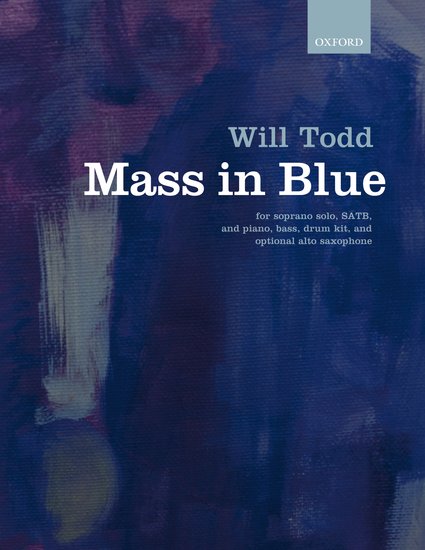
The rise of choral jazz

The genre of ‘choral jazz’ has become increasingly prevalent among choirs, with the jazz mass the ultimate form. Settings of the Latin mass by Lalo Schifrin and Scott Stroman have enjoyed popular following, while more recently Bob Chilcott’s A Little Jazz Mass and Nidaros Jazz Mass have established the genre in the wider choral tradition, reaching choirs from across the choral spectrum and audiences young and old.

Read More
Book thumbnail image

What goes up must come down

Biomechanics is the study of how animals move. It’s a very broad field, including concepts such as how muscles are used, and even how the timing of respiration is associated with moving. Biomechanics can date its beginnings back to the 1600s, when Giovanni Alfonso Borelli first began investigating animal movements. More detailed analyses by pioneers such as Etienne Jules Marey and Eadweard Muybridge, in around the late 1800s started examining the individual frames of videos of moving animals.

Read More

The history of the word “qualm”

Once John Cowan suggested that I touch on the murky history of the noun qualm and try to shed light on it. To the extent that I can trust my database, this word, which is, naturally, featured in all dictionaries, hardly ever appears in the special scholarly literature.

Read More
Book thumbnail image

The environmental case for nuclear power

Time is running short. When the IPCC published its first scientific report in 1990 on the possibility of human-caused global warming, the atmospheric concentration of carbon dioxide (CO2) was 354 ppm. It is now 397 ppm and rising. In spite of Kyoto, Copenhagen, Cancun, Durban, and Doha, atmospheric CO2 continues its inexorable upward path.

Read More
Book thumbnail image

The gender gap in pay in Spanish company boards

Is there gender gap in pay on the boards of listed Spanish firms? If there is, what are the factors behind the gender gap in pay? We sought to find the answers to these questions. Over the last few decades, payments for men have been consistently higher than those for women, even when they hold the same post and have been educated to the same level.

Read More
Book thumbnail image

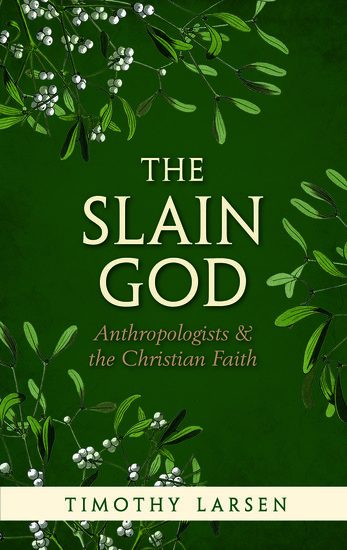
Anthropology and Christianity

The relationship between anthropologists and Christian identity and belief is a riddle. I first became interested in it by studying the intellectual reasons for the loss of faith given by figures in the nineteenth and twentieth centuries. There are an obvious set of such intellectual triggers.

Read More

The life of oceans: a history of marine discovery

It pays to be nice. One of the most absolutely, emphatically wrong hypotheses about the oceans was coined by one of the most carefree and amiable people in nineteenth century science. It should have sunk his reputation without trace. Yet, it did not.

Read More