Oxford University Press's
Academic Insights for the Thinking World

  • Arts & Humanities

Five quirky facts about Harry Nilsson

By Alyn Shipton
(1) Harry nearly had no career at all after he accepted a dare as a teenager to slide down a fast running flume at Wofford Heights in California. After sliding down the waterway for several miles at high speed he narrowly escaped with his life by grabbing a metal bar above his head and hauling himself out of the rapid current.

Read More
Book thumbnail image

The mysteries of Pope Francis

By Peter McDonough
If you’ve visited Rome, you may have noticed that the Jesuit headquarters, right off St. Peter’s Square, overlooks–“looks down on”– the Vatican. Jesuits are fond of reminding visitors, with a smile, of this topographical curiosity and its symbolic freight.

Read More
Book thumbnail image

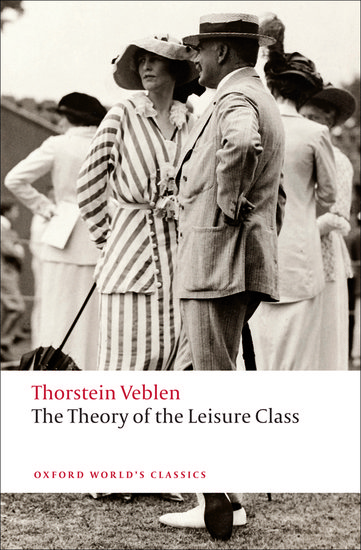
Dress as an expression of the pecuniary culture

By Thorstein Veblen
The dress of women goes even farther than that of men in the way of demonstrating the wearer’s abstinence from productive employment. It needs no argument to enforce the generalisation that the more elegant styles of feminine bonnets go even farther towards making work impossible than does the man’s high hat.

Read More
Book thumbnail image

Anthems of Africa

I would love to visit Africa someday. I think it would settle a lot of curiosity I have about the world. For now, my most informed experience regarding the place is a seminar I took this past semester, called Sacred and Secular African American Musics.

Read More
Book thumbnail image

Sources of change in Catholicism

By Peter McDonough
Vocation directors report a ten percent bump in applications to the Society of Jesus since the ascension of a Jesuit to the papacy. The blip reflects a certain relief. The personable contrast that Pope Francis offers to his dour predecessor shifts the motivational calculus.

Read More
Book thumbnail image

Homicide bombers, not suicide bombers

By Robert Goldney
To some this heading may seem unexpected. The term ‘suicide bomber’ has entered our lexicon on the obvious basis that although the prime aim may have been the killing of others, the individual perpetrator dies. Indeed, over the last three decades the media, the general public , and sometimes the scientific community have uncritically used the words ‘suicide bomber’ to describe the deaths of those who kill others, sometimes a few, usually ten to twenty, or in the case of 9/11, about two thousand, while at the same time killing themselves.

Read More
Book thumbnail image

Oxford authors and the British Academy Medals 2013

We don’t often discuss book awards on the OUPblog, but this year the inaugural British Academy Medals were awarded to three authors and their titles published by Oxford University Press: Thomas Hobbes: Leviathan, edited by Noel Malcolm; The Organisation of Mind by Tim Shallice and Rick Cooper; and The Great Sea: A Human History of the Mediterranean by David Abulafia (USA only).

Read More
Book thumbnail image

Experiencing art: it’s a whole-brain issue, stupid!

By Arthur Shimamura
We love art. We put it on our walls, we admire it at museums and on others’ walls, and if we’re inspired, we may even create it. Philosophers, historians, critics, and scientists have bandied about the reasons why we enjoy creating and beholding art, and each has offered important and interesting perspectives.

Read More
Book thumbnail image

Songs of summer, OUP style

Compiled by Natasha Zaman
It’s finally summer — the perfect time to spend with family and friends, enjoy the weather, gardens and parks, and to create fond memories. What better way to create those summer memories than have our favorite songs playing in the background?

Read More
Book thumbnail image

Kammerer, Carr, and an early Beat tragedy

Following last year’s release of On the Road, adapted by director Walter Salles from the legendary Jack Kerouac novel published in 1957, two more Beat Generation movies are on the way. Big Sur, a November release directed by Michael Polish, stars Jean-Marc Barr, Stana Katic, Anthony Edwards, and Radha Mitchell in a story based on Kerouac’s 1962 novel about his efforts to shake off inner demons at an isolated cabin near the California coast.

Read More
Book thumbnail image

A birthday gift of lullabies for Baby Cambridge

After a long wait, the royal baby has arrived. To honor the occasion, congratulate the Duchess of Cambridge, and welcome the new baby, we at Oxford University Press (OUP) have arranged a birthday gift: a compilation of classic lullabies from some of the different regions around the globe where OUP has offices.

Read More
Book thumbnail image

Constantine in Rome

By David Potter
July is a month of historic anniversaries. The Fourth of July and Bastille Day celebrate moments that have shaped the modern world. No less important is the 25th of July. This Thursday will mark the 1707th anniversary of Constantine’s accession to the throne of part of the Roman Empire.

Read More
Book thumbnail image

The misfortune of Athos

We wish a happy birthday to Alexandre Dumas today with the musketeers. In the 1620s at the court of Louis XIII, Athos, Porthos, and Aramis with their companion, the headstrong d’Artagnan, are engaged in a battle against Richelieu, the King’s minister, and the beautiful, unscrupulous spy, Milady. Behind the flashing blades and bravura, Dumas explores the eternal conflict between good and evil. The following is an excerpt from Chapter 27, The Wife of Athos.

Read More
Book thumbnail image

Of Mormonish and Saintspeak

By Philip Barlow
In the beginning, Mormonism was a cult. Not in the vulgar sense often attributed to feared or misconstrued religious minorities, but in the way that earliest Christianity or nascent Islam was a cult: a group that forms around a charismatic figure coupled with radical new religious claims.

Read More
Book thumbnail image

On ‘work ethic’

By Peter Womack
The expression is somehow on everybody’s lips. Its incidence in the media has risen steadily over the last decade or so, and now an attentive reader of the broadsheets is likely to encounter it every day. It’s most often found on the sports pages: one recent forty-eight-hour period registered online praise for the respective work ethics of the footballer Nicolas Anelka, the cricketer Peter Siddle, the tennis player Marion Bartoli, and the British Lions rugby team.

Read More
Book thumbnail image

Summers with George Balanchine

By Elizabeth Kendall
A hundred years ago in the summer of 1913, nine-year-old George Balanchine, then Georgi Balanchivadze, spent the last moments of normal childhood — in the country, in the forest by a lake — before he was abruptly brought back to St. Petersburg.

Read More