Oxford University Press's
Academic Insights for the Thinking World

  • History

Book thumbnail image

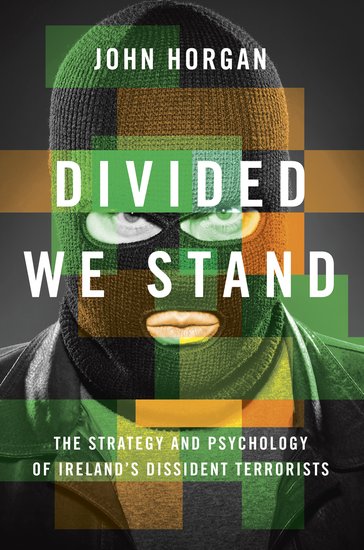
20 years since the Bishopsgate bombing

By John Horgan
On 24 April 1993, the city of London was brought to a standstill. A massive terrorist bomb exploded at the NatWest tower, killing one person and injuring at least 40 more. The truck bomb, planted by the Irish Republican Army (IRA) was designed to strike at the financial heartland of London, and it succeeded. In addition to the human casualties, what has since become known as the Bishopsgate bomb caused $1 billion in financial damages.

Read More
Book thumbnail image

Editing an encyclopedia

By Dr. David Milne
When I was invited to review the second volume of Odd Arne Westad’s and Melvyn Leffler’s The Cambridge History of the Cold War in 2010, I compared the enterprise to Denis Diderot’s Encyclopédie — which I intended both as a compliment and as a criticism. Sweeping in its coverage, the Encyclopédie aimed to capture the main currents of Enlightenment thinking.

Read More
Book thumbnail image

The environmental history of Russia’s steppes

By David Moon
When I started researching the environmental history of Russia’s steppes, I planned my visits to archives and libraries for conventional historical research. But I wanted to get a sense of the steppe environment I was writing about, a context for the texts I was reading; I needed to explore the region. I was fortunate that several Russian and Ukrainian specialists agreed to take me along on expeditions and field trips to visit steppe nature reserves.

Read More
Book thumbnail image

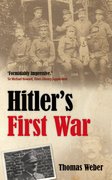
Top five untrue facts about Hitler

By Thomas Weber
It has been thirty years this month since the master forger Konrad Kujau had his fifteen minutes of fame. Kujau managed to fool Stern magazine in Germany and the Sunday Times into believing that Hitler had secretly kept a diary. On 25 April 1983, Stern went public with the sensational story that Hitler’s diaries – which Kujau had penned in the late 70s and early 80s – had surfaced and that the history of the century had to be rewritten. By 6 May, it had become clear that two of the most venerable German and British publications had become the laughing stock of their nations. While no-one still believes that Hitler kept a diary, many other untrue facts about Hitler have been surprisingly resilient

Read More
Book thumbnail image

Jackie Robinson and Branch Rickey

15 April 2013 marked the fifth Jackie Robinson Day, commemorating the 66th anniversary of Jackie Robinson’s debut with the Brooklyn Dodgers, an event which broke baseball’s racial barrier. In each game that is now played on 15 April, all players wear Jackie Robinson’s iconic #42 (also the title of a new film on Robinson). Thirty years ago, historian and ardent baseball fan Jules Tygiel proposed the first scholarly study of integration in baseball, shepherded by esteemed Oxford editor, Sheldon Meyer: Baseball’s Great Experiment.

Read More
Book thumbnail image

Celebrating Bicycle Day

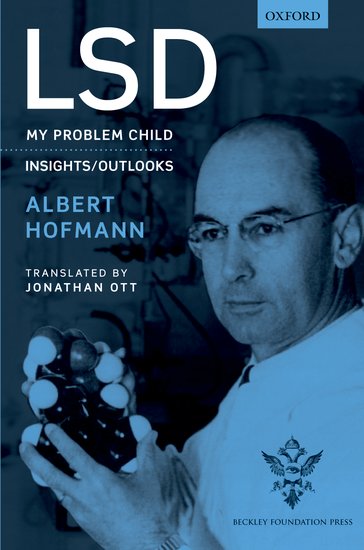
By Amanda Feilding
Albert Hofmann was one of the most important scientists of our time, who through his famous discovery of LSD, crossed the bridge from the world of science into the spiritual realm, transforming social and political culture in his wake. He was both rationalist and mystic, chemist and visionary, and in this duality we find his true spirit.

Read More
Book thumbnail image

Our treaties, ourselves: the struggle over the Panama Canal

By Natasha Zaretsky
In March 1978, Ada Smith, a fifty-six-year old woman from Memphis, sat down at her typewriter and wrote an angry letter to Tennessee’s Republican Senator Howard Baker. She explained that until recently, she had always been proud of her country, and “its superiority in the world.” But now her pride had turned to fear: “After coming through that great fiasco Vietnam, which cost us billions in dollars and much more in American blood, we are now faced with another act of stupidity, which, in the years to come, could be even more costly.”

Read More
Book thumbnail image

Border Control in America before Ellis Island

By Hidetaka Hirota
On the seventeenth of April 1907, 11,747 immigrants arrived in the Ellis Island landing station in New York, marking a record high in terms of the number of people processed on a single day at the station, where 17 million newcomers landed between 1892 and 1954. This arrival was part of a broader landmark immigration wave.

Read More
Book thumbnail image

A vegetable wonder!

By Tatiana Holway
With headlines and taglines and raves such as these fanning out from Fleet Street in the autumn of 1837, it would be hard to overestimate the sensation surrounding the immense water lily found earlier that year in the remote South American colony of British Guiana and subsequently named Victoria regia in honor of the empire’s newly crowned queen.

Read More
Book thumbnail image

Discovering the hermit in the garden

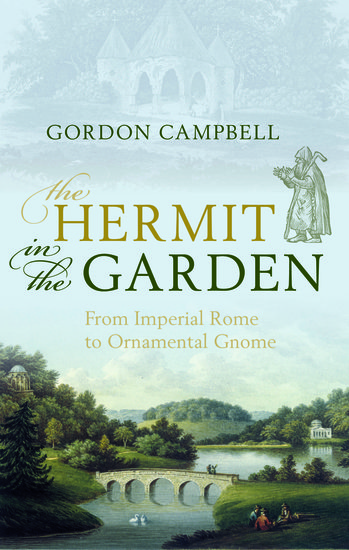
By Gordon Campbell
For many years, answering polite enquiries about my current book project was relatively easy: I could explain that it was about Milton, or the Bible, or Renaissance art and architecture, or the decorative arts, or whatever might be the topic, and the conversation could happily proceed to more interesting subjects. For the past few years, however, I have had to say that I was writing a book about ornamental hermits in eighteenth-century gardens.

Read More
Book thumbnail image

Mark Roodhouse on the black market

From cigarettes to knockoffs, what’s available on the black market? Lecturer in modern history Mark Roodhouse investigates the illegal trade in counterfeit and stolen goods in Britain from the interwar period to today. And there’s always a boom in the underground economy as austerity measures hit, whether with “losses of goods in transit” during the Second World War or horsemeat discovered in packaged meals in 2013. Mark Roodhouse speaks with BBC Wiltshire’s Mid-Morning Show about the history of the black market.

Read More
Book thumbnail image

The Mashapaug Project

By Caitlin Tyler-Richards
Continuing our celebration of the release of 40.1, today we’re excited to share a conversation between managing editor Troy Reeves and contributors Anne Valk and Holly Ewald. Valk and Ewald are the authors of, “Bringing a Hidden Pond to Public Attention: Increasing Impact through Digital Tools,” which describes the origins and methods of the Mashapaug Project, a collaborative community arts and oral history project on a pond in Providence, Rhode Island.

Read More
Book thumbnail image

The challenges and rewards of biographical essays

By Susan Ware
One of the first things I did after being appointed general editor of the American National Biography was to assign myself an entry to write. I wanted to put myself in the shoes of my contributors and experience first-hand the challenge of the short biographical form.

Read More
Book thumbnail image

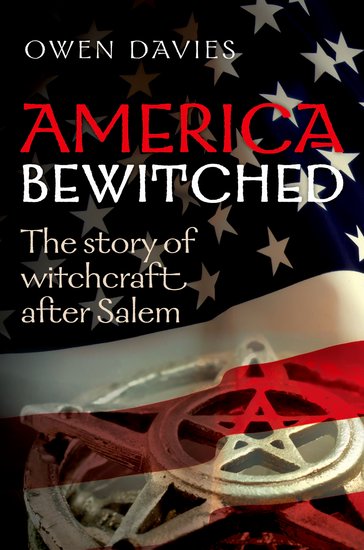
The other Salem witch trials

By Owen Davies
The history of American witchcraft is indelibly associated with Salem, Massachusetts, where in 1692 nineteen people were executed as witches after the accusations of two young girls sparked a wave of fear. The village of Salem, the centre of the events of 1692, is now the town of Danvers, with the focus of today’s witchcraft industry centred on Salem city. But there are numerous other Salems in America, born of the country’s religious heritage – Salem in Hebraic means “peace”. But forget colonial Salem for a moment, as on two occasions in America’s more recent past Salem was the scene of trials related to witchcraft.

Read More
Book thumbnail image

Understanding the Muslim world

By Robert Repino
While interest in Islam has grown in recent years—both in the media and in educational institutions—there remains a persistent misunderstanding of the religion’s practices, beliefs, and adherents, who now number over one and half billion people. Addressing this problem is not simply an academic exercise, for the past decade especially has shown that our understanding of Islam can have enormous consequences on foreign and domestic policies, as well as on social relations.

Read More