Oxford University Press's
Academic Insights for the Thinking World

  • Social Sciences

Book thumbnail image

Making space for well-being?

By Mia Gray, Linda Lobao, and Ron Martin
“There is a paradox at the heart of our lives.  As Western societies have got richer, their people have become no happier” (Layard, 2005). Layard has not been alone in questioning the relationship between economic growth and well-being.  Theoretically, empirically, and politically, there is increasing dissatisfaction with growth as the main indicator of well-being.   As such, there is renewed interest in analysing the institutions and conventions through which the economy and society are measured and understood.
Read More
Book thumbnail image

Public unions: What’s the big deal?

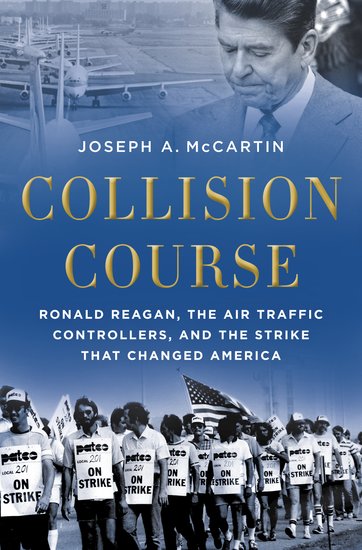
By Joseph A. McCartin
Over the course of the last 30 years, bipartisan support for public sector bargaining has eroded. And it was Reagan’s breaking of the 1981 strike by PATCO, the union of air traffic controllers, that contributed to this shift. More recently, Gov. Scott Walker in 2011 cited that action as an inspiration for his effort to strip government workers of bargaining rights in Wisconsin.

Read More
Book thumbnail image

An academic librarian without a library

By Michael Levine-Clark
I’m sitting in a dorm room—complete with the uncontrollable blast heat I remember from college — the space that has been my office since June, when the library shut down for a major renovation. Besides having to get used to a somewhat uncomfortable and isolated space, my colleagues and I have had to learn to be librarians without a library building, and our students and faculty have had to learn to use physical collections that are entirely offsite. And the campus community has had to think about the question of what a library is and should be, particularly the question of how to find and use our physical monographs.

Read More
Book thumbnail image

The Road To Super Tuesday

By Elvin Lim
The Republican party has traditionally been the more conservative party not only in terms of values but also in terms of organization reform. Leaders tend to be slower than their Democratic counterparts in reforming the nomination process, and voters tend to be more deferential to the last cycle’s runner-up to the winner.

Read More
Book thumbnail image

Turning Data into Dates

By Sydney Beveridge
Cupid scours a trove of demographic data to guide his arrows. This Valentine’s Day, let Social Explorer help you map your way to love.

Read More
Book thumbnail image

Understanding evolution on Darwin Day

By Karl S. Rosengren, Sarah K. Brem, E. Margaret Evans and Gale M. Sinatra
Today is Darwin’s birthday. It’s doubtful that any scientist would deny Darwin’s importance, that his work provides the field of biology with its core structure, by providing a beautiful, powerful mechanism to explain the diversity of form and function that we see all around us in the living world. But being of importance to one’s field is only one way we judge a scientist’s contributions.

Read More
Book thumbnail image

Strategic implications of a “nuclear weapons free world”

By Louis René Beres
Barack Obama still favors the creation of a “nuclear weapons free world.” This high-minded preference is more than infeasible; it is also undesirable. For Israel, in particular, a beleaguered microstate that could ultimately suffer the full fury of this American president’s misplaced idealism, a denuclearization “solution” in any form could not be tolerated.

Read More
Book thumbnail image

Europe: it’s not all bad

This is the very time to remind ourselves of the achievements of the EU, because if we are to make sensible choices about where we go from here, we will need to have a clear idea of both its successes and its failures.

Read More
Book thumbnail image

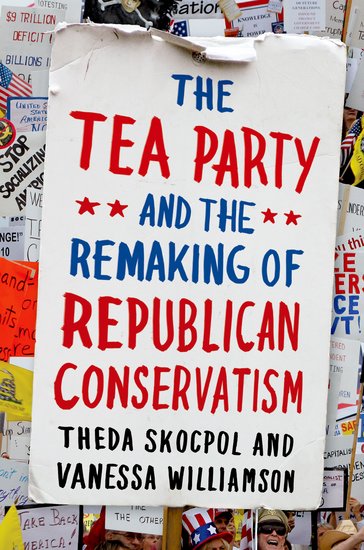
Questions about the Tea Party

In the The Tea Party and the Remaking of Republican Conservatism, Harvard University’s Theda Skocpol and Vanessa Williamson go beyond images of protesters in Colonial costumes to provide a nuanced portrait of the Tea Party. We asked Vanessa Williamson about her research, and what was behind the grassroots protests and national movement.

Read More
Book thumbnail image

Mitt Romney’s IRA

By Edward Zelinsky
On a personal level, I enjoyed the news reports that Governor Romney holds assets worth tens of millions of dollars in his individual retirement account (IRA). These reports confirm a central thesis of The Origins of the Ownership Society, namely, the extent to which defined contribution accounts, such as IRAs and 401(k) accounts, have become central features of American life.

Read More
Book thumbnail image

World Cancer Day: Q&A

On World Cancer Day 2012, we speak with Dr Lauren Pecorino, author of Why Millions Survive Cancer: the successes of science, to learn the latest in the field of cancer research. – Nicola

Read More
Book thumbnail image

The Republican establishment steps in

By Elvin Lim
The very reason why Gingrich appeals to primary voters is the reason why he will not do well with independents voters in the fall. (And that’s an assessment coming from Anne Coulter.) Gingrich has fire, but placed alongside No Drama Obama, he’s going to look like a very unlikeable candidate. There’s hardly anyone who has worked closely with the former Speaker who has endorsed him — which tells us a lot about the guy.

Read More
Book thumbnail image

Gingrich becomes the Anti-Romney Candidate

by Elvin Lim
Newt Gingrich has won the biggest primary prize up for grabs so far. Romney’s win in New Hampshire has been discounted because he’s from neighboring Massachusetts, while poor Rick Santorum’s newly recently declared victory in Iowa was quickly eclipsed by the news about Rick Perry dropping put of the race, ABC’s interview with Gingrich’s ex-wife, and the scuffle over Romney’s tax returns. This is a huge victory for Gingrich because every winner in South Carolina since 1980 has gone on to win the nomination.

Read More
Book thumbnail image

Ron Paul has two problems

By Corey Robin
Ron Paul has two problems. One is his and the larger conservative movement of which he is a part. The other is ours—by which I mean a left that is committed to both economic democracy and anti-imperialism.

Read More
Book thumbnail image

How to communicate like a Neandertal…

By Thomas Wynn and Frederick L. Coolidge
Neandertal communication must have been different from modern language. Neandertals were not a stage of evolution that preceded modern humans. They were a distinct population that had a separate evolutionary history for several hundred thousand years.

Read More