Oxford University Press's
Academic Insights for the Thinking World

  • Social Sciences

Book thumbnail image

Adopt the Marketplace Fairness Act

By Edward A. Zelinsky
The Marketplace Fairness Act, now being debated in the US Senate, is a rare phenomenon: a bill with strong bi-partisan support and an accurate title. The Act would indeed establish fairness in the marketplace by imposing on out-of-state internet and mail order sellers the same sales tax withholding requirements now imposed only on in-state brick-and-mortar businesses.

Read More
Book thumbnail image

An Oxford Companion to NBC’s Hannibal

By Kimberly Hernandez
The new television show Hannibal resurrects Thomas Harris’s famous serial killer and offers a few new surprises bound to shock both newcomers and longtime fans of Dr. Lecter. So while you’re catching up on the latest incarnation of the series, why not brush up on criminology facts or learn something new about cannibalism?

Read More
Book thumbnail image

State and private in China’s economy

By Tim Wright
The central story of China’s economic reforms and the resulting economic miracle has been the move from a centrally planned to a largely market economy, and the emergence of a market-based and mainly private sector alongside the old state-owned sector. Most quantitative trends are still in that direction, and legal and institutional reforms, notably stronger property rights within a situation of limited rule of law, have provided some support.

Read More
Book thumbnail image

Saints and sinners, politicians and priests, and the 2013 local elections

By Matthew Flinders
Justin Welby recently used his first Easter sermon as Archbishop of Canterbury to warn of the dangers of investing too much faith in frail and fallible human leaders, be they politicians or priests. Blind belief in the power of any single individual to bring about true change in any sphere, he argued, was simplistic and wrong, and led inevitably to disillusionment and disappointment.

Read More
Book thumbnail image

Sovereign debt after March 2013

By Muti Gulati
It is perhaps natural human tendency to think that the big events that occur during our lifetimes — particularly if they involve us personally — are both unique and will change the course of history. Reality though is that most of us aren’t particularly good at predicting what future historians will consider important.

Read More
Book thumbnail image

Remembering Jack the Ripper

By John Randolph Fuller
From April 1888 to February 1891, history’s most infamous cold case emerged when a series of 11 murders ripped through London’s working-class Whitechapel district. All of the murdered were women, and most were prostitutes. Whitechapel was one of the poorest areas in London and by the 1880s some of England’s grimiest industries, such as tanneries and breweries, had become established there.

Read More
Book thumbnail image

Is stock market trading good for society?

By Alex Edmans, Vivian W. Fang, and Emanuel Zur
Short-term stock traders — such as hedge funds — have come under fire for pursuing their own profits rather than the long-run health of companies they invest in. The recent financial crisis added fuel to flames, but they had started burning several decades earlier. In the 1980s, many commentators argued that Japan’s economic success resulted from shareholders taking long-term stakes and thus having incentives to improve their firms’ long-run health.

Read More
Book thumbnail image

Freedom Day and democratic transition

By Robert P. Inman and Daniel L. Rubinfeld
Despite the recognized virtues of democratic rule, both for protection of personal rights and liberties and for economic progress, the current list of world governments still classifies 46 of all countries, or 25%, as dictatorships. Rulers in these existing dictatorial regimes resist the transition to democracy, often at a high cost each year in lives and resources.

Read More
Book thumbnail image

Closeted/Out in the quadrangles

By Monica L. Mercado
“That was my radio show!” narrator David Goldman exclaimed, looking at copies of classified ads placed in the University of Chicago’s student newspaper during the late 1960s and early 1970s, when he was an undergraduate student. Goldman, a retired math teacher and one of the founders of the gay liberation movement at the University of Chicago, recently contributed his story to the Center for the Study of Gender and Sexuality (CSGS) research project.

Read More
Book thumbnail image

Global warfare redivivus

Charles Townshend
When the ‘global war on terror’ was launched by George W. Bush – closely followed by Tony Blair – after the 9/11 attacks, many people no doubt felt reassured by these leaders’ confidence that they knew the best way to retaliate. Some, though, found the global war concept alarming for several reasons. The notion of a ‘war’ seemed to indicate a wrong-headed belief that overt military action, rather than secret intelligence methods, was an effective response. More seriously, perhaps, this seemed to be a ‘war’ which couldn’t be won. Since it is all but inconceivable that terrorism per se can ever be eliminated by any method, the Bush-Blair crusade looked dangerously like a declaration of permanent war of an Orwellian kind.

Read More
Book thumbnail image

The illusion of “choice”

By Rickie Solinger
Recently Planned Parenthood announced that it will no longer use the term “choice” to describe what the organization aims to preserve. It’s about time. The weak, consumerist claim of individual choice has never been sufficient to guarantee women what they need — the right to reproduce or not — and to be mothers with dignity and safety.

Read More
Book thumbnail image

Post-Soviet Chechnya and the Caucasus

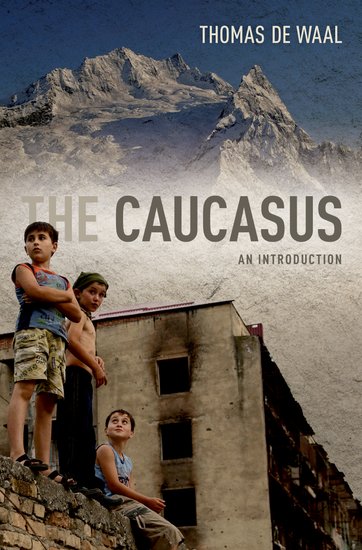
When the names and ethnic backgrounds of the two Boston Marathon bombing suspects were released on Friday, 19 April 2013, rumors immediately began flying over Chechnya, its people, and its role in the world. In order to provide some deeper perspective on the region after the fall of the Soviet Union, we present this brief extract from Thomas de Waal’s The Caucasus: An Introduction.

Read More

eIncarnations

By William Sims Bainbridge
Cleora Emily Bainbridge was born 8 November 1868, and passed away on 14 April 1870. Her father was a clergyman, and her mother, Lucy Seaman Bainbridge, was director of the Woman’s Branch of the New York City Mission Society. In 1883, her father, William Folwell Bainbridge, imagined what her life might have been like by casting her as the heroine of his novel Self-Giving, where she became a Christian missionary and died a martyr.

Read More
Book thumbnail image

Lessons from Iraq 10 years on

By Nigel D. White
Ten years after the capture of Baghdad on 5 April 2003 by US troops, following an invasion of Iraq by US and UK forces, we are still awaiting the outcome of the Chilcot Inquiry which was set up by the government of Gordon Brown in 2009. The report has been delayed at least until the end of 2013 due to the reluctance of the government to release key documents, but the outcome as regards the illegality of the invasion should not be in doubt.

Read More
Book thumbnail image

The legacies of Margaret Thatcher’s rhetoric

By Richard Toye
The death of Margaret Thatcher has already prompted an outpouring of reflections upon her place in history. One aspect of her legacy that deserves attention is her use of rhetoric and the way in which, to a great degree, she helped reshape the language of British politics as well as the substance of policy. Historians divide about when original Thatcherism really was.

Read More