Oxford University Press's
Academic Insights for the Thinking World

  • Science & Medicine

Book thumbnail image

American psychiatry is morally challenged

By Michael A. Taylor
The fundamental problem with American psychiatry is American psychiatrists. It seems every few months there’s fresh news about some well-known academic psychiatrist paid boatloads to endorse a new treatment that doesn’t work—or worse—causes harm. Among the 394 US physicians in 2010 who received over $100,000 from the pharmaceutical industry, 116 were psychiatrists, well out of proportion of the percentage of psychiatrists in medical practice.
Read More
Book thumbnail image

Personality disorders in DSM-5

By Donald W. Black, M.D.
Those of us in the mental health professions anxiously await the release of the fifth edition of the American Psychiatric Association’s Diagnostic and Statistical Manual of Mental Disorders (DSM-5). Others may wonder what the fuss is about, and may even wonder what the DSM-5 is. In short, it is psychiatry’s diagnostic Bible.

Read More
Book thumbnail image

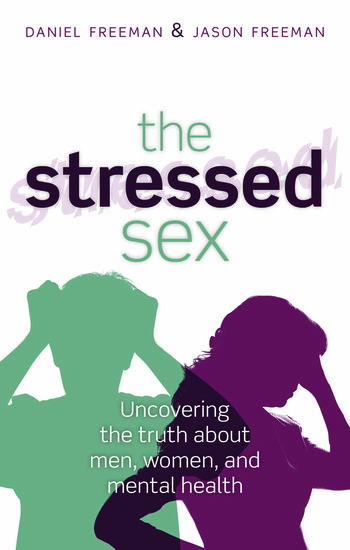
The classification of mental illness

By Daniel Freeman and Jason Freeman
According to the UK Centre for Economic Performance, mental illness accounts for nearly half of all ill health in the under 65s. But this begs the question: what is mental illness? How can we judge whether our thoughts and feelings are healthy or harmful? What criteria should we use?

Read More
Book thumbnail image

DSM-5 will be the last

By Edward Shorter
In assessing DSM-5, the fog of battle has covered the field. To go by media coverage, everything is wrong with the new DSM, from the way it classifies children with autism to its unremitting expansion of psychiatry into the reach of “normal.” What aspects should we really be concerned about?

Read More
Book thumbnail image

Insomnia in older adults

What keeps you up at night? Do the effects of sleep deprivation change with age? What are risks associated with insomnia in older adults? Mr. Christopher Kaufmann and Dr. Adam Spira join us to discuss their most recent research in The Journals of Gerontology Series A: Biological Sciences and Medical Sciences.

Read More
Book thumbnail image

100 years of psychopathology

By Paolo Fusar-Poli and Giovanni Stanghellini
In 1913, Allgemeine Psychopathologie (General Psychopathology) was published. A guide for young students, doctors and psychologists, it had been completed two years earlier by a 28-year-old German psychiatrist: Karl Jaspers. He aimed to overcome scientific reductionism and establish psychopathology as a new comprehensive science during a period of significant advances in neuroscience.

Read More
Book thumbnail image

Pornography, sperm competition, and behavioural ecology

By Michael N. Pham, William F. McKibbin, and Todd K. Shackelford
Like candy, pornography creates an adaptive mismatch. For a moment, try to see the world not from “human eyes” but from the eyes of an animal biologist. You might think that men’s enjoyment of pornography is bizarre: men are sexually aroused by the sight of ink that’s splattered on magazine pages, or computer pixels that display light. Nobody would argue that men evolved to have sex with magazines or computers. Adaptive mismatch? Quite.

Read More
Book thumbnail image

What’s the secret of bacteria’s success?

By Sebastian Amyes
Bacteria have achieved many firsts; they were the first cellular life-forms on the planet, they are the primary biomass on the planet; they are the most prevalent cell type in and on the human body outnumbering our own cells; they are responsible for more human deaths than any other infectious agents; and, in some parts of the world, they are the premier cause of all deaths. How did these small, single-cell organisms, that are invisible to the naked eye become so successful?

Read More
Book thumbnail image

The five big lifestyle changes for heart health

Today’s problem for the health-conscious person is information overload – new health studies pour out almost daily from newspapers, radio stations, and television networks. Just how true are the studies? How compelling are the facts they claim? Lionel Opie, Director Emeritus of the Hatter Cardiovascular Research Institute, has read countless scientific articles and listened to countless international experts – as well as keeping an ear open when patients tell him about their experiences – to identify the ‘big five’, the only five lifestyle changes with compelling evidence behind them.

Read More
Book thumbnail image

This is your brain on food commercials…

By Ashley N. Gearhardt
Gooey chocolate and scoops of mouth-watering chocolate ice cream. Steaming hot golden French fries. Children see thousands of commercials each year designed to increase their desire for foods high in sugar, fat, and salt like those mentioned above. Yet, we know almost nothing about how this advertising onslaught might be affecting the brain.

Read More
Book thumbnail image

Advice from the CDC on travel and H7N9

By Megan Crawley O’Sullivan, MPH
Avian influenza. H7N9. Bird flu. If you are planning a trip to China, these phrases might have you concerned. There are still many uncertainties regarding the new influenza A (H7N9) virus: it isn’t clear where the virus started or how people are getting sick, and a vaccine is not yet available. Amid these unanswered questions, it’s not surprising that many travelers are doubting their plans.

Read More
Book thumbnail image

Getting from “is” to “ought” near the end of life

By Nancy Berlinger
There is a saying in ethics: you can’t get an “ought” from an “is.”  Descriptions of the world as it is do not reveal truths about the world as it ought to be. Even when descriptions of real-world conditions suggest that something is seriously wrong — that our actions are causing unintended and avoidable harms to ourselves, to others, to our common environment — reaching agreement on how we ought to change our thinking and our behavior, and then putting these changes into practice, is hard.

Read More
Book thumbnail image

Give weight-loss diets a rest

By Abigail C. Saguy and Tamara B. Horwich
A respected cardiologist of our acquaintance recently confessed that he often tells his patients to lose weight. This may sound like good advice, but he knows better. Scores of clinical studies show that heavier patients with heart disease are, on average, less likely to die than thinner ones. Furthermore, weight loss efforts are typically counterproductive.

Read More
Book thumbnail image

Why do we have a Heart Failure Awareness Day?

By Anya Creaser
How would you feel if you were told you had heart failure? Once you had recovered from the shock, what are the questions you’d ask? European Heart Failure Awareness Days aim to combat all those blank looks in doctors’ offices. So you have heart failure and now you have to live with it. But you’re not alone.

Read More
Book thumbnail image

John Snow and cholera: how myth helped secure his place in history

By Sandra Hempel
The high-profile marking of John Snow’s bicentenary on March 15th would have surprised the great man. The London School of Hygiene and Tropical Medicine, the WellcomeTrust, and The Lancet were among the august UK organisations to honour him, with events including an exhibition, three days of seminars, and a gala dinner. The physician was also celebrated in the United States where he has a large fan base.

Read More