Oxford University Press's
Academic Insights for the Thinking World

Book thumbnail image

Did we really want a National Health Service?

By Nick Hayes
For most today, it’s difficult to imagine a British hospital system where treatment is not ‘free’ at the point of delivery, paid for out of national taxation, because in our imagination, the alternatives conjure pejorative images of the Americanisation of health. Those today opposed to decentralisation also echo the concerns of earlier health reformers like Dr Stark Murray, who thought the pre-nationalised hospital system simply disparate and chaotic.
Read More
Book thumbnail image

Bereavement: the elephant in the room

By Christine Young and Tracy Dowling
For most of us the death of a child is unimaginable and when it happens to someone close to us, or in our community, we may have no idea of how to respond.  If you’re a grandparent or close family member you may well be dealing with your own sense of loss as well as thinking about how to support the bereaved family and it’s the latter that people typically struggle with.

Read More
Book thumbnail image

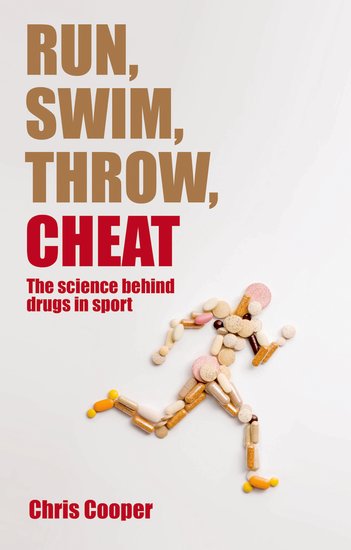
The science behind drugs in sport

What is cheating? What drug compounds for performance enhancement are legal and why? Why do the sports drug classification systems change all the time? If all the chemical were legal, what effect would this have on sport? Biochemist and author Chris Cooper explores the biological, moral, political, and ethical issues involved in controlling drug use in sports.

Read More
Book thumbnail image

Komen leadership in flux

By Gayle Sulik
Earlier today, Komen President Liz Thompson announced her plans to leave Susan G. Komen for the Cure next month. Founder Nancy Brinker will also give up her role as Komen CEO and serve as chair of the board as soon as a replacement is found, and two board members are stepping down, Brenda Lauderback and Linda Law.

Read More
Book thumbnail image

Test Your Smarts on Dope

By Leslie Taylor
Why are certain substances used? How are they detected? Do they truly have an effect on the body? Cooper explains how drugs designed to improve physical ability — from anabolic steroids to human growth hormone and the blood booster EPO — work and the challenges of testing for them, putting in to context whether the ‘doping’ methods of choice are worth the risk or the effort. Showing the basic problems of human biochemistry, physiology, and anatomy, he looks at what stops us running faster, throwing longer, or jumping higher. Using these evidence-based arguments he shows what the body can, and cannot, do.

Read More
Book thumbnail image

How to Teach a Successful Medical Class

By Peggy Mason, MD
Recently the second year-medical students (Class of 2014) at the University of Chicago Pritzker School of Medicine honored me with the L.D.H. Wood Pre-Clinical Teaching Award. This occasion prompted me to reflect on what made the Medical Neurobiology class that I taught in the fall of 2011 so successful. I believe that the following were key to the class’s success.

Read More
Book thumbnail image

Public Health, Public Hypochondria

By Catherine Belling
We used to feel reassured by the possibility that medicine might soon be able to find any disease hidden inside our bodies before it could do real harm, and remove it before we even began to feel sick. “Disease awareness” and “early detection” became public health buzzwords. We have been encouraged to get screened for diseases we probably don’t have (but just might). Some began paying for full body CT scans in the hope of catching and fixing all possible anomalies and pathologies the instant they appeared. What could possibly be wrong with such diligent vigilance?

Read More
Book thumbnail image

AIDS in 2012

By Richard Giannone
The International Conference on AIDS is announcing the details about Trudeva, the new drug from Gilead Science, that has shown to be effective in lowering the risk of HIV infection. It’s a single pill that in Brazilian trials reduces the rate of infection. The drug is expensive, about $12,000 a year. With 15,000 new infections a year and 1.2 million already infected with HIV, the drug is well worth the price.

Read More
Book thumbnail image

What is the health impact of the 2012 London Olympic transport plans?

While the UK government worries about visitors streaming through customs at Heathrow, locals around the new Olympic site are worried about what the sudden wave of visitors will mean to them. What can they expect as ticket-holders jam roads, crowd public transport, and over-run East London? Will the commitment to public health hold true for transportation? And what will happen after the closing ceremony?

Read More
Book thumbnail image

The stigma of mental illness

By Norman Sartorius
When asked, many people with mental illness will say that the consequences of the stigma of mental illness are worse than the illness itself. Stigmatization affects the position that people have in their community, their employment, their housing, the size and functioning of their social network. An episode of mental illness which is well treated may leave no trace in the mental state or functional capacity of the individual. Yet the stigma related to the disease will last for the rest of a person’s life and even often have repercussions for descendants of the person who experienced a stigmatizing illness.

Read More
Book thumbnail image

Ensuring a good death: a public health priority

By Joachim Cohen and Luc Deliens
The quality of dying, and maintaining quality of life for those who are dying and for those caring for them, is an inherent aspect of public health. In developed and developing societies everyone is affected by death and dying (either directly or indirectly, for instance in case of a dying relative) and it affects several aspects of their health and wellbeing. Adequate health promotion can improve the circumstances in which these people need to cope with death and dying and is thus susceptible to improve several aspects of health. Sadly, though the manner in which people die and the quality of dying has blatantly been neglected as a priority of public health, partly because death and dying, in all its aspects, have rather been regarded as antonymous to health and a failure of health care.

Read More
Book thumbnail image

National HIV Testing Day: Take the Test, Take Control

Today is National HIV Testing Day in the US, where nearly 1.2 million people are living with HIV and almost 1 in 5 don’t know they’re infected. Here Martin S. Hirsch, MD, FIDSA, editor-in-chief of The Journal of Infectious Diseases, discusses the importance of HIV testing. Dr. Hirsch is also professor of medicine at Harvard Medical School, professor of infectious diseases and immunology at the Harvard School of Public Health, and a physician at Massachusetts General Hospital.

Read More
Book thumbnail image

Most older pedestrians are unable to cross the road in time

By Dr Laura Asher
The ability to cross the road safely is important for the health of older people. Those who cannot cross the road safely are less able to access to the shops, health services and social contacts they need to stay healthy. The feeling that they will not be able to reach the other side of the road in time can deter older adults from even going out at all. 

Read More
Book thumbnail image

Five things you can do about multiple sclerosis

By Barbara S. Giesser, MD
First, the bad news. Multiple Sclerosis (MS), is a chronic, incurable, often progressive, and unpredictable neurodegenerative condition. The good news is that in the 21st century, with early diagnosis, prompt treatment, and numerous options for treating the disease and its symptoms, most people who are diagnosed nowadays can expect to lead full functional lives with MS mostly being a nuisance, rather than a source of significant permanent disability. Here are five basic strategies for not letting MS get the better of you.

Read More
Book thumbnail image

Healing American Health Care

By Walter M. Bortz, II M.D.
One hundred years ago the fledgling American Medical Association (AMA) and the Carnegie Foundation joined in an effort to redress the wretched state of medicine in America. Its scientific value was meager, but more important was its status as a huckster enterprise. The AMA and Carnegie sought out Abraham Flexner, a young John Hopkins graduate educator, to lead the examination. The resulting Flexner Report is widely regarded as the single most important document in the history of current medicine.

Read More
Book thumbnail image

Thoughts on the Passing of Sir Andrew Huxley, OM, FRS, Nobel Laureate

By Alan J. McComas
With the death of Sir Andrew Huxley on 30 May 30 2012, the world lost not only an intellectual giant but a man respected, admired, and loved by all who knew him. Born into a most distinguished family, Andrew was at the age of 94, likely to have been the last surviving grandchild of T. H. Huxley, the Victorian scientist and educator, and the friend and champion of Charles Darwin. Andrew’s brothers (by his father’s first marriage) included Julian Huxley, the zoologist and first Director-General of UNESCO, and Aldous Huxley, the author of Brave New World.

Read More