Oxford University Press's
Academic Insights for the Thinking World

  • History

Book thumbnail image

Halloween witches: ladies not for burning

By Owen Davies
Why is Halloween associated with witches? Look back beyond the twentieth century and you will find few connections. The 31st of October has long been a day of great religious significance of course. It is All Hallows’ Eve, the build-up to the Catholic All Saints’ Day, and then All Souls’ Day on 2 November. This was a time when the worlds of the living and the dead were at their closest.

Read More
Book thumbnail image

New York City goes underground

By Joseph B. Raskin
Service on the first route of the New York City subway system began 109 years ago today, on 27 October 1904. The occasion was marked by ceremonies in City Hall, led by George A. McClellan and representatives of the Interborough Rapid Transit Company (IRT), the operators of that line. Mayor McClellan saw the opening of the subway as the beginning of a new era for the greater city.

Read More
Book thumbnail image

Gridlock and The Federalist

By David Brian Robertson
In the The Federalist, Alexander Hamilton, James Madison, and John Jay offer us urgent lessons for coping with the kind of gridlock that grips American government today. They were defending a plan intended to replace a failing national government. The proposed Constitution aimed to break a government stalemate that threatened the survival of the infant American republic.

Read More
Book thumbnail image

Argentina’s elections: A Q&A

In anticipation of Argentina’s mid-term elections to be held on Sunday, 27 October 2013, Political Analysis co-editor R. Michael Alvarez (Caltech) discussed some of the most important things that we need to know about this contest with Francisco Cantu (University of Houston) and Sebastian Saiegh (UCSD).

Read More
Book thumbnail image

Considering your digital resume

By Steven Sielaff
Throughout my time as Oral History Review (OHR) editorial assistant at the Oral History Association’s (OHA) annual conference in Oklahoma City, OK, I saw a number of prevailing themes. In the recent past, the push towards digitization and web-based portals has dominated the professional landscape. This was certainly the case again at this year’s conference.

Read More
Book thumbnail image

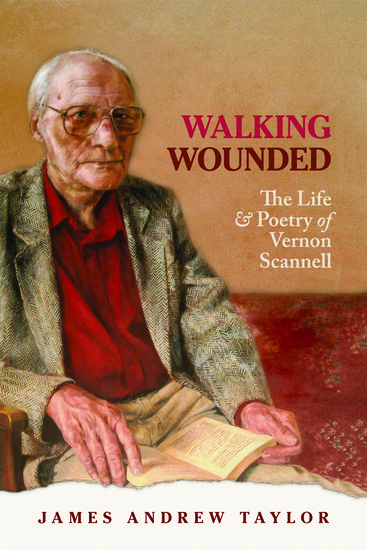
Vernon Scannell: War poetry and PTSD

By James Andrew Taylor
the more I read about his life after the war – the monumental drinking binges, the black-outs, the terrifying, sweating nightmares, and most of all the raging, unreasonable jealousies and the sickening violence that he meted out to his wife and, later, his lovers – the more I began to wonder whether this was not also the story of a man seriously damaged by his wartime experiences.

Read More
Book thumbnail image

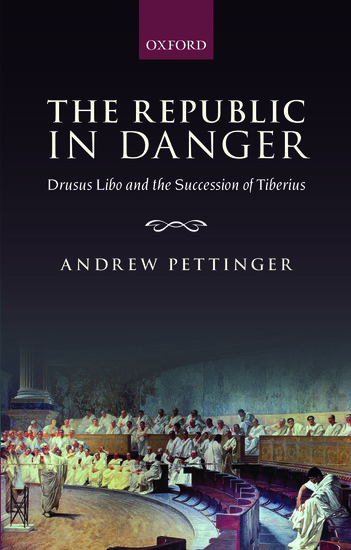
Participating in the OAPEN program

By Andrew Pettinger
I was recently invited by Oxford University Press (OUP) to have my book, The Republic in Danger, published on the online open access library OAPEN. After a few general questions, I happily accepted. Why?

Read More
Book thumbnail image

Getting and keeping the vote

By Jean Baker
Organizing for the women’s suffrage parade planned for 23 October 1915 in New York had taken months. By this time leaders of the New York movement were practiced at arranging such popular spectacles in a state that would be a significant prize, with parades its most effective, opinion–changing tactic. Finally–nearly seventy years after the Seneca Falls Convention and its call for women’s suffrage– the momentum seemed to be shifting.

Read More
Book thumbnail image

The wait is now over

By Erik N. Jensen
Let’s get one thing straight about Andy Murray’s Wimbledon singles title: It was not the first one by a Briton in 77 years, despite what the boisterous headlines might have you believe. London’s venerable Times set the tone on July 8 with its proclamation, “Murray ends 77-year wait for British win.”

Read More
Book thumbnail image

Bloody but unbowed

By Sonia Tsuruoka
Not much remains to be said about the politics of the written word: scores of historical biographers have examined the literary appetites of revolutionaries, and how what they read determined how they interpreted the world. Mohandas Gandhi read Henry David Thoreau’s Civil Disobedience during his two-month incarceration in South Africa.

Read More
Book thumbnail image

Appomattox and black freedom

By Elizabeth R. Varon
This year’s Civil War sesquicentennial commemorations have highlighted the theme of emancipation, and appropriately so: Lincoln’s promulgation of his Emancipation Proclamation in January of 1863 was a watershed event. But if we cast our eyes back to African American freedom commemorations in the wake of the war, we are reminded that emancipation was a process, not an event — and that its fulfillment hinged on Confederate military defeat.

Read More
Book thumbnail image

The end of Nez Perce

In early October of 1877, Chief Joseph of the Nez Perce surrendered to the United States military after a harrowing five month war to reclaim their ancestral homeland from gold rushing Americans. The following excerpt from Elliot West’s The Last Indian War: The Nez Perce Story describes the settlement made and the challenging move north the displaced Nez Perce faced as a result of it.

Read More
Book thumbnail image

In the wake of the uprisings

By Jan Wouters and Sanderijn Duquet
In early 2011, a series of revolutionary chain reactions against uncompromising and authoritarian regimes set the Middle East and Northern Africa (MENA) in motion. The popular uprisings spread quickly across the Arab world and their effects continue today.

Read More
Book thumbnail image

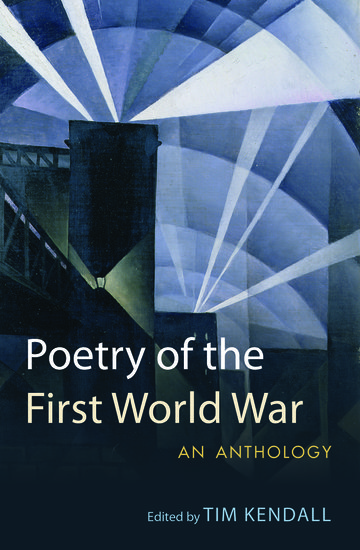
Ivor Gurney and the poetry of the First World War

By Tim Kendall
One of the anthologist’s greatest pleasures comes from discovering previously unknown pieces to jostle with the familiar classics. Editing The Poetry of the First World War, I knew that I should need to accommodate ‘Dulce et Decorum Est’, ‘The Soldier’, and ‘For the Fallen’. Whatever their qualities, these have become so inextricably part of our understanding that to omit them would be perverse.

Read More