Oxford University Press's
Academic Insights for the Thinking World

  • History

Book thumbnail image

Welcome to the OHR, Stephanie Gilmore

By Caitlin Tyler-Richards
This summer, our editor-in-chief Kathy Nasstrom is taking a well-deserved break, and leaving the Oral History Review and related cat-herding in the hands of the extremely capable Stephanie Gilmore. As some may have read in the Oral History Association’s most recent newsletter, Stephanie is a multitalented historian who works to combat sexual assault on university campuses.
Read More
Book thumbnail image

What has changed in geopolitics?

By Klaus Dodds
If a week is a long time in politics then goodness knows what seven years represents in geopolitical terms. The publication of the second edition of the VSI to Geopolitics was a welcome opportunity to update and reflect on what has changed since its initial publication in 2007.

Read More
Book thumbnail image

Putting an end to war

By Barry S. Levy and Victor W. Sidel
War is hell. War kills people, mainly non-combatant civilians, and injures and maims many more — both physically and psychologically. War destroys the health-supporting infrastructure of society, including systems of medical care and public health services, food and water supply, sanitation and sewage treatment, transportation, communication, and power generation.

Read More
Book thumbnail image

Felipe VI, Spain’s new king: viva el rey

By William Chislett
Spain has a new king, following the abdication of King Juan Carlos earlier this month in favour of his son, Felipe VI. The move comes at a time when Spain is emerging from a long period of recession with an unemployment rate of 26%, a tarnished monarchy, a widely discredited political class, and a pro-independence movement in the region of Catalonia.

Read More
Book thumbnail image

The long, hard slog out of military occupation

By Alan McPherson
In 2003, former secretary of defense Donald Rumsfeld infamously foresaw victory in Afghanistan and Iraq as demanding a “long, hard slog” and listed a multitude of unanswered questions. Over a decade later, as President Obama (slowly) fulfills his promise to pull all US troops from Afghanistan, a different set of questions emerges: Which Afghans can coalition troops trust to replace them? Will withdrawal lead to even more corruption in the Hamid Karzai government or that of his successor? Has the return of sectarian violence in Iraq been inevitable?

Read More
Book thumbnail image

Torture: what’s race got to do with it?

By Rebecca Gordon
June is Torture Awareness Month, so this seems like a good time to consider some difficult aspects of torture people in the United States might need to be aware of. Sadly, this country has a long history of involvement with torture, both in its military adventures abroad and within its borders.

Read More
Book thumbnail image

This empire of suffering

By Mary L. Dudziak
On 6 June 2014 at Normandy, President Barack Obama spoke movingly of the day that “blood soaked the water, bombs broke the sky,” and “entire companies’ worth of men fell in minutes.” The 70th anniversary of D-Day was a moment to remember the heroes and commemorate the fallen.

Read More

Composer and cellist Aaron Minsky in twelve questions

Each month we will bring you an interview with one of our OUP composers, providing an insight into their music and personalities. Today, we are speaking with the cellist Aaron Minsky about his proudest moment, the challenges of staying relevant, desert-island playlists, and his debt to J. S. Bach.

Read More
Book thumbnail image

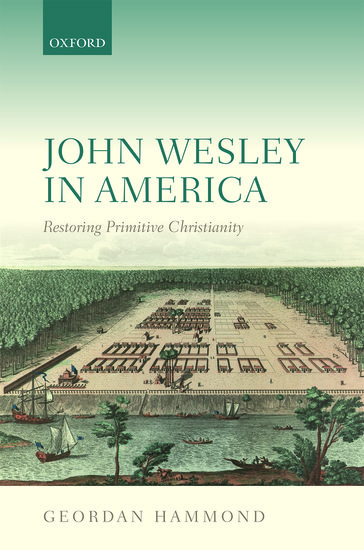
The appeal of primitivism in British Georgia

By Geordan Hammond
The ideal of primitivism was common feature in eighteenth-century British society whether in architecture, art, economics, landscape gardening, literature, music, or religion. Nicholas Hawksmoor’s six London neo-classical churches are one example of the primivitist ideal in architecture and religion.

Read More
Book thumbnail image

English convent lives in exile, 1540-1800

By Victoria Van Hyning
In the two and a half centuries following the dissolution of the monasteries in England in the 1530s, women who wanted to become nuns first needed to become exiles. The practice of Catholicism in England was illegal, as was undertaking exile for the sake of religious freedom.

Read More
Book thumbnail image

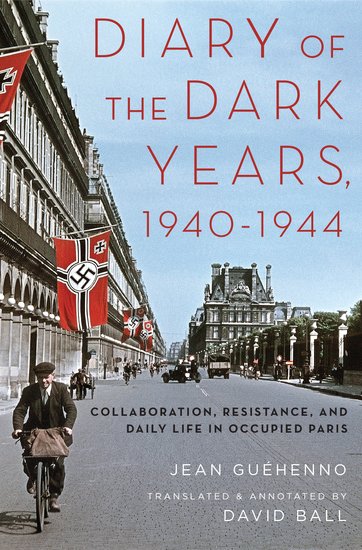
Life in occupied Paris during World War II

By David Ball
If you were a fifty-year-old intellectual, a well-known writer of left-wing articles and literary essays, and your country was occupied by the Nazis and its more-or-less legal government collaborated with them — and now the editor of the leading literary magazine of the time pressed you to contribute an essay to his review, would you do so?

Read More
Book thumbnail image

“Stretch” Johnson, my father

By Wendy Johnson
In the grim period of McCarthyism during the 50s, Howard “Stretch” Johnson, my father, fought for freedom of thought and speech, protesting the persecution of artists and intellectuals. Despite the fact that he had grown away from the Communist Party, with the 22nd Congress of the Communist Party and the revelations of Stalin’s bloody deeds, Stretch stood trial and refused to denounce his comrades.

Read More
Book thumbnail image

1914-1918: the paradox of semi-modern war

By Dennis Showalter
The looming centennial of the Great War has inspired a predicable abundance of conferences, books, articles, and blog posts. Most are built on a familiar meme: the war as a symbol of futility. Soldiers and societies alike are presented as victims of flawed intentions and defective methods, which in turn reflected inability or unwillingness to adapt to the spectrum of innovations (material, intellectual, and emotional), that made the Great War the first modern conflict.

Read More
Book thumbnail image

Reflecting on the 70th anniversary of the D-Day landings

In the early morning of 6 June 1944, thousands of men stood in Higgins boats off the coast of Normandy. They could not see around them until the bow ramp was lowered — when it was time for them to storm the Gold, Juno, Sword, Utah, and Omaha beaches. Over 10,000 of them would die in the next 24 hours.

Read More
Book thumbnail image

How did writing begin?

We’re continuing our discussion of what is a book today with some historical perspective. The excerpt below by Andrew Robinson from The Book: A Global History gives some interesting insight into how the art of writing began.

Read More