Oxford University Press's
Academic Insights for the Thinking World

Book thumbnail image

Beach body brief

By Erik N. Jensen

Summer officially arrived on June 21, and as Americans anticipate lounging by pools and vacationing on beaches, they also look in the mirror and worry about how that midriff will look, once it’s squeezed into a swimsuit. Despite the country’s rising obesity rates, our society has not grown more accepting of different body types and sizes. We seem, if anything, to have become less accepting of them. Women in the 1950s and

Read More
Book thumbnail image

But the dictionary says…

By Dennis Baron
The Supreme Court is using dictionaries to interpret the Constitution. Both conservative justices, who believe the Constitution means today exactly what the Framers meant in the 18th century, and liberal ones, who see the Constitution as a living, breathing document changing with the times, are turning to dictionaries more than ever to interpret our laws: a new report shows that the justices have looked up almost 300 words

Read More
Book thumbnail image

5 habits of highly effective terrorist organizations

By Daniel Byman
On paper, Egyptian jihadist Ayman al-Zawahiri, who just formally filled Osama bin Ladin’s shoes as al Qaeda’s emir, seems a perfect replacement for the late Saudi terrorist. Zawahiri formed his own terrorist group as a teenager, and ever since he has fought autocratic Muslim regimes and the United States with both tenacity and intelligence. As bin Ladin’s number two, he learned at the feet of the master, and by some accounts taught his boss much of what he knew about how to run an underground organization.

Read More
Book thumbnail image

Privacy law: a 10 minute tutorial

By Mark Warby
My mum told me the other day that she found all this publicity about privacy, super-injunctions, and Twitter most confusing. So do I, because the way it is reported seems to bear little resemblance to the world I thought I worked in and knew.

Read More
Book thumbnail image

Orwell and Huxley at the Shanghai World’s Fair

Tweet Who, we sometimes ask, at the dinners and debates of the intelligentsia, was the 20th century’s more insightful prophet — Aldous Huxley or George Orwell? Each is best known for his dystopian fantasy — Huxley’s Brave New World, Orwell’s 1984 — and both feared where modern technology might lead, for authorities and individuals alike. […]

Read More
Book thumbnail image

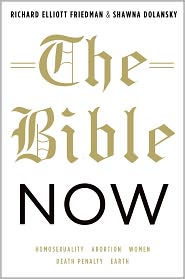
The Bible: As relevant (and misunderstood) as ever

By Richard Elliott Friedman and Shawna Dolansky
More than 20 centuries after the Bible’s production, people still bring it to bear on practically every important social and political issue in the Western world (and much of the Eastern world). In the 18th and 19th centuries, both proponents and opponents of African slavery quoted chapters and verses to support their positions. In the 20th and 21st centuries

Read More
Book thumbnail image

A reason to vote along racial lines

By Rebecca Alpert

Growing up as a baseball fan in the 1950s and 60s, I could not wait until the All-Star game rolled around every July. (Imagine my delight during the years when there was a second game in August!) Back then, fans didn’t choose the players, so I would eagerly anticipate the announcement of the teams in the newspapers. Then I would rummage through my baseball card collection to pull out the All-Stars and admire their accomplishments. Watching the game on television was thrilling to me, no matter the outcome. If I was in

Read More
Book thumbnail image

Bismarck spat ‘blood and iron’

By George Walden

Everything about Otto von Bismarck was off the scale: his rages, his disloyalty, his mendacity, his gargantuan appetite and his colossal chamber pots. So, too, was the political genius of the greatest, if least lovable, statesman 19th-century Europe had to offer.

Read More
Book thumbnail image

Was Iraq a just war?

By David Fisher
There has been much recent debate about whether the 2003 Iraq War was legal, with both Tony Blair and his Attorney General summoned before the Chilcot enquiry to give evidence on this. But a more fundamental question is whether the war was moral?

Read More
Book thumbnail image

They called themselves “Freedom Riders”

By Adam Phillips
The American South was a segregated society 50 years ago. In 1960, the U.S. Supreme Court outlawed racial segregation in restaurants and bus terminals serving interstate travel, but African-Americans who tried to sit in the “whites only” section risked injury or even death at the hands of white mobs. In May of 1961, groups of black and white civil rights activists set out together to change all that.

Read More
Book thumbnail image

Osama’s dead. Now what?

By John Esposito

The killing of bin Laden in Abbottabad is a major psychological blow to al Qaeda, who lost a charismatic leader, viewed by both his supporters and his enemies as the true symbol of global terrorism and militancy. For many around the world it is a victory in the war against extremist violence which has resulted in the deaths of thousands of innocent people.

Read More
Book thumbnail image

Rising generation of al-Qaeda poses threat in wake of bin Laden’s death

Michael Scheuer, former chief of the CIA’s bin Laden unit, wrote in the biography Osama bin Laden that Mr. bin Laden’s “has anticipated a war of attrition, one that might last decades” and “has given no indication that he expects to live long enough to finish the job.” Mr. Scheuer believes that younger al-Qaeda activists have already been well groomed for the future.

Here we present an exclusive excerpt from Osama bin Laden that considers the threat

Read More
Book thumbnail image

Boobies, for fun & profit

By Gayle Sulik
A blogger who goes by the name of The Accidental Amazon recently asked: “When did breast cancer awareness become more focused on our breasts than on cancer? Is it because our culture is so obsessed with breasts that it slides right past the C word?”

The Amazon’s questions are important — but they are inconvenient; blasphemous to the pink consumption machine, disruptive to the strong societal focus on pink entertainment,

Read More
Book thumbnail image

Royal weddings: looking at a Queen

By Helen Berry
The purpose of British royalty is for people to look at them. Successful monarchs throughout history have understood this basic necessity and exploited it. Elizabeth I failed to marry, and thus denied her subjects the greatest of all opportunities for royal spectacle. However, she made up for it with a queenly progress around England. As the house guest of the local gentry and nobility, she cleverly deferred upon her hosts the expense of providing bed, breakfast and lavish entertainment for her vast entourage, in return for getting up close and personal with her royal personage. It was not enough to be queen: she had to be seen to be queen.

Read More
Book thumbnail image

On Equal Pay Day, Busting 4 Top Myths About the Wage Gap

By Mariko Lin Chang

This year’s Equal Pay Day falls on April 12, marking how far into 2011 the average woman must work in order to earn what the average man had by the end of 2010. In the 15 years since Equal Pay Day was established, the gender wage gap has barely budged, moving from 74 percent in 1996 to 77 percent in 2010. This amounts to a three-cent increase in women’s wages for every dollar earned by men. Given that women make up half of the workforce, the gender wage gap does not generate the outrage that it should, as is clear from the failure of the Paycheck Fairness Act last November.

Read More