Oxford University Press's
Academic Insights for the Thinking World

Book thumbnail image

Wimbledon, Shakespeare, and strawberries

By Daniel Parker
It’s time to dust off your racket and wrestle the tennis balls from your dog’s mouth. Wimbledon 2013 is upon us! Using Oxford Scholarly Editions Online (OSEO) as my experienced, disciplined, but approachable coach, I cast a hawk-eye over OSEO’s collection of Shakespeare texts to look for references to tennis.
Read More
Book thumbnail image

10 things to understand about diaspora

The word diaspora, as explained in the Oxford Dictionaries, is most closely associated with the dispersion of the Jews beyond Israel. However, it is also defined as the dispersion or spread of any people from their original homeland. To learn more about diasporas around the world, we asked Kevin Kenny, Professor of History at Boston College and author of Diaspora: A Very Short Introduction to share some of his extensive knowledge.

Read More
Book thumbnail image

A marriage equality reading list

Yesterday, the Supreme Court of the United States struck down part of the Defense of Marriage Act in their decision on the United States vs. Windsor. The judges also dismissed the Proposition 8 case (Hollingsworth vs. Perry), clearing the way for same-sex couples in California to marry.

Read More
Book thumbnail image

Smoke and mirrors

By Ian Lloyd
Recent weeks have seen a plethora of media postings concerning revelations about the US government’s systems for obtaining access to communications data. The passage quoted above would seem to fit well into these but actually comes from 1999 and relates to the disclosure of a massive surveillance operation, known as project ECHELON which allegedly allowed the US security agencies (and also those from the UK and a number of other countries) to monitor the content of all email traffic over the Internet.

Read More
Book thumbnail image

World music for woodwind

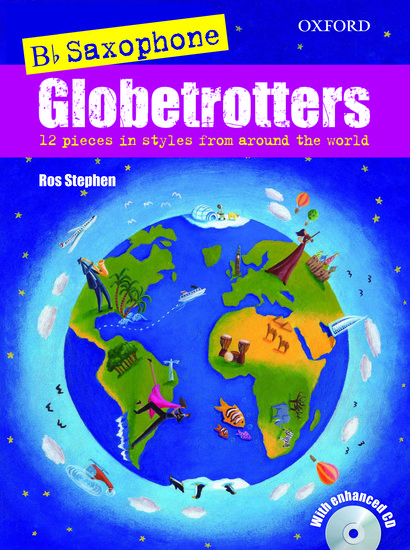
When you think of styles that are associated with the clarinet or saxophone you might think of classical, klezmer, or jazz, but these instruments are also well-suited to many world music styles. Ros Stephen explores this concept in the Globetrotters series, with original pieces in styles from across the globe.

Read More
Book thumbnail image

The great quiet

By Trevor Herbert
The story of military music in the long nineteenth century is absent from conventional music histories even though it had a vast influence on most aspects of musical life. Bands of music originated in the British military in the eighteenth century among the aristocratic officer class as a form of entertainment and as a means of enhancing the cultural status of that profession, and they retained this function throughout the nineteenth century and beyond.

Read More
Book thumbnail image

The realities of spy fiction

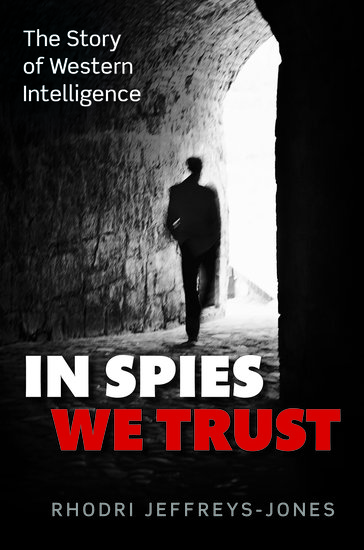
When talking about spy fiction, people sometimes confuse verisimilitude and reality. Spy novelists who use the words “friends” and “cousins” to describe our American collaborators are engaging in verbal verisimilitude. When John Le Carré tells us in his latest novel A Delicate Truth that the business of secret intelligence is now being privatized, he’s conveying an important reality.

Read More

Monthly etymological gleanings for June 2013

By Anatoly Liberman
One cannot predict which posts will interest the public and which will leave them indifferent. I hoped that my “revolutionary” hypothesis on the origin of Old Nick would result in a tidal wave (title wave, as some of my students write), but it did not produce as much as a ripple, whereas the fairly trivial essay on the letter y aroused a lively discussion.

Read More

A flag of one’s own? Aimé Césaire between poetry and politics

Aimé Césaire (1913 – 2008) has left behind an extraordinary dual legacy as eminent poet and political leader. Several critics have claimed to observe a contradiction between the vehement anti-colonial stance expressed in his writings and his political practice. Criticism has focused on his support for the law of “departmentalization” (which incorporated the French Antilles, along with other overseas territories, as administrative “departments” within the French Republic) and his reluctance to lead his country to political independence.

Read More
Book thumbnail image

Beware of gifts near elections: Cyprus and the Eurozone

By Alexandros Apostolides
Cyprus was not on the agenda of most analysts as the next plot twist in the Eurozone Sovereign debt saga. Although the island nation has been locked out of international capital markets since May 2011, the government of President Demetris Christophias only asked for support from the Eurogroup on 25 July 2012.

Read More
Book thumbnail image

Byrd’s reasons to sing

By Kerry McCarthy
The composer William Byrd published the first great English songbook (Psalms, Sonnets and Songs) in 1588. He began his book with an unusual and charming list: “Reasons briefly set down by the author to persuade everyone to learn to sing.” Byrd’s “reasons to sing” give us a glimpse into everyday musical life in the time of Shakespeare.

Read More
Book thumbnail image

Days are long—Life is short

Author Christopher Peterson passed away late last year. As the World Congress on Positive Psychology approaches (Oxford University Press will be at booth 110), we’d like to pay tribute to one of the founders of the field in this brief excerpt from Pursuing the Good Life.

Read More
Book thumbnail image

The History of the World: North Korea invades South Korea

In 1945 Korea had been divided along the 38th parallel, its industrial north being occupied by the Soviets and the agricultural south by the Americans. Korean leaders wanted a quick reunification, but only on their own terms, and the Communists taking power in the north did not see eye to eye with the nationalists whom the Americans supported in the south.

Read More
Book thumbnail image

Happy birthday Mr. Orwell

By Robert Colls
Sorry to bother you with serious thoughts on your birthday George, but you’ve become quite a famous chap down here. To your certain horror you’ve even become slightly fashionable and it’s only a matter of time before some lithe young man calling himself ‘Orwell’ comes sashaying down the catwalk in bags and cords, thin tash and Tin Tin hair.

Read More