Oxford University Press's
Academic Insights for the Thinking World

  • History

Book thumbnail image

The medieval pilgrimage business

By Adrian R Bell and Richard S. Dale
Pilgrimages, saints, shrines, indulgences and miracles were central to western medieval culture and religious experience. Yet, although much has been written, what has often been overlooked by historians is the economic underpinning of medieval religious beliefs and practices.

Read More
Book thumbnail image

Barnard performs first heart transplant

This Day in World History
For five hours, the thirty-person surgical team worked in an operating room in Cape Town, South Africa. The head surgeon, Dr. Christiaan Barnard, was leading the team into uncharted territory, transplanting the heart of a young woman killed in a car accident into the chest of 55-year-old Louis Washkansky.

Read More
Book thumbnail image

Ian Fleming and American intelligence (Part 3)

By Nicholas Rankin
On 27th June 1941, in Washington D.C., Lt-Commander Ian Fleming RNVR drafted a short ‘Memorandum to Colonel Donovan’ on how to structure and staff the headquarters of his new American intelligence agency, COI, to be set up by Christmas 1941. Fleming suggested taking over a section of the FBI building and liaising closely with the Attorney-General and J. Edgar Hoover; Donovan would need to make friends with both the State Department and the FBI and enlist their full help ‘by cajolery and other means’.

Read More
Book thumbnail image

Ian Fleming and American intelligence (Part 2)

By Nicholas Rankin
In May 1941, Ian Fleming and his boss, the Director of Naval Intelligence, Admiral John Godfrey, were touching base in New York City with William Stephenson, the British Secret Service’s representative in North America as head of British Security Co-Ordination, whose headquarters occupied the 34th and 35th floors of the Rockefeller Center. The place later went into Fleming’s fiction. In chapter 20 of the very first Bond book, Casino Royale, James Bond confesses to the assassination of a Japanese cipher expert cracking British codes

Read More
Book thumbnail image

Ian Fleming and American intelligence (Part 1)

By Nicholas Rankin
On 15 May 1941, two Englishmen flew from London to Lisbon, at the start of a ten-day wartime journey to New York City. Though they wore civilian clothes they were, in fact, the Director of Naval Intelligence, Admiral John Godfrey, and his personal assistant, Lieutenant Commander Ian Fleming RNVR, the future author of the James Bond novels. What followed was to change American intelligence forever.

Read More
Book thumbnail image

Haitian leaders declare independence

This Day in World History
On November 29, 1803, Haitian leaders Jean-Jacques Dessalines, Henri Christophe, and a General Clerveaux joined together to sign a preliminary proclamation of independence for St. Domingo, the former French colony that soon after took the name Haiti. The proclamation came just ten days after French forces under the Vicomte de Rochambeau had surrendered to the Haitian rebels.

Read More
Book thumbnail image

We also give thanks for beer

Thanksgiving is all about tradition, and if you are like my family, your dinner will probably be served with wine. But having recently spent some time with The Oxford Companion to Beer and its Editor-in-Chief Garrett Oliver, I am thinking about adding a little twist to the end of the meal.

Read More
Book thumbnail image

Darwin publishes On the Origin of Species

This Day in World History
On the day it was published, Charles Darwin’s On the Origin of Species sold out—eager readers bought every single copy. This alone is not remarkable: the print run was a mere 1,250 copies. But in presenting to the world his theory of evolution by natural selection, Darwin’s tome made history.

Read More
Book thumbnail image

Honest Ben

By Ian Donaldson ‘Of all styles he loved most to be named honest, and hath of that an hundred letters so naming him’, wrote Ben Jonson’s Scottish friend, William Drummond, after Jonson had visited him at his castle at Hawthornden on the River Esk, seven miles south of Edinburgh, in 1618.  ‘Honest’ seems a reasonable […]

Read More
Book thumbnail image

The simile of St Paul’s

By Brian Cummings
Like many people I first came across the Book of Common Prayer in a church pew; I must have been in my late teens. But it felt as if I already knew the book: many things in it were already familiar, like the marriage vows ‘for better for worse, for richer for poorer, in sickness and in health, to love and to cherish, till death us do part.’

Read More
Book thumbnail image

China Clipper makes first trans-Pacific flight

This Day in World History
Holding more than 110,000 pieces of mail, the mammoth plane that weighed more than 52,000 pounds and had a 130-foot wingspan lifted from the waters of San Francisco Bay. The plane, the China Clipper, was beginning the first flight across the Pacific Ocean on November 22, 1935—just eight years after Charles Lindbergh had flown alone across the Atlantic.

Read More
Book thumbnail image

Egypt’s President Sadat addresses Israeli Knesset

This Day in World History
On November 20, 1977, Egyptian President Anwar al-Sadat made an historic speech before Israel’s Knesset, or Parliament, becoming the first leader of an Arab nation to speak there. He was also the first of Israel’s Arab neighbors to publicly say anything like these words: “Today I tell you, and I declare it to the whole world, that we accept to live with you in permanent peace based on justice.”

Read More
Book thumbnail image

Elizabeth I becomes England’s Queen

This Day in World History
The twenty-five-year-old princess was seated beneath an oak tree on the lawn of her home, Hatfield House. Suddenly, several courtiers hurried across the lawn until they reached her location, stopped, and bowed. The queen has died, they told her. You are now queen of England. Young Elizabeth, it is said, fell to her knees and quoted a line from Psalm 118: “It is the Lord’s doing, and it is marvelous in our eyes.”

Read More
Book thumbnail image

Gods and priests

By Christian Meier
Hesiod and Homer brought order to the world of the gods for the Greeks, describing their genealogical connections, allocating honours, powers, and areas of responsibility among them, and giving them distinct appearances. This is how Herodotus put it.

Read More
Book thumbnail image

His Eminence of Los Angeles

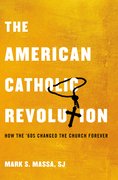
The American Catholic Church of today is a product of many dramatic transformations, especially those that took place in the 1960s. Here is an excerpt from The American Catholic Revolution: How the Sixties Changed the Church Forever where Mark S. Massa recounts some of the practices Archbishop James Francis McIntyre instituted in Los Angeles.

Read More